Messages between Natalie McNally and murder accused ‘had no trace of argument’
Ms McNally, 32, was 15 weeks pregnant when she was killed at her home in Lurgan on December 18 2022.
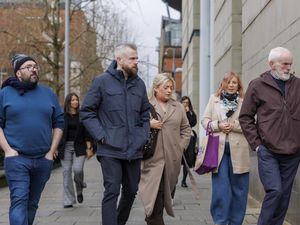
Hundreds of text messages exchanged between Natalie McNally and the man accused of murdering her did not contain a “single trace of an argument”, a court has heard.
The detective who led the investigation following the killing of Ms McNally told Belfast Crown Court that he did not note any “affectionate language” in the correspondence.
Ms McNally, 32, was 15 weeks pregnant when she was killed at her home in Lurgan on December 18 2022.
Her partner, Stephen McCullagh, 36, of Woodland Gardens in Lisburn, is on trial at Belfast Crown Court accused of murdering her.
He has denied the charge.
Detective Chief Inspector Neil McGuinness resumed giving evidence at the trial on Monday morning.
Defence barrister John Kearney asked him to look at transcribed WhatsApp messages between the defendant and Ms McNally over 133 days between August and December 2022.

The barrister said: “Essentially this WhatsApp communication is the record, the written record, of the messages pinging back and forth from one to the other?”
The detective replied: “That is correct.”
Mr Kearney said: “It’s right to say that there was not a single trace of any argument between the defendant and Ms McNally across any of those 133 days of this relationship, or any of these 498 pages, isn’t that correct?”
The officer said he had not noted “anything of that nature”.
Mr Kearney said there were messages exchanged on almost every day of the relationship.
The detective said: “It was very much in keeping with Natalie’s pattern of communication, she was a heavy phone user so there was a lot of communication.”
Mr Kearney said the tone of the conversations was “night and day” from that of her exchanges with her previous boyfriend.
Mr McGuinness said: “These were very, very different types of conversations.”
The barrister said the messages were an example of “perfect normality”.
The detective said: “I didn’t note any affectionate language or kisses or I love yous and things like that, so that did stand out to me.”
The barrister said the messages were “loving and tender” in nature and described them as “entirely innocent chitchat”.
The barrister said the messages indicated the only times Ms McNally and McCullagh were not exchanging messages was when when they were at work or together.
Mr Kearney said over time the couple had exchanged addresses and began to spend nights at each other’s homes.
The barrister suggested to the officer that if he scratched the surface of the messages he would find a “loving relationship”.
Mr Kearney added: “There were clear expressions of love and concern?”
Mr McGuinness said having reviewed Ms McNally’s other communications, he would have expected “more forthright communication”.
He said: “I was surprised at the nature of the communication between the two….she was not behind the door and letting people know how she felt.”

The barrister pointed out that Ms McNally had sent a message to the defendant which included an extract of a poem from Seamus Heaney.
He read a message McCullagh had sent in response which said: “Seeing more of you, is never a bad thing, as long as I’m not too much of a distraction. You are the sweetest, loveliest person I’ve ever met.”
A message from Ms McNally said: “Totally addicted to you”, the court heard.
Another message from her said: “We have a lifetime to do fun stuff together.”
The barrister said Ms McNally had habitually sent “loving, poetic messages”.
He asked: “Do you feel this was a loving relationship?”
The officer said he was not in a position to say that on the basis of text messages.
Later messages referred to her pregnancy and the two of them moving in together, the barrister told the court.
After Mr McGuinness finished giving evidence, a number of agreed facts were read to the jury before the prosecution concluded its case.
Trial judge Mr Justice Kinney told the jury: “You have heard all of the evidence that the prosecution are going to provide to you in this trial.”
After lunch, the judge asked Mr Kearney if he had advised his client that the stage had been reached at which he may give evidence.
Mr Kearney said: “We are not calling any evidence.”
The judge told the jury that the evidence in the case had now concluded.
Closing statements in the case will begin on Wednesday.