Government giving veterans ‘preferential treatment’ in legacy approach – O’Neill
The First Minister said there needed to be ‘fairness across the board’ in legislation currently going through Westminster.
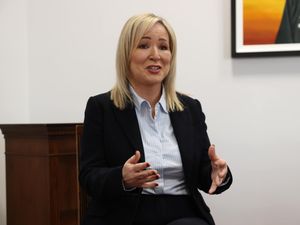
The UK Government is giving “preferential treatment for British state forces” in its approach to dealing with the legacy of the Northern Ireland Troubles, Michelle O’Neill has said.
The First Minister said there needed to be “fairness across the board” in legislation currently going through Westminster.
Deputy First Minister Emma Little-Pengelly said the DUP was challenging the Government to “stand up for and protect” veterans who were sent to serve in Northern Ireland.
Last year the UK and Irish Governments announced a new framework to deal with the legacy of the Troubles.
Labour is currently progressing its Troubles Bill at Westminster, which will replace the controversial Legacy Act introduced by the previous government.

Recently, MPs backed a remedial order which removed the measures in the previous Act providing conditional immunity from prosecutions for Troubles-era crimes, as well as scrapping a bar on future legacy compensation cases.
The immunity provision had been found to be unlawful in the courts.
Prime Minister Sir Keir Starmer has also indicated that new protections for military veterans will be added to the Northern Ireland Troubles Bill.
The Government has said these will include protection from repeated investigations, a right to give evidence remotely, protections for health in old age, a right to seek anonymity and protection from cold calling.
Ms O’Neill told Sky News that there was much work to do to “try to heal the wounds of the past”.
She said: “All families want access to truth and justice.
“But what we’re seeing play out in Westminster is preferential treatment for British state forces, and avenues being closed down for families who want access to truth and justice or access to the courts.
“So the British Government saying to them, you’re not good enough to get information at the same while elevating and trying to give preferential treatment for British veterans.”
She added: “That will never wash and it will never allow us to move forward, and never allow us to get the space where we actually have the maximum support of victims and survivors in a process that allows them to heal and actually to move forward.”
Ms O’Neill added: “My job as political leader is trying to help to heal the wounds and to move this forward.
“We’re only going to do that if there’s fairness across the board.”

Ms Little-Pengelly said legacy continued to be an “outstanding issue” in Northern Ireland.
She said: “We should always remember that 90% of the atrocities of the murders carried out were carried out by terrorist organisations.
“I do think that there has been an attempt to rewrite history by having a lot of the focus in relation to the state, should that be police, or should that be the Army and others in Northern Ireland.
“The DUP has always been very clear that we oppose amnesty, but what we are also challenging the UK Government to do is to make sure that it does stand up for and protect those people that they sent to Northern Ireland in very difficult circumstances.”
She said the current Government legislation “is not the correct way to go about this”.