Swinney did not accept briefing on military use of airport, says Alexander
Douglas Alexander made the claim on Thursday as he joined Defence Secretary John Healey.
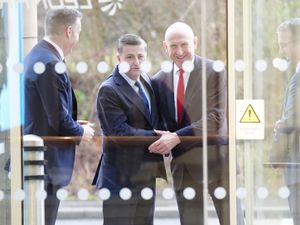
John Swinney did not accept the offer of a briefing to discuss the use of a Scottish airport for military purposes, the Scottish Secretary has said.
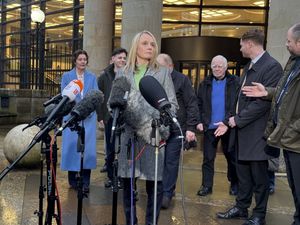
Douglas Alexander made the claim on Thursday as he joined Defence Secretary John Healey on a visit to the Leonardo factory in Edinburgh.
The First Minister has previously said he would have expected the Scottish Government to be “fully sighted” on security issues affecting Scotland’s waters after the US seized a Venezuela-linked oil tanker in the North Atlantic earlier this month.
Mr Swinney also said he was “deeply concerned” when the Marinera, a Russian-flagged vessel previously known as Bella-1, was taken to the Moray Firth for replenishment as it was being escorted by the US military.
Ahead of the operation, American special operations planes were spotted at Wick John O-Groats airport, along with a number of other military aircraft around Scotland.
Speaking to journalists on Thursday, the Scottish Secretary said: “The Scotland Act is very clear that defence and foreign affairs are reserved matters.
“And as a committed devolutionist, Scotland has two governments with respective and discrete responsibilities.
“I personally offered a briefing to John Swinney, the First Minister, in relation to the use of Wick airport – that hasn’t been accepted.
“But these issues are far, far too important to be subject to party politics.”
The Scottish Secretary went on to say the offer of a briefing was made by letter last week but was not accepted.
Mr Healey said he wanted the Scottish Government to be a “firm, strong, reliable government partner for the UK Government” on defence.
He accused the SNP Government of failing to invest in skills around the defence sector.
Asked about Donald Trump’s rhetoric over Greenland, the Defence Secretary said Nato is still united in its efforts to protect the high north.
He said: “Our military and security co-operation – and the closeness of that co-operation – with the US, with Norway and with other Nato allies as needed to protect the North Atlantic and the high north is as strong as ever and it will continue.”