Family caused ‘indescribable distress’ by health board’s admission, inquiry told
Molly Cuddihy died aged 23 in August last year, having been treated at the Queen Elizabeth University Hospital in Glasgow since 2018.

A health board’s change in position on the possible cause of infections at a flagship hospital has caused “indescribable distress” to the family of a patient who died, an inquiry has heard.
The grief of Molly Cuddihy’s parents was “further exacerbated” by the fact she died at the Queen Elizabeth University Hospital in Glasgow before she could hear about the change in NHS Greater Glasgow and Clyde’s (NHSGGC) position, the Scottish Hospitals Inquiry was told.
Clare Connelly, representing the Cuddihy family and that of Eilidh Mackay, also said there was a “systemic breach” by NHSGGC of its commitments to child wellbeing under the United Nations Convention on the Rights of the Child and the Scottish Government’s Getting it Right for Every Child framework (GIRFEC).
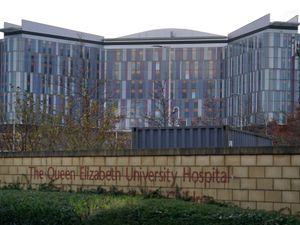
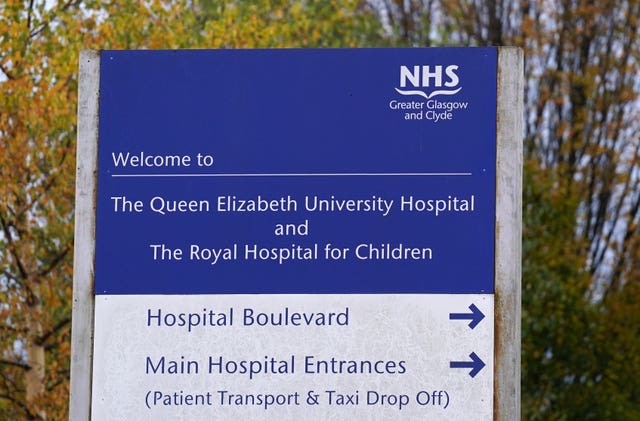
The inquiry has been examining the design and construction of the Queen Elizabeth University Hospital (QEUH) in Glasgow and the Royal Hospital for Children (RHC), which are on the same campus.
It was launched in the wake of deaths linked to infections, including that of 10-year-old Milly Main in 2017.
Ms Cuddihy was cared for at the RHC and the QEUH between January 2018 and 2020.
She developed septic shock while being treated for a rare cancer and was diagnosed with mycobacterium chelonae, an infection in her line that she later discovered came from the hospital environment.
In written closing submissions only made public at the weekend, the health board accepted there was probably a “causal connection” between some infections suffered by patients and the hospital environment, in particular the water system, in a change to its earlier position on the issue.
On Thursday, Ms Connelly told the inquiry of the impact this has had on the Cuddihy family.
She said: “Since Molly’s death, the position of GGC has changed, it’s not evolved, I would say it has fundamentally changed and that change in position came at the end of 2025 and has caused indescribable distress to John and Maria Cuddihy.
“Their incalculable grief and distress following the death of their daughter Molly has been further exacerbated by the fact that Molly did not hear or read of that change in position prior to her death, and for the Cuddihys that has caused unimaginable pain.”
She also read from a statement that Ms Cuddihy provided to the inquiry for a hearing that was due to take place in September 2025. She died in August last year aged 23.
In the statement, Ms Cuddihy told how her health deteriorated “in no small part due to the intensive antibiotic treatment”.
She said: “There is now no end in sight. There is no day to look forward to a cure, and I’m very likely to have a much more limited lifespan than the majority of my peers.
“I understand life isn’t fair, but I had already been diagnosed with a rare, aggressive cancer that is more than likely to be terminal the majority of the time, but surely at 22 years old, I should not be so resigned to such a future.”
She also described how her older brother donated a kidney to her, for which she expressed her gratitude but said “that risk should never have had to be taken”.
She praised her clinical team for the care she received but said the same could not be said for NHSGGC management.
She wrote: “Their utter contempt for the entire process has been clear, and the total disregard they have shown for the patients and their families has been startling.”
Ms Cuddihy also described the “psychological torment” patients have been through against the backdrop of issues at the hospital.
NHSGGC has offered a “sincere and unreserved apology” to the patients and families affected, and said the QEUH and RHC are safe today.
The death of Ms Cuddihy is being investigated by prosecutors.
The health board has also been named in an ongoing corporate homicide investigation into the deaths of three children and a 73-year-old woman at the QEUH campus.
Eilidh Mackay was also a cancer patient at the RHC where she contracted infections in 2016, and “continues to live with the life-impacting and life-limiting effects of the infections she contracted”, closing submissions on behalf of the family said.
Ms Connelly read a statement which Eilidh provided as part of written submissions in which she shared her thoughts about the hospital.
She said: “In this hospital I should have been safe, but the building was killing me. My life is important and should never have been jeopardised the way it was.
“I was just a teenager whose life was turned upside down with a cancer diagnosis, it should never have got to the extent it did with the infections I contracted and how ill they made me.
“Myself and my family should never have had to go through this nightmare. For us and for me, this torment will never go away. Our lives have been changed forever and we have to live with this horror for the rest of our lives.”
Ms Connelly highlighted some of the articles within the UN Convention on the Rights of the Child (UNCRC), including the right to the best possible health and the right to clean water.
She told the inquiry: “In my respectful submission, NHSGGC’s failures should be understood not only as shortcomings in healthcare and governance but as a systemic breach of Scotland’s own commitments under GIRFEC, the UNCRC, and the duty to use child rights and wellbeing impact assessments when making major decisions affecting children.”
The inquiry, taking place before Lord Brodie in Edinburgh, continues.