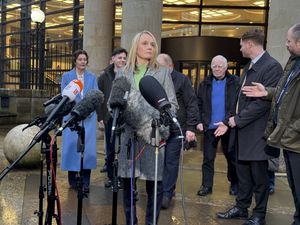
Digital IDs will not be only way to prove right to work in UK, says Chancellor
It is the latest in a series of U-turns by the Government.

The Chancellor has said the Government is “relaxed” about what form of digital documentation people could use to prove their right to work in the future, signalling a climbdown on its flagship digital ID policy.
Rachel Reeves said plans are now for a form of digital identification to be mandatory for right-to-work checks, but that this would not be limited to the new digital ID scheme unveiled last year.
When he announced the plan, Sir Keir Starmer had said people “will not be able to work in the United Kingdom” if they did not have digital ID as part of a bid to crack down on illegal immigration.
But on Tuesday, Government officials insisted it had always been the case that details of the digital ID scheme would be set out after a consultation.
Ms Reeves told BBC Breakfast on Wednesday morning: “On the digital ID, for starters, I do think this story has been a bit overwritten.
“We are saying that you will need mandatory digital ID to be able to work in the UK.
“Now the difference is whether that has to be one piece of ID, a digital ID card, or whether it could be an e-visa or an e-passport, and we’re pretty relaxed about what form that takes.”
It comes as Sir Keir prepares to face MPs for Prime Minister’s Questions on Wednesday.
It is the latest of a series of U-turns by the Labour Government, including last week’s decision to provide additional support for pubs facing large hikes in business rates.
It has reversed course at least 11 times so far, including by raising the inheritance tax relief threshold for farmers after months of protest and scrapping a raft of benefits cuts under threat of a backbench revolt.
Health Secretary Wes Streeting told a conference in London on Tuesday that ministers should aim to “get it right first time”.
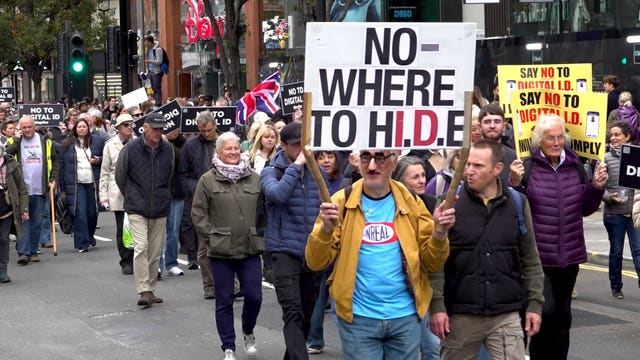
The Chancellor sought to downplay the change, saying: “I don’t think most people mind whether it is one piece of digital ID or a form of digital ID that can be verified.
“But the point is, we’re trying to address a problem and the question is how to do that.”
Put to her that continually backtracking on policy shakes the public and backbenchers’ confidence, Ms Reeves said: “The key thing is where you’re trying to go.
“Our Government, this Government, our focus is on growing the economy and improving living standards for working people.”
On Tuesday, Government officials insisted it had always been the case that details of the digital ID scheme would be set out after a consultation.
A Government spokesman said: “We are committed to mandatory digital right to work checks.
“Currently right-to-work checks include a hodgepodge of paper-based systems with no record of checks ever taking place. This is open to fraud and abuse.
“We have always been clear that details on the digital ID scheme will be set out following a full public consultation, which will launch shortly.”
The change leaves open the possibility that the digital ID programme would be entirely voluntary.
Sir Keir first announced the policy on the eve of last year’s Labour Party conference, saying it would help curb illegal migration by making it harder to work in the UK illegally.
He told the Global Progress Action Summit in London: “Let me spell it out: you will not be able to work in the United Kingdom if you do not have digital ID.”
Opposition parties, while welcoming the decision, have already used the U-turn to attack Sir Keir.
The Conservatives called it “shambolic” while the Liberal Democrats suggested Downing Street was “bulk ordering motion sickness tablets” to cope with so many changes of direction.
Dame Priti Patel said it was “yet another U-turn” which “shows how shambolic this Government is”.
The shadow foreign secretary also told the Press Association: “Of course, Keir Starmer’s feeble justification for digital ID was that it would stop the small boats, so clearly he was making it up as he goes along.

“This was a failed project from the outset, and the Government should hold its head in shame really, that it even proposed such a spurious scheme in the first place.”
Support for digital ID collapsed in the wake of Sir Keir’s announcement, falling from 53% in June to just 31% in October.
Liberal Democrats Cabinet Office spokeswoman Lisa Smart said: “Number 10 must be bulk ordering motion sickness tablets at this rate to cope with all their U-turns.
“It was clear right from the start this was a proposal doomed to failure, that would have cost obscene amounts of taxpayers’ money to deliver absolutely nothing.”
Sir Tony Blair’s think tank said the test of whether digital ID works is if people choose to use it.
Ryan Wain, executive director of policy and politics at the Tony Blair Institute for Global Change, said: “Removing mandatory digital ID from right-to-work checks is a change in approach, not a change in direction.
“Digital identity remains essential if we want public services that work in the way people now expect, with less friction, fewer forms and services that actually join up.
“The real test isn’t whether people are forced to use it, but whether it’s good enough that they choose to.”