‘The people of Wales are front and centre of every decision Plaid Cymru makes’, a Senedd Member claims
Plaid Cymru led on a debate on the Welsh Government’s funding settlement for local authorities, before the Christmas recess
This presented me with an opportunity to share concerns that local authority leaders – as well as constituents – have shared with me over recent years.
Since having the debate, we have successfully negotiated a funding settlement with Welsh Government which increases financial support for local authorities.
With rapidly rising costs, every local authority in Wales would have been hit hard by the proposed funding settlement presented to us in December by Mark Drakeford; however, with rural councils more likely to have been hit the hardest.
We know that the cost of providing public services in rural areas is far greater per head than in urban areas, due to a range of factors, for example: the greater number of schools, libraries, and leisure centres needed compared to urban areas; the longer distances that staff have to travel; difficulties in finding people with specialist skills, and a dependence, as a result, on costly agency staff; and the higher cost of social care related to an ageing population.
At the same time, the scope to raise council tax is lower, since a higher proportion of the population are pensioners; there are fewer high-paying job opportunities; and there are many people who are asset rich but don’t always have cash at hand – farmers, for example.
The settlement presented to us by the Welsh Government didn’t acknowledge any of this. Almost every local authority in rural Wales, with several of them in my region, was due to receive the lowest percentage increase possible to their budgets, namely 2.3% to counties such as Powys, Gwynedd, Pembrokeshire, Ceredigion and Carmarthenshire.
Considering that inflation remains stubbornly at 3.6%, this is a real-terms cut in council budgets, and all this following a period of 15 years of Conservative austerity.
It would have meant councils having to implement further cuts to services and jobs and to borrow from their quickly emptying reserves. I remember how painful that was when I was a member of the cabinet of Carmarthenshire County Council.
If we take Powys County Council, for example, they warned even after this increase of 2.3% to their budget, and finding £10 million of savings, that they still face a deficit of £11.8 million, which equates to an increase in council tax of 12%.
For context, council tax in Powys has already increased on average by 6% every year over the past six years.
Plaid Cymru, in response, entered negotiations with the Welsh Government to push for fairness, and in the process secured an additional £300 million for councils and the NHS.
As part of this deal, Plaid Cymru ensured that no council will receive less than a 4.1% increase to their budgets, rather than the previous 2.3%, which is enough to cover inflationary cost pressures and alleviate the crisis on its way to rural councils.
By allowing the budget to pass Plaid Cymru has acted in a responsible manner to protect public services and avoid job losses.
Once again, we have put people before party and ensured that the people of Wales are front and centre of every decision we make.
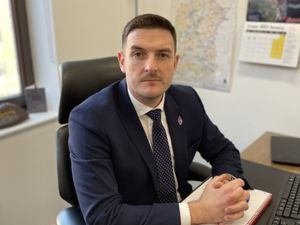
Cefin Campbell, Plaid Cymru Member of the Senedd for Mid and West Wales