A winter land of teeming wildlife - we explore the joys of nature you can see in Shropshire this December
Barely have I cleared the last of the autumnal leaves from beneath the ancient copper beech in my back garden before December arrives and we are well and truly into the hardest of seasons for wildlife in our county.
However far from it being a bleak and lifeless time of the year, this month can be a joy for wildlife watchers here in Shropshire and real inspiration for me as a wildlife artist.
Subscribe to Shropshire Star Plus now for just £1 a month for 12 months for exclusive content and an ad-free website. Visit shropshirestar.com/subscribe for our Black Friday offer
The Christmas cards may be all about robins, more on them in a moment, but for a bird that really explodes onto the scene this month, look no further than the humble, even ubiquitous, wood pigeon.
Common, yes, indeed there are more than 5.4 million breeding pairs in the UK, with additional winter migrants from continental Europe swelling numbers now.
Yet for most of the year they are relatively solitary or paired off. Now however they change behaviour, flocking en masse and creating a truly impressive sight above as several hundred and occasionally thousands, search for food on the fields.
Speaking of flocks, November and December are the best time to spot murmurations of starlings in various spots around the county. These dense, shifting clouds can contain tens of thousands of birds, sometimes more, wheeling above the landscape before descending to roost.
In Shropshire, sites such as Whixall Moss, Chelmarsh Reservoir and various reedbeds and farmland margins are known gathering points. Keep an eye out just before dusk for although there are famous congregations, smaller ones, equally impressive in their shapes and form, can pop up anywhere near you.
Murmurations peak in December because the region’s resident starlings are joined by migrants from Scandinavia and Eastern Europe escaping harsher conditions. The movement patterns, synchronised turns and pulsating bulges, serve practical purposes, confusing predators like sparrowhawks and facilitating information exchange about feeding sites. Each individual bird weighs only around 75 grams, yet the combined mass of a large murmuration can exceed a tonne of living motion. As daylight fades, they funnel into reeds or trees, producing a communal chatter that continues long after dark.
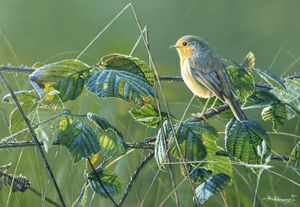
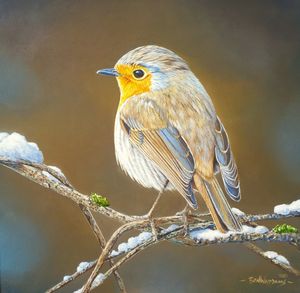
In Shropshire’s gardens, churchyards and woodlands, the most familiar of winter birds can be heard delivering their liquid, melancholy song even on frosty evenings.
The robin weighs about 18 grams yet burns a high proportion of its body weight overnight to stay warm, so reliable feeding sites are crucial. They feed on invertebrates where soil remains soft, but in freezing conditions turn to fruit, berries and seeds. Their aggression is notable; far from being the sweet harbinger of Christmas, winter robins will fight intruders fiercely, sometimes fatally, to hold a territory that ensures enough food through the lean months.
Although winter is mainly for the birds, mammals are of course still carrying on at ground level. One such is a predator that moves quietly through hedgerows and field edges but can look much different at this time of the year. The stoat is a small carnivore, typically 25-30 centimetres long with a 10-12 centimetre black-tipped tail, hunts voles, mice, rabbits and occasionally small birds. In northern parts of Britain, but not quite Shropshire as far as I know, stoats moult into a white winter coat known as ermine, a change triggered by shorter day length rather than temperature.
‘Our’ stoats often retain brown upperparts with white undersides, though partial whitening can occur in cold or snowy Decembers.
Stoats remain active throughout the winter, using complex networks of holes and dry banks as shelter. They kill prey larger than themselves with a single bite to the neck, and their bounding tracks can sometimes be seen in fresh snow. Because they rely heavily on small-mammal populations, the presence of stoats indicates a healthy field ecosystem.
Far from me to appear a Scrooge, I’ll end on something seasonal – Hawthorn, holly, rowan and guelder rose all carry fruit into December – red fruit! These berries provide essential energy for migrating and overwintering birds.
Species such as redwings and fieldfares, both thrushes that arrive from Iceland and Scandinavia in late autumn, depend heavily on these berries before turning to fallen apples and ivy fruit later in the season.
Hawthorn “haws,” for instance, contain around 200 kilojoules per 100 grams, making them valuable winter fuel. Waxwings, occasional visitors from the north, are also drawn to these supplies, sometimes appearing in towns where ornamental rowans line streets.
Even resident blackbirds and song thrushes join the feast when insect prey disappears. This is why hedge trimming is so damaging to so many species.
Together, these wild threads of December life, from massed wood pigeons, swirling starlings, defiant robins, stealthy stoats and berry-fed migrants, reveal how Shropshire’s wildlife adapts to scarcity and cold.
By writer and wildlife artist Ben Waddams. See his new work in Callaghans Gallery, Shrewsbury.