Fictional portrayals of autistic people are stereotyped, research suggests
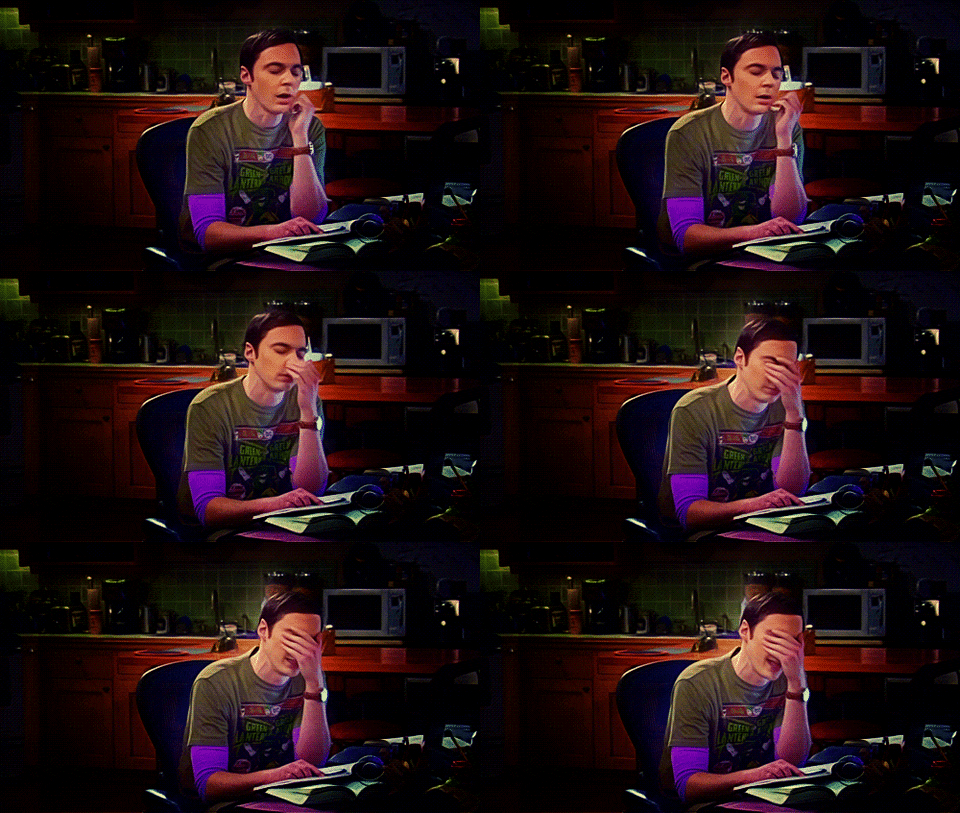
Researchers analysed The Big Bang Theory’s Sheldon Cooper along with 25 other characters.
Fictional portrayals of autistic people, such as The Big Bang Theory’s Sheldon Cooper, tend to portray characters in a stereotypical fashion, new research suggests.
Experts have found that the characters tend to be unrealistically aligned with textbook diagnostic criteria and do not accurately reflect the variety seen in real life.
The team from the Universities of Edinburgh and Oslo analysed Sheldon’s character along with a further 25 fictional personalities from TV and film.
They judged each character against the standard criteria that doctors use to diagnose autism, known as the Diagnostic and Statistical Manual of Mental Disorders or DSM-5.
In reality, this level of alignment with the diagnostic criteria is rare.
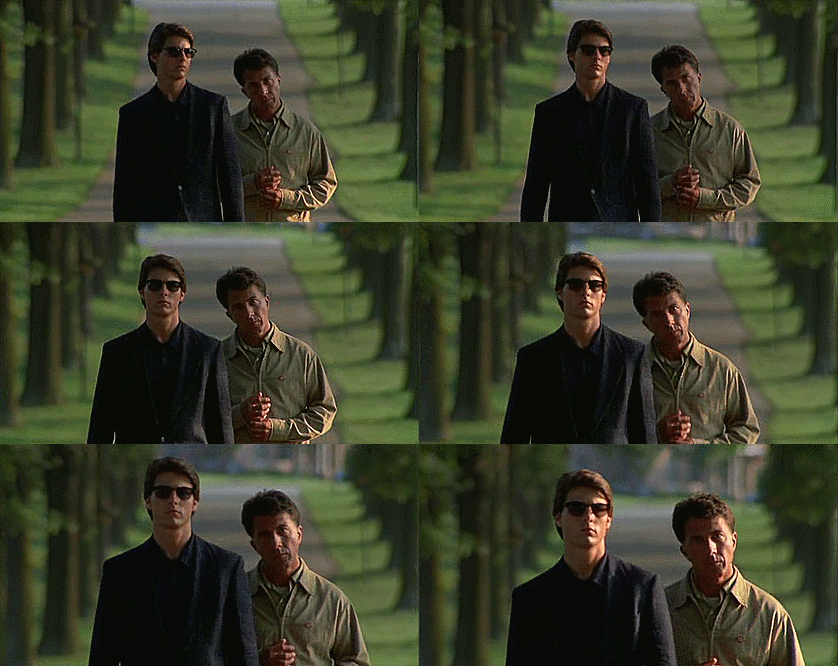
About half of those analysed are portrayed as being a genius or having some other exceptional skill, such as Dustin Hoffman’s character in the 1988 film Rain Man.
In reality, the researchers said, fewer than one in three people with autism will have such a skill.
Dr Sue Fletcher-Watson, of the University of Edinburgh’s Patrick Wild Centre, said: “To deepen public understanding of autism spectrum disorders, we need more autistic characters on our screens.
“These characters should reflect the diversity we see in real life, rather than being artificially built from a textbook diagnosis of somebody with autism.”
The study is published in the journal Psychiatry Research.