True Nobility: Peter Rhodes's book pays tribute to his war hero grandfather and great uncle
It was a spectacle being played out in almost every town and village in the country, but it left its impression on young John Willie Smith and his mate.
"There was great excitement, the band played throughout the village and then after about half an hour of hard blowing, in the evening there was a recruiting meeting in the church school room," the 19-year-old wrote in the opening paragraph of his war diary. "I and Joseph Smith fell victims that night."
On a gloomy mid-December day in 1914, the Duke of Wellington's Regiment brought a welcome dash of colour and excitement to the sleepy Yorkshire farming village of Lothersdale.
It was too much for the young lads to resist, and the following day they headed into town for their medicals. Joseph passed first time, but John Willie had a hand injury, and was told to come back the next day. On December 17, 1914, Private John William Smith was a fully-fledged member of 'The Dukes'.
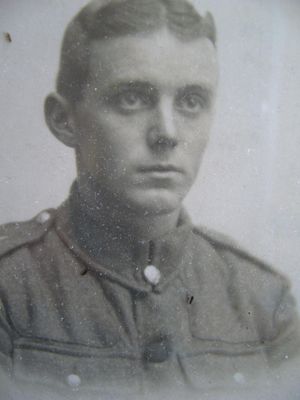
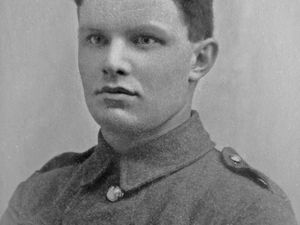
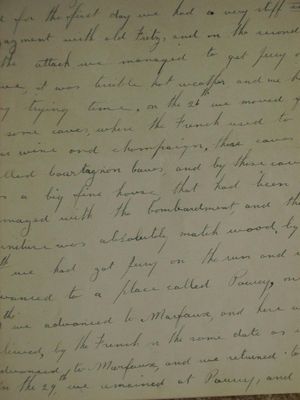
Private Smith was also the grandfather of the Star's Peter Rhodes, and his war diaries, which remained undiscovered until 1993, form the basis of the writer's final book Pure Nobility.
Unlike so many of the early recruits, who had been seduced by the glamour, excitement and marching bands, John Willie returned from battle alive and relatively unscathed, settling down to a happy life with his sweetheart Alice Laycock, and producing two children.
Not so lucky was his younger brother Alvin, who was desperate to follow in his brother's footsteps, but was deemed an 'essential worker' on the family farm. Frustrated at the derision often heaped on those in reserved occupations - it was commonplace for girls to taunt young men not in uniform by handing them white feathers - he jokingly asked his girlfriend Amy Teal if she would love him if he were a soldier.
"Well," teased the 18-year-old, in words that would haunt her for the rest of her life, "I might respect you a bit more." For Alvin, that was the final straw, and on January 26, 1916, just in time for Sir Douglas Haig's "Big Push", he followed his big brother by signing up for The Dukes. Eight months later he was dead, probably killed by his own side.
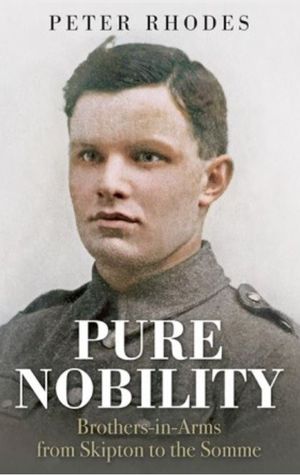
Rhodes's book describes how expendable young men like the Smith brothers were to the top brass like Haig in the killing fields of the Somme, where territorial gains were measures by the number of lives lost in making them.
"The total losses in this division are less than 1,000," the general wrote furiously in his diary, taking the view that they were not dying quickly enough in service of their country. To make matters worse, some of the troops in Alvin's division had failed to salute a visiting general, a misdemeanour addressed with an early-morning saluting drill.
Alvin's death came after British troops seized German trenches south of Thiepval. Three companies of Alvin's battalion took over the trenches, to prepare for another attack, supported by mortar fire from behind. But the battalion's mortars got the range wrong, and instead hit their own trenches, specifically a store of hand grenades. Alvin's body was never found.