Ludlow Town Council’s integrity again questioned over collapsed town walls saga
Questions around Ludlow Town Council’s (LTC) integrity have again been raised in respect of how much it has spent in relation to a collapsed section of the town walls.
A complaint was made to the Information Commissioner’s Office (ICO) after the complainant was not happy about how their request was handled.
They initially contacted the council on November 22, 2024 asking for information in relation to the wall’s collapse in 2013.
LTC is currently at loggerheads with the Parochial Church Council over who should be liable for the upkeep and maintanence of the wall by St Laurence’s Church. The council was asked to disclose several pieces of information including an unredacted copy of the structural engineer’s report and how much it cost, whether all councillors had been given access to it, and whether it had an insurance policy in place in February 2013 that might have covered the cost of repairing the wall.
Other questions the complainant wanted answered included whether any insurance had been made on any insurance policy, what insurance the council has on any other sections of the wall, whether all councillors had been given access to all legal advice received by LTC, and how much had been spent on legal fees.
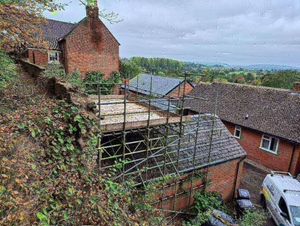
The complainant also requested to know how much LTC spent on renting scaffolding for the temporary buttress of the wall and renting storage space owned by third parties displaced by the collapsed wall, as well as the minutes of meetings or other documentation showing approval for the cost of the legal advice. The correspondence the council had with Shropshire Council (SC) concerning the maintenance reponsibility for the collapsed section of the wall was also requested.
LTC initially refused to disclose copies of all the correspondence it had with SC, applying section 36 of the Freedom of Information Act (FOIA) – prejudice to the effective conduct of public affairs.
The complainant contacted the ICO on March 6 to complain about the way their request for information had been handled. In its response to the commissioner, the council confirmed that no councillors were refused access to the report, and it agreed to provide the complainant with the total amount it had spent on legal expenses and on scaffolding.
Following the commissioner’s advice that the information was environmental, the council reconsidered the details it had previously withheld. It therefore applied Regulation 12(4)(e) of the Environmental Information Regulations (EIA) to withhold internal communications information from disclosure.
Given that the other matters were resolved, the commissioner considered whether the council was correct to apply that regulation, and whether it held any further information that was requested.
LTC argued that its relationship with SC is such that it is more akin to communications between internal departments than external communications between different parties. It clarified that SC has provided legal advice and assistance in respect of the collapsed wall, and the councils had acted collaboratively in partnership on the issue.
The commissioner’s guidance makes clear that, other than in limited circumstances which do not apply in this case, communications between two separate local authorities will not be internal communications for the purposes of Regulation 12(4)(e). Therefore, LTC was not correct to withold the information, and the commissioner has asked for it to be disclosed, subject to the appropriate redaction of personal data.
But he commissioner concluded that, on the balance of probabilities, no further information is held by LTC. The authority therefore had until November 22 disclose the withheld information.
The issue was brought up by Sebastian Bowen, a member of the public, during a town council meeting on December 1.
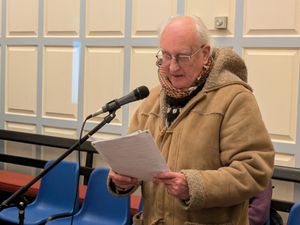
My Bowen, who is a former chairman of Herefordshire Council and lives in Ludford, said it is evident that LTC “went to great lengths to conceal, obfuscate and avoid answering some quite simple and straightforward questions about the amount of public money spent on legal fees, scaffolding and storage relating to the wall”.
“The Information Commissioner has done a public service by compelling the town council to reveal this information,” said Mr Bowen.
“It is scandalous that a council which has always professed to uphold high standards of transparency and accountability should have resorted to such tactics to try and bamboozle the public.”
According to Mr Bowen, the information now shows that LTC spent around £140,000 on legal advice related to the wall up to December 2024.
At a recent policy and finance committee, he asked how much it had spent since then, but has not received a reply.
“I would also like to know how much more rate payers’ money the town council intends to spend enriching lawyers,” said Mr Bowen.
“And why has £25,000 been spent on renting scaffolding worth a fraction of that sum – especially if, as the town council alleged last April – it did not consider itself responsible for maintaining the aforesaid wall?
“Why was £11,000 spent on storing unidentified goods for 10 years? At the same recent committee meeting that I attended, it was revealed that close to £100,000 of potential income for the town council was lost by leaving over £1.2 million of the town council’s reserves for three years in a low-yielding bank account, instead of investing it in a public sector investment fund yielding a 3 per cent higher rate? I hope the shareholders of Barclays Bank are suitably grateful to the ratepayers for this generous gift.
“But who was responsible for these astonishing acts of mismanagement? Why was this item put on the committee agenda ‘to note’ meaning that discussion was not permitted at the meeting? What is the council planning to do about this?”
LTC did not respond to Mr Bowen’s questions.