
Woman waits two days on hospital trolley in one of many 'dire' NHS experiences in county - MP
A patient waited for two days on a trolley for transfer from A&E to a county hospital ward, according to an MP.
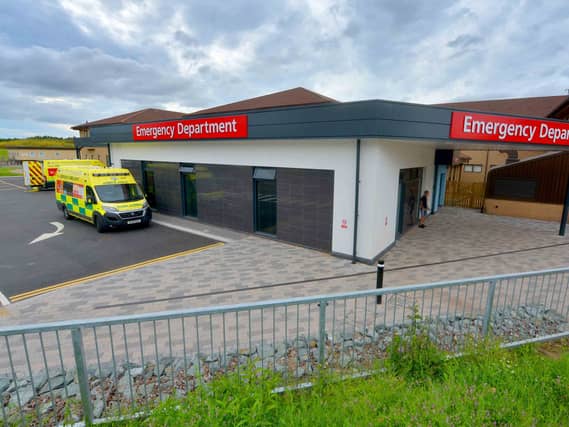


The case is just one raised by North Shropshire's Liberal Democrat MP, Helen Morgan, who this week highlighted concerns over the county's healthcare services with Health Minister, Helen Whatley.
Mrs Morgan said there were worries over ambulance response times, and also told the minister of a case where a patient had an 18-hour wait to see a doctor after contracting an infection while undergoing cancer treatment.
The MP said the situation remains ‘dire’ for too many.
Both Shrewsbury and Telford Hospital NHS Trust (SaTH) and West Midlands Ambulance Service (WMAS) said they were working to improve the situation.
Mrs Morgan cited statistics showing that the average ambulance response time for a heart attack or stroke – category two incidents – across the West Midlands was 43 minutes in January, with North Shropshire likely to be significantly worse performing than more urban areas.
Meanwhile half of patients attending A&E in Shropshire are waiting more than four hours despite a target of 95 per cent of patients being seen within that time-frame.
The latest NHS figures, from January, show Shrewsbury and Telford Hospital Trust is in the bottom three performing NHS trusts in the country for A&E waiting times.
Raising the issue in parliament Mrs Morgan said: "The average category two response time for West Midlands Ambulance Service was over 43 minutes in January.
"We know that the problems are worse in Shropshire, and that follows on from stories like a lady who waited for 18 hours before seeing a doctor having contracted an infection following radiation therapy for her cancer treatment.
"The situation in Shropshire doesn't seem to be improving as fast as you'd like it to. Can she give me an assessment of the steps that she's taken to resolve that problem?”
Responding the minister said: "Across the country, ambulance response times have come down by a third. We've worked very hard, particularly with areas that face greater challenges, including Shropshire, as she refers to. And I have spoken to leaders in the local health system about the ongoing challenges.
“One of the things we're doing now is learning lessons of what has worked over the last year and where we haven't made so much progress to make sure that we do better in areas like her's over the year ahead.”
Mrs Morgan said she was frequently being contacted by patients who had faced 'dire' experiences.
She said: "A 63-year old constituent called Pauline contacted my office on Friday afternoon to say that she was in the A&E department of Shrewsbury Hospital.
"She needed a scan of her heart, which she was told would not take place until Monday. She was on a trolley in a corridor which she said was dirty, and here she remained for two days, awaiting transfer to a ward.
"There were no call bells, and my constituent and the others in the same position were left alone and unattended for long periods of time. One patient left with a cannula still in his hand, and this went unnoticed by staff for two hours.
“Almost every week, I pick up a case or hear a story just like Pauline’s. Ministers need to understand that in Shropshire the situation continues to be dire. We need a serious programme focused on recruitment, investment, and providing community care to stop people getting to A&E in the first place – not more empty words.”
Both Shrewsbury and Telford Hospital NHS Trust (SaTH) and West Midlands Ambulance Service (WMAS) have responded to the comments.
SaTH apologised and said it was using "every available space" in its hospitals to treat patients.
WMAS said the pressure at hospitals was leading to ambulances being held for longer, making it harder for the service to free up crews to respond to fresh emergencies.
It said that progress was being made – comparing January's 34,933 lost hours of handover delays across the region and the 43 minute 34 second category two response time, to the 22,766 hours lost in February and the corresponding drop in the category two response time of 36 minutes and five seconds.
Sara Biffen, Acting Chief Operating Officer at SaTH, said: “We are truly sorry that our patients are experiencing long waiting times to be admitted to a ward. Our staff are doing all they can to support patients’ care, dignity and make them as comfortable as possible.
“We will always put our patients and their safety first. We are using every available space in the hospital and have invested in more nurses and other health professionals who are trained to care for patients whilst waiting for admission.
“Through our improvement programmes, we continue to trial new ways of working to support earlier discharges and improve flow in our hospitals. We are working hard with partners and together have invested in new services to release much-needed hospital beds. We are starting to see small but steady improvements, however, continue to experience extreme demand across the whole health and care system.
“We would like to thank our patients for their understanding and co-operation and our staff for their compassion and dedication during this extreme demand.”
A West Midlands Ambulance Service spokesman said: “There is a direct correlation between hospital handover delays and our ability to get to patients in the community quickly.
“In February, as hospital handover delays reduced so did the time it took to get to Category 2 patients.
“A huge amount of work has taken place, and continues to be worked on, in Shropshire and the rest of the region to find ways of reducing hospital handover delays. As can be seen from the figures above, as that work succeeds, response times improve rapidly.
“While there has been an improvement, there is still a long way to go before we get back to the level of delays we saw before the pandemic and the response times we had at that time.
“We will continue to work with our partners across health and social care to find ways of reducing the delays further so that our ambulances can get to patients in the community more quickly than they currently do.”
Comment Guidelines
Iconic Media encourages reader discussion on our stories. User feedback, insights and back-and-forth exchanges add a rich layer of context to reporting. Please review our Community Guidelines before commenting.