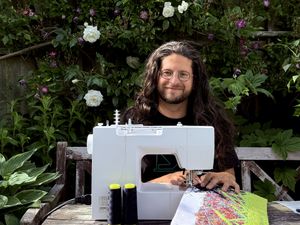
The time to prepare for winter’s chills: Wildlife artist Ben Waddams reveals that November is a time of transformation.
As the days shorten and the crisp air of November settles over Shropshire’s rolling hills and patchworked countryside, a quiet transformation unfolds in the county’s woodlands, farmland, and hedgerows.
For myself as a wildlife artist, it is far from a bleak time, but one of excitement, colour and variety, writes Ben Waddams.
This is a time of flux for much of the local wildlife, as resident species prepare for winter and migratory birds arrive to overwinter or pause during their long journeys.
But there are variations within these themes; for example some of our ‘resident’ birds embark on migrations and a few migrants are showing signs of staying on.
One of our true residents, the jackdaw, is amongst the smallest members of the crow family, yet perhaps one of the most intelligent and socially complex.
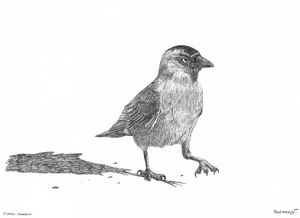
These charcoal-grey corvids are common year-round in Shropshire but become more visible in November as they gather in increasingly large communal roosts. These gatherings can number in the hundreds, sometimes thousands, often shared with rooks and crows.
One of the key visual signs of autumn is the sight of a chattering flock of jackdaws wheeling through the late afternoon sky, their tight formations and abrupt aerial turns hinting at a well-coordinated social structure.
Jackdaws are remarkably adaptable. They nest in a wide variety of locations from chimneys and ancient ruins, to church spires, tree hollows, and cliffs. They tend to prefer to remain close to human habitation and indeed can recognise our faces. Studies have shown that jackdaws then associate these with past experiences, positive or negative.
In November, as the breeding season is long past, the birds concentrate more on reinforcing their social bonds. Food becomes the dominant concern, and they often forage in fields and stubble left after harvest, searching for grains, invertebrates and indeed anything edible.
A distinctly seasonal visitor and a member of the thrush family, the redwing breeds in the forests of Scandinavia, Iceland, and parts of Russia.
By early to mid-November, as frosts sweep across the North, redwings arrive in great numbers in Shropshire and across the UK, their migration driven by the search for food and milder conditions.
They are easily identified by their creamy eye stripe and the reddish-orange flanks that flash as they fly, hence the name.
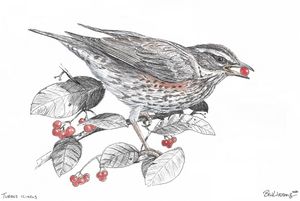
Redwings often arrive at night, their high-pitched ‘tsee’ calls audible to those familiar with them.
During daylight, they gather in flocks, sometimes mixed with fieldfares and other thrushes, feeding hungrily on berries, especially hawthorn and rowan.
Hedgerows, scrubby woodland margins, and orchards become vital larders for these birds. If November is mild, there can be a surplus of fruit, but an early cold snap may strip these resources quickly, forcing redwings into gardens in search of windfall apples or accessible suet feeders.
Less visible, but equally fascinating, is the woodcock. This elusive, nocturnal wader spends much of its life hidden in dense woodland and damp thickets, its cryptic brown and russet plumage rendering it almost invisible on the forest floor.
Woodcocks are resident in small numbers in Shropshire’s more wooded areas, such as the Clun and Wyre Forest, and indeed one is apt to stumble upon them in any wood if lucky.
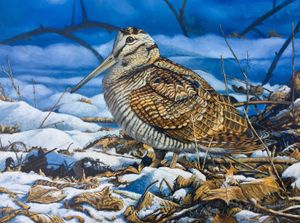
But November brings an influx of migrants from Scandinavia and eastern Europe. These migrants far outweigh our resident birds and the duel populations means sightings are much more likely from now until spring.
They are most active at dawn and dusk, and their sudden, explosive flight, zig-zagging low through the trees, can startle even the most seasoned walker.
Because of their secretive habits, woodcocks are often only noticed when flushed. In recent decades, concerns have grown over declining breeding populations in the UK, driven by habitat loss, increased predation, and climate change.
Protecting their natural habitat will be key to conserving our native numbers. In Shropshire, woodland edges and damp pastures near rivers and brooks can provide essential such sites.
For those who venture out into the chill of a November dawn or dusk, all the above and many more besides, offer fleeting but profound glimpses into the rhythms of the natural world, just as the land begins to brace itself for winter.
Ben Waddams is a wildlife artist. See his work in Callaghan’s Gallery, Shrewsbury