'Shropshire was the first industrial powerhouse in the world' - County's "iron men" who forged a revolution that changed our world for ever
New book tells the story of Shropshire pioneers who changed the world
"The iron men of that age had no awareness that they were altering the destiny of humankind," says Norman Pagett, from Telford, who tells the story of these key personalities in his new book "The Iron Men of Shropshire - How They Put The World To Work."
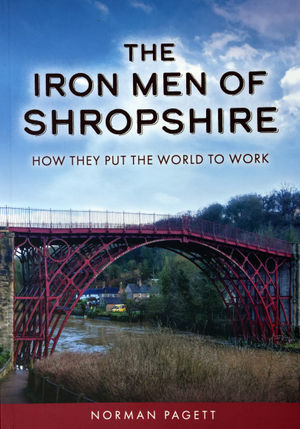
"The inspiration for this book came from the awareness that the great men of the Industrial Revolution, the Darby family, Thomas Telford, James Watt and others, all stood - literally - where I stand now, and watched their radical ideas come to reality, unaware they were changing the future of not only their world, but mine," said Mr Pagett, who has had a lifetime interest in Shropshire's industrial history.
"Shropshire became the first industrial powerhouse in the world."
And 89-year-old Mr Pagett says he witnessed the final days of this great revolution himself.
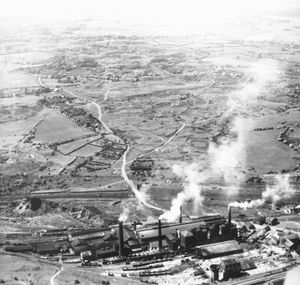
"I saw the last of the great furnaces, before their fires were finally extinguished. The great furnace I remember was Priorslee, before it closed.
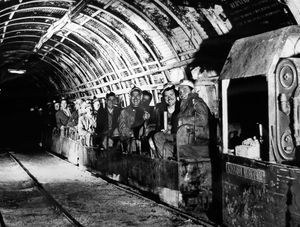
"The Granville colliery was the last of several hundred in the East Shropshire coalfield. As a young teenager I was taken a quarter of a mile down the Granville pit to see coal being hewn at the coalface. Health and safety rules were less stringent then!
"I count myself lucky to have seen it working underground and on the surface. My father and grandfather worked there.
"I was fortunate too, in having seen the winding at Granville worked by steam engines, before it switched to electric winding gear."
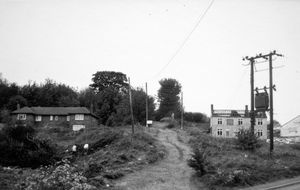
Born in St Georges, he grew up amid the relics of redundant industries, which sparked his curiosity and a desire to learn more. Today he lives in Ketley, where his garden runs down to one of the first canals built in Britain.
"It is long gone, but traces of it are still there to fire the imagination."
That 1788 canal was the work of William Reynolds, one of the personalities featured in the book, active in Shropshire in the 18th and early 19th centuries and all playing their part in the Industrial Revolution kickstarted by Abraham Darby I at Coalbrookdale in 1709 through using coke instead of charcoal to smelt iron.
Mr Pagett gives regular illustrated talks on various aspects of industrial history and became involved as a volunteer with archiving work at the Ironbridge Gorge Museum after retirement.
"That prompted me to delve more deeply into the lives of the people who drove the early years of the Industrial Revolution.
"Going through the museum's material, I became aware that it held the potential for a different kind of book on the Ironbridge story, told from the point of view of family dynasties, over the period of roughly 1700 to the 1830s, and giving a more detailed examination of what actually started the Industrial Revolution, and why it happened in Coalbrookdale."
He added: "Of all the 'ironmen,' for me, probably John Wilkinson was head and shoulders above the rest, though they all depended on the work of each other.
"Wilkinson invented the first machine tool, from which all modern machine tools derive. In that sense he established the working importance of cheap iron - and steel - in the way we use it today. Modern civilisation depends on that. Machine tools allow repeatable accuracy in millions of identical items. Basic iron casting can’t do that."
"The Iron Men of Shropshire" is published by Amberley Publishing and is softback, and costs £15.99.