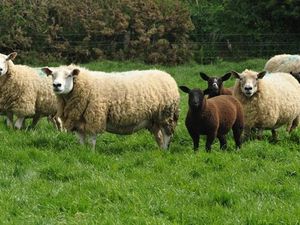
Shropshire farmers worried over newborn lambs as damp weather persists
Mild and wet weather could cause problems with the lambing season, with fears that up to 20 per cent of newborns could die because of infection.
After heavy rainfall and warmer temperatures, the atmosphere has become full of moisture, which makes ewes and lambs more prone to infections, especially in the first few days.
Oswestry farmer Malcolm Roberts has 200 ewes that are due to start lambing.
He says recent temperatures, which have been as high at 15C (59F) have caused concern.
He said: "It will be a concern. We very much depend on the elements. The wrong elements create a lot of work and anxiety.
"We could lose 20 per cent of them if an infection occurs and is not handled.
"The lambs will be very young and can suffer from lying in dirty water."
Mr Roberts, an NFU representative of Maesbury village, said issues can arise as the ewes cannot find dry land. Their bedding can become contaminated, and they can get infections such as salmonella and e.coli.
Mr Roberts said farmers must try to avoid problems through prevention, adding: "It all comes down to cleanliness."
He said ideal conditions for lambing are for temperatures to be around 6C (43F) and for it to be completely dry.
The current wet weather means extra work for farmers, repeatedly changing bedding and using a lot more fodder.
Mr Roberts added: "We can only do so much." Farmers are also being urged to think carefully before spreading manure in the wake of one of the wettest Decembers in living memory.
The unprecedented flooding has hampered both the storage and spreading of slurry for farmers and contractors.
As a result, many stores are full after fields were left waterlogged and therefore unsuitable for slurry spreading.
Rob Howells, NFU water quality adviser, said: "For many farmers and contractors conditions are not really suitable for spreading manure following weeks of wet weather.
"If they are getting close to storage capacity and have concerns and are unable to get a window to get out and spread, they really need to speak to the Environment Agency."