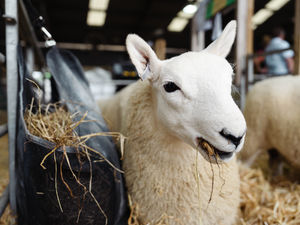
Great harvest followed by stores aplenty
"In a world of plenty . . ." Slight exaggeration – must be the remake of the Live Aid song playing in my mind, writes Clive C Roads.
However, along the same thought process we have approached winter with "stores a plenty," the result of a fabulous spring, summer, autumn harvest and maize harvest.
The barns are literally crammed full and with little sale value, what is a farmer to do? Feed it! But to what? Well then, buy it! Music to any auctioneers' ears.
Having seen the finished beef and lamb trades in somewhat of a backwater throughout the summer months – don't blame the meat men if retail demand is slow – then everything, as we approached autumn/winter, looked at the outset as if livestock prices would be on the back foot. However from the early and mainstream breeding ewe sales talk of "no spare money" may well have found many supporters but demand did not reflect that comment and prices were up on the year with North Country mule yearlings (the barometer in these parts) up on average £12 to £15 per head.
"Ah yes" was the comment "but wait for the store cattle sales in the autumn. People have increased sheep numbers and won't be wanting cattle". Yet to date store cattle sales have, in the main, been phenomenal with no shortage of buyers or competition and returns that will, hopefully, encourage suckler men to stick with their cows a little longer.
Many markets have been reporting steer averages over 230p/kg and heifers 210p/kg.
Is this "headless chicken" syndrome? I don't think so. As I write this article the lamb trade is steadily rising by a few pence per week, now averaging over 170p/kg. The beef trade approaching the festive season looked more acceptable and more positive longer term according to a recent Eblex outlook which states "with lower production, robust exports and lower imports, expected forecasts point to the prospect of stronger prices". Hopefully not so strong as to put off retail sales.
The pound continues to weaken, always a lift for agriculture and also better news for "cash crop" growers as the grain audits in both America and Russia show less tonnage of wheat than anticipated which had an immediate effect on our market pushing up feed wheat from around £105 to £115 per tonne.
If your yards are full and your barns are full – make sure your stock are full . . . of meat.
* Clive C Roads, partner, McCartneys LLP