The true cost of cheap food
Never has animal welfare been more in the spotlight in Britain than it is now.
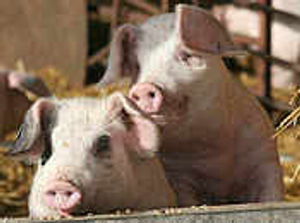
The appalling conditions uncovered at Bernard Matthews' farm in Suffolk sparked comment and fury from both the eminent and the ordinary.
Consumers are partly to blame. For years they have glibly filled their supermarket trolleys according to cost alone without realising that cheap food equals cheap production.
When that production involves animals, it should be no surprise to discover that turkeys are sharing a shed with 40,000 of their cousins.
So what happens now? Not everyone can afford to eat ethically reared animals and it is naive to think they can. However, a lot of people have the spending power to make a difference.
For those wanting meat from animals which have been professionally cared for in an environment their ancestors would have enjoyed, David Haighton is your man.
David decided to sell his 300-acre farm at Ellerdine 12 years ago and downsize. The 47 acres he owns at Muckleton are now alive with two dozen Highland cattle and 50 or so Gloucester Old Spot pigs.
To him, it's all about ethics.
"I'm a traditional man and I wanted to go back to the way things should be done," he says.
"Animals should have space to roam and the sort of environment they would have had centuries ago. The bigger the production the more that is compromised; that's why I'm perfectly happy with the numbers I have here on the farm."
The pigs seem to love it too, splashing around in the mud and taking refuge from the wind in the spacious pig arcs or in the straw-laden surroundings of the barn.
"There are plenty of methods employed by other farms which we have no part in," he continued.
"We don't carry out any castrations and we don't take out incisors when the pigs are born. The entire process is as natural as it can be and I want it to stay that way."
His dedication to the animals has resulted in his business, Muckleton Meats, gaining widespread acclaim.
David sells direct to restaurants, such as the Hundred House at Norton, and has a loyal private client base who keep coming back for more.
"There is a real clamour at the moment for food to be locally sourced and locally reared. But more than that, people want to know that the animal is being treated properly.
"We've all seen what has happened at Bernard Matthews. The trouble is that eating has now become a class issue, in that people on the breadline buy according to price.
"But the market for people who can afford to have a food conscience is growing and growing. For the last 20 years we have got used to eating cheap food. That simply has to change for the welfare of our animals as well as ourselves."
David sells pork and beef in all quantities, so if a customer just wants one chop then they can have it.
"I've learned over the years that while the big orders make life easier, the small orders are just as important. Sometimes people don't want to buy 20 chops at a time. By catering for everyone it guarantees they come back for more."
For more information, visit David's website at www.muckletonmeats.com
By Rural Affairs Editor Nathan Rous