The exact date winter ends and when the clocks will go forward
Watch the Met Office week ahead forecast, as an unsettled start to February is expected.
The date of the last day of winter is different in the astronomical calendar compared to the meteorological calendar.
Astronomical winter
The Met Office writes that the astronomical calendar determines the seasons due to the 23.5 degrees of tilt of the Earth's rotational axis in relation to its orbit around the Sun.
Both Equinoxes and Solstices are related to the Earth's orbit around the Sun. However, the dates of the Equinox and Solstice aren't fixed due to the Earth's elliptical orbit of the Sun.
This year, astronomical winter began on December 21 2025 and will end on March 20 2026.
Meteorological winter
The meteorological seasons are four periods of the year made up of three months each.
The seasons are split to coincide with the Gregorian calendar, making it easier for meteorological observing and forecasting to compare seasonal and monthly statistics.
In the meteorological calendar, the first day of winter is always December 1, with the season ending on February 28 (or 29 during a Leap Year).
When do the clocks change?
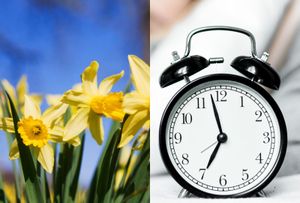
The clocks will jump forward an hour at 1:00 on March 29 2026. The clocks moving forward unfortunately means that we lose an hour in bed.