Revamp of Shrewsbury's grandfather of skyscrapers' nets nearly £50 million in economic benefit and more than 60 jobs, report says
A report into the regeneration of the Flaxmill Maltings in Shrewsbury shows that the local economy has benefited by tens of millions of pounds and that scores of jobs have been created
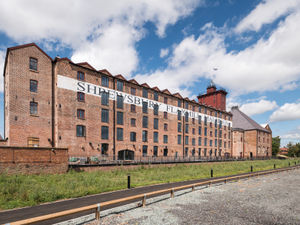
The regeneration of Shrewsbury’s “grandfather of skyscrapers” has yielded almost £50 million in economic benefit and created more than 60 jobs, a report has said.
A new independent evaluation report into the Flaxmill Maltings has revealed the economic, social and environmental benefits of Historic England’s £32 million transformation of the derelict mill into a thriving cultural and commercial centre.
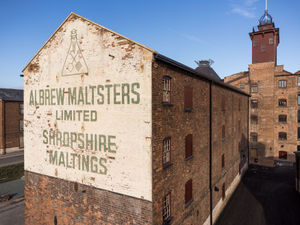
The Flaxmill is the world’s first iron-framed building. Originally a flax mill and then a maltings, the site fell derelict after closing in 1987.
After nearly two decades of unsuccessful attempts to restore it, Historic England stepped in as the “owner of last resort” in 2005.
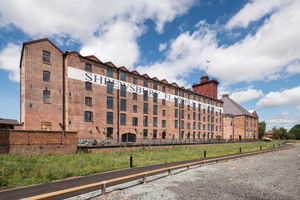
Thanks to £20.7 million from The National Lottery Heritage Fund, funding from Historic England, and support from partners, the Grade I listed Main Mill and Grade II Malting Kiln were transformed into offices, cultural spaces and a community café .
The Flaxmill opened to the public on September 8, 2022 - the same day Queen Elizabeth died.
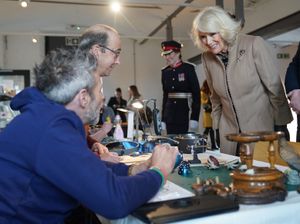
Around 18 months later, Queen Camilla made a Royal visit to the site, where she made people from charity and volunteers groups, and had a go at wreath making.
The evaluation by AMION Consulting reveals the total economic benefits of the regeneration project are £49.6 million against public sector costs of £36.4 million, creating £13.1 million in net value.
For every £1 spent the project created £1.36 worth of benefits such as jobs, tourism and heritage preservation.
The restoration has created 930 square metres of cultural space and 2,259 square metres of commercial office accommodation.
This has led to 62 full-time equivalent jobs, with the potential for this to increase when additional floors are leased to businesses.
Amion Consulting found the project achieved exemplary conservation standards, earning 18 national and international awards including RIBA and Europa Nostra recognition.
The Main Mill was successfully removed from the Heritage at Risk register.
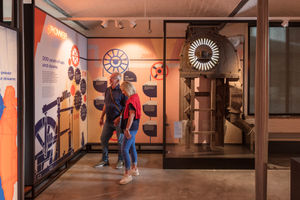
Visitor numbers reached 18,340 in-person visits over the past year.
Including visitors to the Turned Wood Cafe, which closed towards the end of last year, total footfall approaches 56,000 annually, contributing to local economic activity and community engagement.
The evaluation also reveals social benefits including reduced crime and improved community pride.
Duncan Wilson, former chief executive of Historic England, said: “The success of Shrewsbury Flaxmill Maltings provides a valuable model for future heritage-led regeneration projects across England, showing how strategic investment in historic buildings can deliver lasting economic and social benefits for local communities.”
Eilish McGuinness, chief executive, The National Lottery Heritage Fund, said: "I am thrilled our support for the redevelopment of Shrewsbury Flaxmill Maltings with a grant of £20.7m, made possible thanks to National Lottery players, has been so successful. This has been an excellent heritage project for us as a showcase for how historic buildings can be reused and revitalised, supporting the local community and economy through shared spaces and jobs. It is a brilliant example of our vision for heritage to be valued, cared for and sustained for everyone, now and in the future.
“I would also like to thank Historic England and The Friends of Flaxmill Maltings for their tireless efforts in bringing this important heritage site back to life.”
For further information on visiting Shrewsbury Flaxmill Maltings or booking a guided tour, go to english-heritage.org.uk/visit/places/shrewsbury-flaxmill-maltings/