Owen Paterson hoping to grow rural economy
The countryside must not be "preserved in aspic", Environment Secretary Owen Paterson has said.
The North Shropshire MP said his desire was to improve, rather than just protect, the environment.
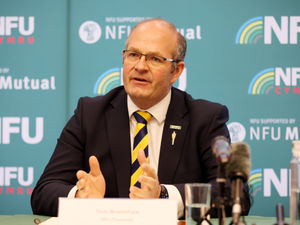
He was speaking yesterday at the Policy Exchange – a think-tank that debates a wide range of issues.
Since taking up the post of environment minister Mr Paterson has courted controversy with his views on issues from the badger cull and TB in cattle to genetically modified crops.
He said he had four key priorities, to grow the rural economy, improve the environment, and safeguard both plant and animal health.
"My desire is to improve, rather than just protect, the environment," he said. "I have lived in the countryside all my life. I have always been immersed in its activities. I have seen for myself the impact each and every one of us has on the environment."
"That's why I believe that we need to leave our natural environment in a better condition than we inherited it."
"The countryside is not something that can be preserved in aspic nor would we wish it to be, we must not be afraid to intervene."
Mr Paterson said that the natural environment is under pressure.
"In the UK populations of farmland birds have declined by 50 per cent and woodland birds by 17 per cent since the 1970s but it is not all doom and gloom.
"While many species have declined, others have increased significantly in range or abundance in the last two to three decades. These include common and widespread species, as well as some formerly declining species that are conservation priorities, like the red kite, otter or large blue butterfly."
"I believe that by working with the grain of the countryside and harnessing the enthusiasm that millions of people have for nature, be it on their farms or in their back gardens, we can make real progress in boosting our wildlife and biodiversity."
The minster said the water industry was a prime example improving the environment while growing the economy. "The privatisation of our water industry in the late 1980s has secured more than £116 billion of private investment – investment that would never have come from the Exchequer."