Why Much Wenlock is now a global draw
So this is what they mean by 'the Much Wenlock Olympic effect' . . . a 42-strong coach party of hardcore Townswomen's Guild members from Essex rocks up at the town's visitor centre, and Brenda from Romford speaks for the rest of the world.
So this is what they mean by 'the Much Wenlock Olympic effect' . . . a 42-strong coach party of hardcore Townswomen's Guild members from Essex rocks up at the town's visitor centre, and Brenda from Romford speaks for the rest of the world.
"I've never been to Wenlock before," says guild secretary Brenda Smith as the party wanders around the starting point of any visit to the town, Much Wenlock Museum and Visitor Information Centre.
"I knew that the tree which went to the Stratford Olympic Park came from here, and I thought I'd like to see it. The Olympic Games is being held on our doorstep and we wanted to learn about where it all started."
A coach-load of curiosity is an increasingly common occurrence right now at Wenlock's information centre, which has seen visitor numbers double in the countdown to London 2012.
In an economy boost worth an estimated £1.2 million to the market town, the world is coming to Wenlock; and most visitors from further than Essex.
Suddenly countries around the globe who have never heard of the small but perfectly formed Shropshire market town are getting to hear all about the town which through its most famous son, Dr William Brookes, inspired the modern day Olympic Games through his meeting here with Frenchman Baron Pierre de Coubertin.
In the countdown to the opening ceremony of London 2012, TV crews from China and Japan, Poland have descended on the town to spread word on Wenlock's part in the greatest show on earth.
Chinese TV channel CCTV filmed a few days ago in Much Wenlock and the report, which will be shown at the start of the coverage of the Olympic Games, will be seen by half the population.
That, staggeringly, is well over half a billion people.
The Wall Street Journal has been; Australian TV crews have been; the, er, Oldham Chronicle has been. Throw in the power of Twitter and the internet and if Wenlock wasn't on the map before, it certainly is now.
At the heart of all this global activity is the Tourist Information Centre and Museum, in the centre of town.
When I visit as a tourist so my eight-year-old daughter can do the Olympian Trail as part of her homework, I find myself joined on the walk by visitors from America, Japan and a French family.
There is a steady stream of new visitors. Soon after the arrival of the 'Essex girls', a taxi pulls up outside The Raven Hotel and out tumbles a French TV crew.
Catherine Jentile, presenter of France's premier television channel TF1, gives her first impressions: "It's very beautiful, and the story – how Baron Pierre de Coubertin met Mr Brookes – is like a dream. It's a good French-English story for once! No fights, no problems!"
Opening time at the visitor centre, and there is a queue to get in. Once inside, visitors learn all about the town's connections with the Games, through displays and artefacts which are part of the museum and visitor centre's £600,000 revamp.
Since opening in January, visitor numbers to the end of June reached almost 22,000. Figures for the whole year, prior to closure for refurbishment, were 24,000.
Emma-Kate Lanyon, a Shropshire Council team leader, says: "At weekends we are typically getting between 200 and 300 visitors. In July 2010, before redevelopment, we would get around 100, and it's definitely the result of the Olympic effect."
She adds: "In the past, most overseas visitors were coming for walking experiences, to enjoy the Shropshire countryside, but I think the walking experience is taking second spot this year – but there's always a reason to come back."
It's good news for the local economy. Hotels and guest houses are seeing the benefits, their guest books packed with complimentary remarks about their stay in Wenlock.
Kirk Heywood, landlord of the Raven Hotel, the very place where Penny Brookes staged a historic meeting with Coubertin, says: "We have had visitors from Rio to Auckland and from Mexico City to Shanghai. A Japanese journalist came, and he brought his girlfriend and made a weekend of it."
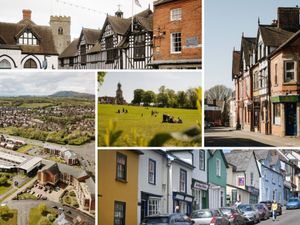
"What nothing prepares people for is that when they come to Wenlock they suddenly see this lovely town, a piece of Little England. It has changed very little really and they can clearly see what it would have been like when Penny Brookes was here."
Back at the information centre, assistant Robert Elliott helps people to Olympian Trail maps and assists with visitor enquires.
He says: "We had a group of people who came from Japan and did not have a clue about the Olympic connections, but they became very interested and even did the Olympian Trail."
The visitors keep coming. One minute it's eager Japanese tourists, the next Robert is dealing with 145 pupils from a Birmingham girls' school eager to learn more about the Olympic connections for a school project.
Emma-Kate Lanyon adds: "It is a fantastic opportunity for Shropshire to sell itself.
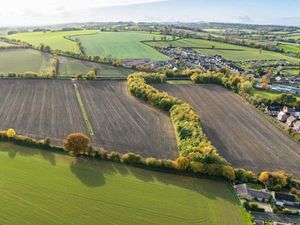
"Tourism is one of the largest economy drivers for the county. People usually come for heritage and the countryside and if we can build on that to sell other great stories, such as its geology, Darwin, and its part in the Industrial Revolution, then we hope that more people will come."
Tim King, of Shropshire Tourism, finds himself being interviewed in Wenlock for French television – but spreading the word is something he's more than happy to do.
He says: "The museum is up 243 per cent to the end of June compared to 2010 – if that rate continues through the year, the total spending by visitors to the museum that is spent in the town will be £1.2 million.
"When one of the mascots was unveiled as Wenlock it was the first time in Olympic Games history that a mascot has had a back story. People would have asked 'why is it called Wenlock'?"
They will probably know now.