Call for return to local patient care
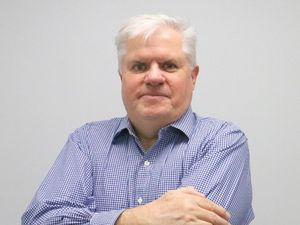
Former Shropshire hospital boss David Sandbach has called for the opening of more than 100 community-based NHS beds across the county. Former Shropshire hospital boss David Sandbach has called for the opening of more than 100 community-based NHS beds across the county. It is one of three core policy recommendations he has put forward in a challenge to official thinking on the way health care should be developed in Shropshire over the next 10 years, with the ultimate aim of providing all acute services on one site, possibly in a new hospital. Mr Sandbach was chief executive of the Princess Royal Hospital, Telford, before its merger with the Royal Shrewsbury in 2003 to form a single trust. He is calling on the trust, along with the Orthopaedic Hospital at Oswestry, to relocate most outpatient facilities to the centres of Shrewsbury and Telford. Read the full story in the Shropshire Star.
Former Shropshire hospital boss David Sandbach has called for the opening of more than 100 community-based NHS beds across the county.
It is one of three core policy recommendations he has put forward in a challenge to official thinking on the way health care should be developed in Shropshire over the next 10 years, with the ultimate aim of providing all acute services on one site, possibly in a new hospital.
Mr Sandbach was chief executive of the Princess Royal Hospital, Telford, before its merger with the Royal Shrewsbury in 2003 to form a single trust.
He is calling on the trust, along with the Orthopaedic Hospital at Oswestry, to relocate most outpatient facilities to the centres of Shrewsbury and Telford.
Mr Sandbach also proposes concentrating inpatient, general and orthopaedic surgical services next to the Princess Royal A&E department as an interim measure prior to a decision on the full centralisation of all hospital services.
He says it is time to reinvent the community inpatient care service and for the NHS to admit that the number of beds lost through the closure of the county's cottage hospitals in the 1980s was too many.
There is a need to open 40 of these intermediary beds in both Shrewsbury and Telford, with smallish numbers (a minimum of 10 per locality) near to the larger communities around Shropshire, he says.
This need is driven by increases in the elderly population requiring inpatient care services which are non-acute in style, safe, and near as possible to family.
Some infrastructure already exists within the independent nursing home sector and could be tapped into very quickly, he feels.
Mr Sandbach says the community beds would provide the level of clinical care necessary to avoid people having to be admitted to hospital as an emergency/urgent case.
"These beds would also provide a safe place for people to recuperate after serious episodes of acute medical illness or surgery, thereby helping keep average lengths of stay in acute hospital to a minimum," he adds.
Mr Sandbach says the community hospital unit currently at the Robert Jones and Agnes Hunt Hospital, should be put back into central Oswestry within the next four years.
He cites as a good example of what could be achieved, a project under construction in Malvern, using a brownfield site. The estimated building cost is £13.7 million.
"The residents of the Oswestry area could effectively expect to see a return of the former Oswestry and District Community Hospital with contemporary facilities and technologies," claims Mr Sandbach.
Outside of the existing community hospital network - that is Whitchurch, Bridgnorth, Ludlow, Bishop's Castle - new NHS community beds could be co-located alongside existing nursing homes in both main urban areas as well as in the smaller towns and villages.
Turning to the issue of outpatient facilities,Mr Sandbach says access to hospitals is always an issue, especially for people who do not have their own transport.
"There are lots of clinics, diagnostic and therapeutic services, which do not need to occur on a hospital site," he adds.
Outpatient facilities provided by the Shrewsbury and Telford Hospital Trust and the Robert Jones and Agnes Hunt Hospital should be moved to central locations as close as possible to the bus stations in Shrewsbury and Telford, says Mr Sandbach.
The primary care and hospital trusts should make contact with the local authorities and "cut a deal" with developers to build and lease buildings in which services can be provided.
Regarding his third policy recommendation of centralising general and orthopaedic surgery at Telford, Mr Sandbach says such a move would lead to improved access to better clinical care and emergency services, reduce the time in moving emergency cases to specialist treatment, make more efficient use of staff resources, reduce the amount of cash used to pay for buildings and "background" running costs, and secure economies of scale.
It would also make good use of existing buildings, would not compromise any future plans for a single hospital site and would show "proper stewardship and sparing use" of capital resources.
It has been proposed, in an option favoured by the health trusts, to locate all inpatient children's services at the Royal Shrewsbury with only paediatric assessment facilities left at the Princess Royal.
But Mr Sandbach claims the building that would be used at Shrewsbury is "clapped out" and would cost £18 million to refurbish.
It should be replaced with a new maternity building as soon as possible.
He points to a project in Northern Ireland where a new consultant obstetric unit has been built for £13 million and is of a size which would meet the needs of Shropshire and Telford & Wrekin.
Shropshire's two primary care trusts are meeting this month to decide what options for developing health care should go out to public consultation.