What's it like to own a racehorse?
On the eve of the Grand National, Ben Bentley discovers you don't have to be mega-rich to have a share in a racehorse.
 On the eve of the Grand National, Ben Bentley discovers you don't have to be mega-rich to have a share in a racehorse.
Barry Wormstone doesn't look like your regular mega-rich racehorse owner. Far from it.
The 70-year-old is a lifelong fan of the gee-gees and lives in a flat above a betting shop in Oakengates.
Yet his love of the sport has led to him buying stakes in racehorses, and with Champagne Prince - his most successful animal in which he had a one-twelfth share - he won the Zetland Gold Cup at Redcar in 1997.
"I used to do two jobs to keep him going, cleaning the bakery at Tesco and doing every other bit of work I could," he says.
"If you are interested in horses you can go where the rich men go, but you don't have to be rich. I was interested in racing horses and it was the nearest I could go to owning a race horse. You can do it easily and it's a good thing - I've been all round the country watching horses."
Barry is living proof that horseracing is no longer exclusively a rich man's sport, the domain of flash cars and oil baron levels of wealth. Horseracing is galloping into a new era, with many Shropshire race fans themselves buying shares in horses and becoming the owner, or part-owner, of their own horse.
For as little as the price of a pair of tickets to a Premiership football match, fans can buy a stake in a bit of a horse - and even if it's the hind legs of a leased donkey the investment adds a whole new dimension to race-going.
Last month, 165 members of the Million In Mind partnership - many of whom live in Shropshire and have stakes in the group founded by Shropshire bloodstock agents David Minton and Anthony Bromley - found themselves in the winner's enclosure when Tricky Trickster won the National Hunt Chase Challenge Cup
And Mike Foster, manager of Deva Racing at footballer Michael Owen's Manor House Stables in Malpas near Whitchurch, has held stakes in horses for 12 years.
"There's no feeling quite like it," he says. "I used to enjoy going to the races but going and having a winner is like scoring the winning goal in a football match.
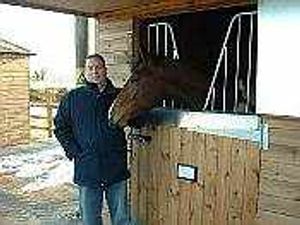
Historically, the perception has been that racehorse owners would own the whole horse but would rarely show up on the gallops or even at races to see their animal develop.
"But now most people feel part of the progress, seeing them from youngsters to hopefully winning a race," says Mike.
It is, he says, a bit like watching a child go through school and seeing them develop, and the stake system puts a rich man's pleasure within reach of the common man.
He adds: "We operate fixed cost ownership - the owners pay a twelfth of the purchase cost (of the horse) and then a fixed £225 per month to cover all other fees. So in a credit crunch owners can budget without any surprising extra bills like vet's bills.
"Co-ownership is a way of becoming involved in horse racing without the huge outlay and still have the potential of owning a winning horse, which can be profitable."
As a co-owner himself Mike recalls good horses and bad - and both gave him pleasure in pretty equal measures. So whether it was "a lovely horse that did not know how to run" or the winner of the Scottish Spring Cup that his horse, Aegean Dancer, won in 2007 his interest was piqued.
These days you can even gift someone a share in a gee-gee in the same way you can buy them a half-day falconry experience or a plot of land on the moon.
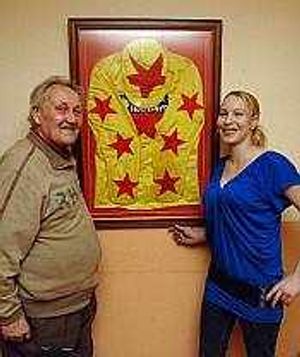
And although there might be a minimum number of shares required, with stakes starting from as little as £80 you could be up and running within minutes.
Retired race fan Mike Fothergill, 65, from Caynham near Ludlow, is part of a syndicate run by Ascot-based Racegoers' Club, in which around 200 people own shares in a single horse.
Mike came to have stakes in racehorses "by accident", after the club fly-posted his car. The beauty of the Racegoers' Club syndicate is that its horses are not bought but are leased, meaning syndicate members can have access to a better horse for less money.
Says Mike: "You don't need to be rich. I pay more for a Shrewsbury Town season ticket and get a damned sight more pleasure from it! We pay £160 for a share in a horse for year and you can go and see round the stables and get introduced to the rider. It's very easy - you've got chance to be the owner for the day and go in the paddock. You get your ticket half price and it's great fun.
"It's a very good chance for people who don't go racing to go along and get into the sport."
In terms of chances of having a winning animal, essentially Mike says there's no difference between owning a £20,000 a year horse outright or being one of 200 owners of a single horse as part of a syndicate.
He has shares in four horses and his current hope is a two-year-old colt called Epic which will start on the flat in spring.
Says Mike: "We won't run until May but we are hoping he might end up at Ascot and we'll be there in our top hats.
"Failing that it'll be October in Wolverhampton."