Trump threatens Canada with 50% tariff on aircraft sold in US
The move expands Washington’s trade war with America’s northern neighbour.
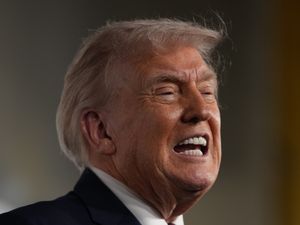
Donald Trump has threatened Canada with a 50% tariff on any aircraft sold in the US.
It is the latest salvo in the US president’s trade war with America’s northern neighbour as his feud with Canadian prime minister Mark Carney expands.
Mr Trump’s threat, posted on social media, came after he threatened over the weekend to impose a 100% tariff on goods imported from Canada if it goes forward with a planned trade deal with China.
But Mr Trump’s threat did not come with any details about when he would impose the import taxes, as Canada has already struck a deal.
In Mr Trump’s latest threat, the Republican president said he was retaliating against Canada for refusing to certify jets from Savannah, Georgia-based Gulfstream Aerospace.
He said the US, in return, would decertify all Canadian aircraft, including planes from its largest aircraft maker, Bombardier.
Mr Trump said in his post: “If, for any reason, this situation is not immediately corrected, I am going to charge Canada a 50% Tariff on any and all Aircraft sold into the United States of America.”
He said he is “hereby decertifying” the Bombardier Global Express business jets. There are 150 Global Express aircraft in service registered in the US, under 115 operators, according to Cirium, the aviation analytics company.
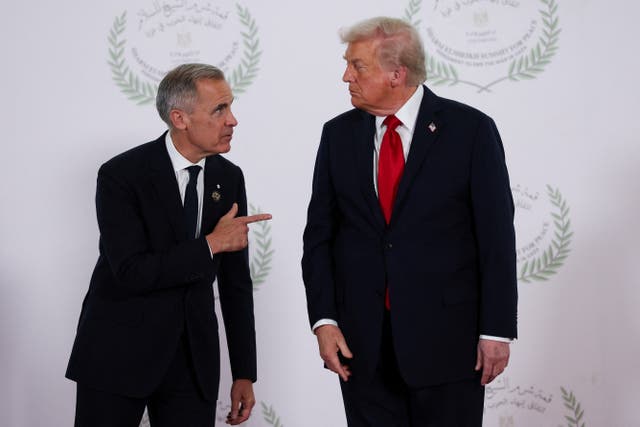
Bombardier and Gulfstream are head-to-head rivals, with the Global series battling for market share against Gulfstream’s latest models.
Bombardier said in a statement that it has taken note of the US president’s post and is in contact with the Canadian government.
The Montreal-based company said its aircraft are fully certified to US Federal Aviation Administration standards and it is expanding American operations.
“Thousands of private and civilian jets built in Canada fly in the US every day. We hope this is quickly resolved to avoid a significant impact to air traffic and the flying public,” the company said.
John Gradek, who teaches aviation management at McGill University, said certification is about safety and it would be unprecedented to decertify for trade reasons.
“Certification is not trivial. It is a very important step in getting planes to operate safely,” Mr Gradek said. “Somebody is not picking on the Gulfstream. Decertification for trade reasons does not happen.”
He said many Gulfstreams have been certified for years in Canada.
“This is really a smokescreen that’s basically throwing up another red flag in the face of Mr Carney,” Mr Gradek said. “This is taking it to the extreme. This is a new salvo in the trade war.”
The US Commerce Department previously put duties on a Bombardier commercial passenger jet in 2017 during the first Trump administration, charging that the Canadian company was selling the planes in America below cost.
The US said then that Bombardier used unfair government subsidies to sell jets at artificially low prices.
The US International Trade Commission in Washington later ruled that Bombardier did not injure American industry.
Bombardier has since concentrated on the business and private jet market in its Global and Challenger families of planes.
Both are popular with individual owners and businesses as well as fractional jet companies like NetJets and Flexjet. If Mr Trump cuts off the US market it would be a major blow to the Quebec company.
US treasury secretary Scott Bessent warned Mr Carney on Wednesday that his recent public comments against US trade policy could backfire going into the formal review of the US-Mexico-Canada Agreement, the trade deal that protects Canada from the heaviest impacts of Mr Trump’s tariffs.
Mr Carney rejected Mr Bessent’s contention that he had aggressively walked back his comments at the World Economic Forum during a phone call with Mr Trump on Monday.
The Canadian leader said he told Mr Trump that he meant what he said in his speech at Davos, and told him Canada plans to diversify away from the United States with a dozen new trade deals.
In Davos at the World Economic Forum last week, Mr Carney condemned economic coercion by great powers on smaller countries, without mentioning Mr Trump by name.
The Canadian prime minister received widespread praise and attention for his remarks, upstaging Mr Trump at the gathering.