Venezuela’s acting leader vows to continue releasing prisoners
President Donald Trump has enlisted Delcy Rodriguez to help secure US control over oil sales.
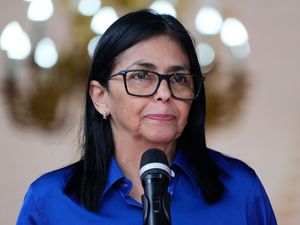
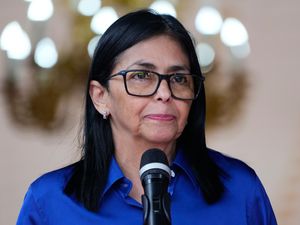
Venezuela’s acting president Delcy Rodriguez has signalled that the country would continue releasing prisoners detained under former president Nicolas Maduro in what she described as “a new political moment” since his ousting by the United States earlier this month.
It appeared to be an understatement for the former Maduro loyalist now tasked with placating an unpredictable American president who says he will “run” Venezuela, while also consolidating power in a government that long has seethed against US meddling.
Ms Rodriguez opened her first press briefing since Maduro’s arrest by US forces with a conciliatory tone.
Addressing journalists from a red carpet at the presidential palace, she offered assurances that the process of releasing detainees – a move reportedly made at the behest of the Trump administration – “has not yet concluded”.

A Venezuelan human rights organisation estimates about 800 political prisoners are still being detained.
The 56-year-old lawyer and political veteran pitched a “Venezuela that opens itself to a new political moment, that allows for… political and ideological diversity”.
President Donald Trump said on Wednesday he held his first conversation with Ms Rodriguez since Maduro’s ousting.
“We had a call a long call. We discussed a lot of things,” Mr Trump said during a press briefing. “And I think we’re getting along very well with Venezuela.”
Unlike past speeches directed at her domestic audience that echoed Maduro’s anti-imperialist rhetoric, Ms Rodriguez did not mention the US – or the dizzying pace at which Venezuela-US relations were evolving.
But she criticised organisations that advocate on behalf of prisoners’ rights. She pledged “strict” enforcement of the law and credited Maduro with starting the prisoner releases as a signal that her government meant no wholesale break from the past.

“Crimes related to the constitutional order are being evaluated,” she said, in apparent reference to detainees held on what human rights groups say are politically motivated charges. “Messages of hatred, intolerance, acts of violence will not be permitted.”
Flanked by her brother and National Assembly president Jorge Rodriguez, as well as hard-line interior minister Diosdado Cabello, she took no questions. Mr Cabello, she said, was co-ordinating the prisoner releases, which have drawn criticism for being too slow and secretive.
Despite sanctioning her for human rights violations during his first term, President Trump has enlisted Ms Rodriguez to help secure US control over Venezuela’s oil sales.
To ensure the former Maduro loyalist does his bidding, he threatened Ms Rodriguez with a “situation probably worse than Maduro”, who faces federal drug-trafficking charges from a Brooklyn jail.
In endorsing Ms Rodriguez, who has served as Maduro’s vice president since 2018, Mr Trump has sidelined Maria Corina Machado, the leader of Venezuela’s opposition who won a Nobel Peace Prize last year for her campaign to restore the nation’s democracy.
Ms Machado is scheduled to meet Mr Trump at the White House on Thursday.
After a lengthy career running Venezuela’s feared intelligence service, managing its crucial oil industry and representing the revolution started by the late Hugo Chavez on the world stage, Ms Rodríguez now walks a tightrope, navigating pressures from both Washington and her hard-line colleagues who hold sway over the security forces.