France’s largest wildfire in decades leaves trail of devastation
The blaze, which tore through the Corbieres massif in the Aude region, remains uncontained despite the deployment of more than 2,100 firefighters.
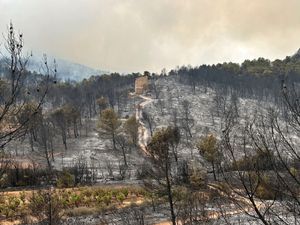
France’s largest wildfire in decades is burning at a slower pace on Thursday after covering more than 160 square kilometres (62 square miles) in the south of the country and claiming one life, local authorities said.
The blaze, which started on Tuesday and tore through the Corbieres massif in the Aude region, has remained uncontained despite the deployment of more than 2,100 firefighters and several water bomber aircraft.
The fire’s rapid spread was fuelled by weeks of hot, dry weather, though cooler temperatures and calmer winds overnight helped slightly ease the situation.
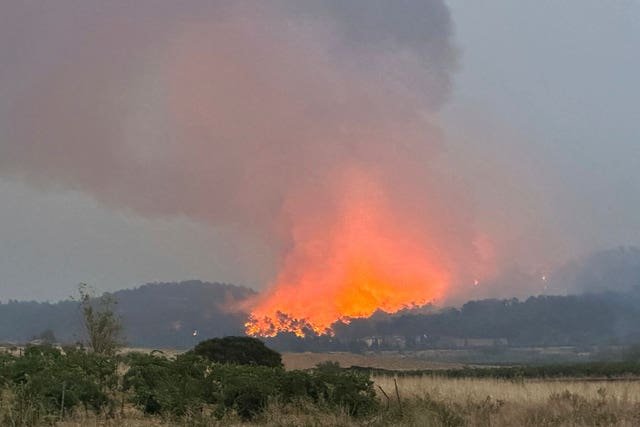
Although the wind picked up later, firefighters remained hopeful they could contain the fire by the end of Thursday.
“We have a fire that has not yet been contained and is no longer spreading,” said region administrator Christian Pouget. “The battle is not over yet. The fire could reignite in a more significant way. We still have a few days before we can say that the fire will be completely extinguished.”
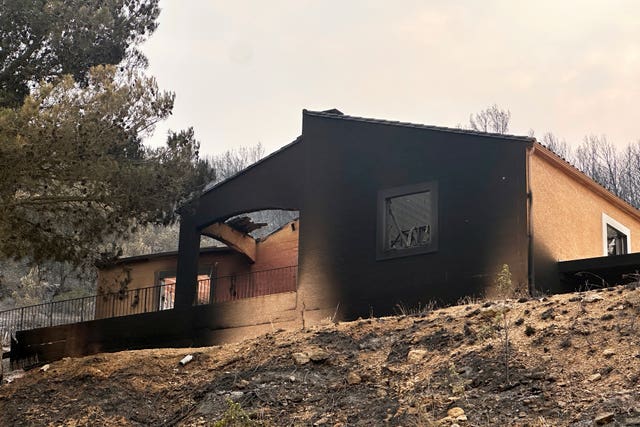
The fire has swept through 15 communes in the Corbieres massif, destroying or damaging at least 36 homes, with a full damage assessment still under way.
One person died in their home, and at least 13 others were injured, including 11 firefighters, according to local authorities.
Three people were reported missing, the Aude prefecture added.
An investigation is ongoing to determine the cause of the fire, which has left a blackened landscape of skeletal trees and ash.
“It’s very sad to think about the image we’re going to give of our Corbieres region, with its devastated landscapes and desperate women and men, not just today or tomorrow, but for weeks and months to come. It will take years to rebuild,” said Xavier de Volontat, the mayor of Saint-Laurent-de-la-Cabrerisse, speaking to BFMTV.
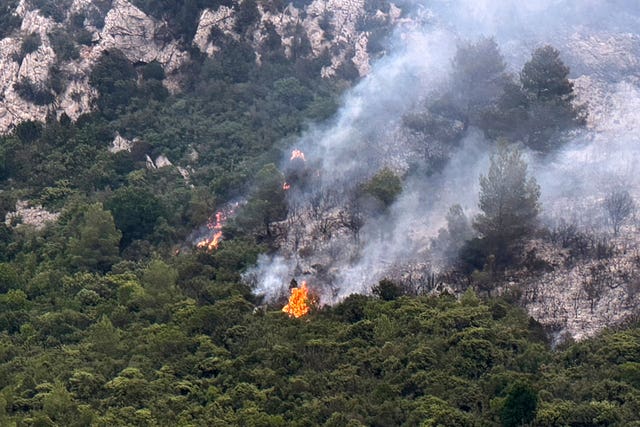
Meanwhile, residents and tourists in nearby areas have been asked to remain in their homes unless told to evacuate.
Those who had already fled the flames were sheltered overnight in temporary accommodation centres in 17 municipalities.
The fire, which began in the village of Ribaute, is the most significant France has faced since 1949, according to Agnes Pannier-Runacher, France’s minister for ecological transition.
“The night was cooler, so the fire is spreading more slowly, but it remains the most significant fire France has seen since 1949,” she told France Info radio.
“It is a fire that is clearly a consequence of climate change and drought in this region.”
This week’s fire was the biggest since the creation of a national fire database in 2006, according to the national emergency service.
Southern Europe has seen multiple large fires this summer.
Scientists warn that climate change is exacerbating the frequency and intensity of heat and dryness, making the region more vulnerable to wildfires.
Last month, a wildfire that reached the southern port of Marseille, France’s second-largest city, left around 300 people injured.
Europe is the world’s fastest-warming continent, with temperatures increasing at twice the speed of the global average since the 1980s, according to the European Union’s Copernicus Climate Change Service.