Ireland not involved in Strait of Hormuz security, Taoiseach says
Ireland will not be getting involved in securing the Strait of Hormuz, the Taoiseach has said.
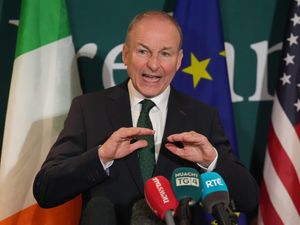
Ireland will not be getting involved in securing the Strait of Hormuz, the Taoiseach has said.
US president Donald Trump has reiterated a call for assistance in securing the safe passage of ships through the strait, two weeks on from engaging in a bombing campaign with Israel against Iran – which has seen Tehran retaliate across the region.
The escalating conflict has impacts on the supply of oil and other key resources through the Strait.
Taoiseach Micheal Martin, who is due to meet Mr Trump on Wednesday, said there was a “conversation going on within Nato” about the security of the passage, but added that Ireland was not a member of that alliance.
Asked about Mr Trump’s request for countries to assist in securing the strait, Mr Martin told reporters in Washington: “We’re not a military power. We don’t have that offensive military capacity in any shape or form, so obviously that’s not something that’s on our agenda.”

He said Ireland wanted a “peaceful resolution”, adding: “There is obviously huge concern about the economic implications globally, energy price increases and so on.
“But that works both ways and I think Iran is recklessly attacking all the Gulf states, for example, and all the citizens and European citizens and Irish citizens within the Gulf who are under threat from those kind of reckless attacks.”
Meanwhile, the UK Government announced that around £50 million will be made available to help low-income families who heat their homes with oil.
The Irish Government has yet to announce what measures it may take, with the Taoiseach stating he could not provide any details on Tuesday but reiterating the approach would be “targeted” at those on low incomes.

Asked about the UK intervention, Mr Martin said: “I think you need to assess what the UK Government has actually announced, and you know, we will do that.
“But I mean more fundamentally, as I said yesterday, any measures we take it’s not just a short-term horizon that we have to look at, we’ve got to look at the medium term horizon and what impact it has on the overall budget.
“Because we have objectives in terms of services as well that we need to invest in continually and we want room for that in the next Budget.”
Mr Martin warned there were potential secondary effects from the increase in oil and energy inflation that will need to be kept “under active review”.
He added: “We want a targeted approach at one level where we understand that people are under a lot of pressure and therefore those on low incomes, we certainly want to help.”
The Taoiseach said he did not want to “raise expectations”, adding: “My approach in terms of this is what is the most effective way to protect people who need protection – as well as protecting the economy and avoiding creating inflationary pressures.”
Mr Martin said the previous UK Government “got into all sorts of difficulties” with the “botched way” they responded to the inflationary issues arising out of the Ukraine conflict.
“So we have to do this in a measured, balanced way that targets our resources and is effective.”

Meanwhile, Irish deputy premier and finance minister Simon Harris said he expected his department to conclude a macroeconomic analysis “in the coming days”.
Speaking after meeting UK Chancellor Rachel Reeves in London, Mr Harris said the government is looking at a “range of levers” and referenced the fuel allowance as a “very effective way of helping people most at risk of fuel poverty”, adding that excise cuts had also been used in the past.