Government flight to rescue Britons stranded in Oman
The conflict between Iran and the US and its allies has caused widespread airspace closures in the Middle East, sparking major disruption to flights.
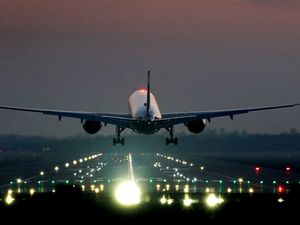
Some Britons stranded in the Middle East will be repatriated on a Government charter flight from Muscat in Oman.
Foreign Secretary Yvette Cooper said the flight will depart from the capital “in the coming days” amid the conflict between Iran and the US and its allies.
A handful of commercial flights are already bringing thousands of stranded Britons back to the UK, but the vast majority of departures from the region have been cancelled because of widespread airspace closures.
Ms Cooper said 130,000 British nationals have registered their presence in the Middle East.
She told MPs it is “a very fast-moving situation” with “unprecedented numbers of British nationals in the region”.
She added: “We are… working with airlines on increasing capacity out of Muscat for British nationals, with priority for vulnerable nationals, and a Government charter flight will fly from Muscat in the coming days, prioritising vulnerable nationals.”
The Foreign Office does not advise against travel to the area where Muscat International Airport is located, unlike the current advice for airports in Dubai, Abu Dhabi and Doha.
Oman’s capital can be reached by road transport from both Dubai and Abu Dhabi in journeys of about 300 miles.

On Tuesday afternoon, British Airways announced it will operate one flight from Muscat, Oman, to London Heathrow, departing on Thursday.
The airline said: “We currently remain unable to operate flights from destinations including Dubai, Doha, Abu Dhabi, Bahrain, Amman and Tel Aviv. We’re continuing to do everything we can to support customers and colleagues in the region, and are in regular contact with them.
“We’re aware that a number of our customers are now in Oman, where the airspace is currently open. Working with the relevant authorities we’ve been able to schedule a flight from Muscat to London, departing at 2.30am local time on March 5.”
Oman Air has continued to operate its two return flights per day between Muscat and London Heathrow.
On Tuesday, Emirates is operating two flights to Heathrow and one each to Gatwick and Manchester, all from Dubai.
At least some of these flights will use the airline’s A380 jets, which can each carry up to 615 passengers depending on how they are configured.
Emirates usually operates 146 weekly flights to the UK, which is the equivalent of about 21 per day.

Etihad Airways scheduled one UK flight on Tuesday, from Abu Dhabi to Heathrow, on a Boeing 787-10 Dreamliner with 336 passenger seats.
Qatar Airways, which usually serves Heathrow and Gatwick from Qatar, is running no flights because of the closure of Qatari airspace.
British Airways cancelled its timetabled flights to Heathrow from Abu Dhabi, Amman, Bahrain, Doha and Dubai on Tuesday.
The airline told passengers: “We are closely monitoring the situation and have cancelled a number of our flights to the Middle East.
“Safety is always our top priority and we would never operate a flight unless it was safe to do so.”
Passengers with bookings on certain routes up to March 15 are being allowed to amend the date to fly on or before March 29.
Virgin Atlantic cut a flight from Dubai to Heathrow.
About half a million passengers per day use airports in Dubai, Doha or Abu Dhabi, which are vital hubs for travel between Europe and the continents of Asia and Australia.
UK-based aviation consultant John Strickland said it could take weeks to clear the backlog of passengers.
He told the Press Association: “It’s a bit uncertain (when that will happen) because of course it will depend on how long the airspace restrictions remain in place.
“But factoring in the high volumes of normal daily traffic and the high capacity of aircraft such as the A380 and the Boeing 777, plus the fact that other flights covering similar routes operate at high occupancy, then it will certainly be quite a period of time which would likely run into weeks.”