What drove the economy’s disappointing end to 2025 and what lies ahead?
Official figures showed gross domestic product rose by 0.1% in the fourth quarter, following growth of 0.1% in the previous three months.
The UK economy ended 2025 on a disappointing note as growth petered out to finish with meagre expansion in the final months.
Official figures showed gross domestic product (GDP) rose by 0.1% in the fourth quarter, following growth of 0.1% in the previous three months.
The Office for National Statistics (ONS) estimated the economy expanded by a subdued 0.1% in December.
The 1.3% growth overall for 2025 was worse than expected, despite marking an improvement from 1.1% in 2024.
Here, the PA news agency looks at what is driving the latest figures and what is next for the UK economy:
– What is gross domestic product?
Gross domestic product, or GDP, is the term typically used to describe the size of a nation’s economy.
It is the measure of what is going on financially across all companies, governments and households.
– Why were the latest GDP figures a disappointment?
Many experts had hoped for growth to pick up to 0.2% in the final three months of 2025, but the paltry growth in December and a downward revision for November – to 0.2% expansion from the 0.3% previously record – meant the out-turn missed the mark.
After a promising start to the year when the economy kicked off with 0.7% growth, output has since been stuck in the slow lane, remaining at 0.1% for the entire second half.
– What was behind the lacklustre performance?
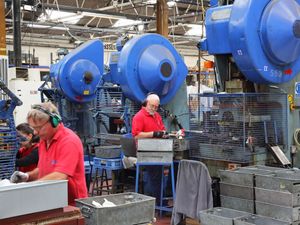
The muted performance comes after a difficult end to 2025 for the British economy, with growth held back by the lingering impact on the manufacturing sector of a major cyber attack at carmaker Jaguar Land Rover, as well as uncertainty ahead of the autumn budget.
The long lead-up to the November 26 fiscal event is widely blamed for holding back growth in the final quarter, with little sign of a bounce-back among consumers and businesses afterwards.
The data showed the UK’s normally dominant services sector flatlined in the fourth quarter with zero growth – the first time there has been no quarterly growth in this sector for two years – while production expanded by 1.2% and construction fell by 2.1%, marking the sector’s worst growth for over four years.
– Why is UK growth in the doldrums?
It was a year buffeted by America’s tariff war and geopolitical conflict and uncertainty, but there were also some home-grown headwinds for the UK economy.
Last April’s employee tax hike and above-inflation minimum wage rise hit many firms hard, in particular those in the retail and hospitality sector.
This, together with worries over further tax rises in the November budget, saw many companies hold back their investment plans.
The ONS statistics revealed a steep fall in business investment during the closing months of 2025, down 2.7% in the fourth quarter, which was the biggest decline for four years.
Tina McKenzie, policy chair of the Federation of Small Businesses (FSB), said: “Last year was one many small business owners would prefer to forget.
“Small businesses and self-employed people are caught in a tricky spot, between low growth and rising fixed costs.”
– Will things get better in 2026?
Recent economic indicators, such as closely-watched PMI business surveys, have shown signs of an improvement at the start of 2026.
But the outlook is still muted, with the Bank of England last week downgrading growth forecasts for the next two years, from 1.2% to 0.9% for 2026, and from 1.6% to 1.5% for 2027.
Business groups are increasingly calling on the Chancellor to focus on policies to spur on growth in the upcoming March budget.
The Resolution Foundation think tank said recent “green shoots will need to be built on if Britain is to get out of its stagnation trap”.
– What do the latest growth figures mean for interest rates?
Financial markets and many economists believe the downbeat growth outlook means an interest rate cut in likely next month, which would likely see Bank Rate cut to 3.5% from 3.75% currently.
This would be a welcome boost for borrowers and homeowners amid the wider economic malaise.