‘Slaughter’ of savings rates will sadden hard-pressed households, expert warns
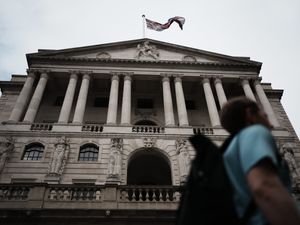
The Bank of England base rate was held on Thursday but Moneyfactscompare.co.uk said 70% of savings providers have already cut rates in 2026.

Savings rates have been “slaughtered” in recent weeks, a finance expert said, as the Bank of England base rate remained on hold on Thursday.
The bank left the base rate unchanged at 3.75%.
According to Moneyfactscompare.co.uk, 70% of savings providers have already cut the rates they are offering since the start of 2026, including variable and fixed-rate deals.
Rachel Springall, a finance expert at Moneyfactscompare.co.uk, said: “The slaughter of savings rates will sadden hard-pressed savers.
“Since the start of this year, more than two-thirds of savings providers have cut their rates.”
Urging savers to shop around for the best deals, she said: “As inflation remains well above target, real returns on cash savings are weak and this can lead to a dangerous attitude of apathy.
“Consumers already feel worried about their financial future and falling interest rates will not inspire them to prioritise their savings pots.”
According to Moneyfactscompare.co.uk’s figures, the average easy access savings account at the start of February had a rate of 2.42%, down from 2.92% a year earlier.
The average easy access Isa rate on the market was 2.60% at the start of February, down from 3.06% in the same month last year.
One-year fixed-rate bonds on sale typically had a rate of 3.81% in February, down from 4.21% a year earlier. The figures are based on someone having a savings pot of £10,000.
Ms Springall added: “The demise of savings rates is clear for those who prefer to have quick access to their cash. A year ago, savers could scrape an average return of 2.92% on an easy access account, that’s now down to 2.42%, the cash Isa equivalent has seen a similar drop from 3.06% to 2.60%; they both sit at their lowest levels since July 2023.”
Ms Springall said five-year fixed-rate bonds and Isas have held up more positively.
The average five-year bond on the market pays 3.86%, according to Moneyfacts, slightly down from 3.93% a year ago, and the Isa equivalent now pays 3.82%, down from 3.86% in February 2025.
Ms Springall added: “A cash Isa may be a preferred choice due to those who need to shield their returns from tax.”
Looking at mortgage rates, Nicholas Mendes, mortgage technical manager at John Charcol, said: “Fixed rates are driven by swap markets and lender funding costs, not the base rate decision in isolation.
“When an outcome is widely expected, most of the adjustment tends to happen beforehand.”
According to UK Finance, around 1.8 million fixed-rate mortgages are ending in 2026.
Mr Mendes added: “A hold does not close the door on lower mortgage rates. It simply points to a market that moves in steps rather than sudden drops unless guidance turns decisively more dovish or the data forces a faster change in expectations.”
He said that some borrowers coming to the end of their deal in the next six months may be tempted to wait for further improvements.
But he said that, by securing a deal early and keeping it under review, “if rates improve before completion, brokers can often switch borrowers on to a better option without delaying plans”.
Mark Harris, chief executive of mortgage broker SPF Private Clients, said: “Those who are coming up to remortgage will have noted that some lenders have increased the pricing on new fixed-rate mortgages in recent days, the pricing of which is heavily influenced by swap rates.
“This increase in swap rates reflects market expectations of a shallower path of rate cuts than was previously thought.”
Simon Gammon, managing partner of Knight Frank Finance, said: “Rates are already low enough to support a gradual recovery in activity, with borrowers broadly comfortable at current levels.
“That said, the pace is likely to remain slow and steady, particularly given the high level of homes currently for sale, which should limit upward pressure on prices and keep any renewed exuberance in the market in check.”
Frances McDonald, director of research at Savills, said: “While interest rates are still expected to continue to gradually decline this year, weaker economic growth will continue to constrain buyer budgets and confidence.
“As a result, we expect house price growth to remain subdued at 2% in 2026 before stronger levels of growth take hold from next year and beyond.”
Nathan Emerson, CEO of property professionals’ body Propertymark, said: “Today’s decision to hold interest rates reflects the Bank of England’s cautious approach in the face of ongoing economic uncertainty.
“While we would ultimately welcome lower borrowing costs, stability at this stage gives buyers and sellers clarity about the cost of borrowing and allows the market to continue adapting.”
Looking at non-mortgage households debts, Ian Futcher, a financial planner at wealth manager Quilter, said: “For households carrying credit card balances or personal loans, today’s hold means borrowing remains expensive. Credit card APRs (annual percentage rates) remain historically high and are unlikely to fall quickly, even once base rate cuts begin.
“Anyone managing costly unsecured debt should focus on repayment or balance transfers where possible. Waiting for rate cuts to materially reduce credit card interest is unlikely to be an effective strategy.”