‘Britain’s poorest getting poorer as people in deep poverty at record high’
The Joseph Rowntree Foundation said 6.8 million people were living in very deep poverty in the year to March 2024.
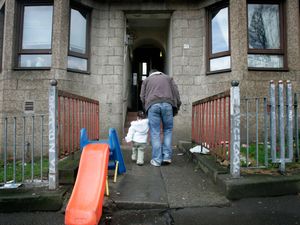
Progress on tackling poverty is likely to stall after April if the Government’s key move to axe the two-child benefit limit is not followed up with more action, campaigners have warned.
The decision to lift the cap had long been called for, was confirmed in the autumn budget, and will see around 400,000 fewer children living in poverty this April compared with 12 months earlier, the Joseph Rowntree Foundation (JRF) said.
The Government has said the change, combined with wider measures in its child poverty strategy published in December, will lift 550,000 children out of poverty by the end of this Parliament in 2029/30.
But the JRF, a social change organisation, said its own analysis suggests that “without further changes, relative poverty levels remain stuck at a high level” after April this year.
It said that according to central Office for Budget Responsibility projections, the headline poverty rate “will remain broadly unchanged”, at 21.3% in 2026 and 21.1% in 2029.
The JRF said 6.8 million people were living in very deep poverty – meaning their incomes after housing costs are less than 40% of the UK average – across the 12 months to March 2024.
This is almost half of everyone in poverty and the highest level since JRF analysis of Government data, which began in 1994/95.
The JRF said its analysis shows “Britain’s poorest are getting poorer”.
Its latest UK Poverty Report suggested more than one in five people in the UK, around 14.2 million, were living in poverty across the 12 months to March 2024.
It said poverty has “hardened, not eased”, with the average person in poverty now living 29% below the poverty line, compared with 23% in the mid-1990s.
The JRF said work is still no guarantee of escaping poverty, with around two-thirds of working-age adults who are deemed to be in poverty (5.4 million) living in households where someone is in work.
JRF chief analyst Peter Matejic said: “Poverty in the UK is still not just widespread, it is deeper and more damaging than at any point in the last 30 years.
“When nearly half of the people in poverty are living far below the poverty line, that is a warning sign that the welfare system is failing to protect people from harm.
“The Government has promised to reduce child poverty this Parliament, and this analysis is the starting line of that commitment.
“JRF analysis shows that, without further changes, relative poverty levels remain stuck at a high level after April 2026.
“There can be no national renewal if deep poverty remains close to record levels.”
The JRF has repeated a call for the Government to introduce an essentials guarantee in the form of a protected minimum floor into universal credit to ensure a “safety net below which no-one should fall”, have local housing allowance permanently linked to local rents to help with affordability, and greater protections in the labour market for workers including the self-employed to be supported if they are temporarily out of work because of sick leave or to care for loved ones.
Mr Matejic said: “People want to feel like the country is turning a corner.
“That means taking action on record levels of deep poverty so everyone can afford the essentials.
“It means making people feel supported rather than being one redundancy or bout of ill health away from failing to make ends meet.
“And it means supporting individuals so they can afford to be their most productive selves at work, enabling them to find a job that works for them while improving productivity and growing the economy.”
A Government spokesperson said: “We understand that too many families are struggling, and we are taking decisive action to address poverty by boosting the national living wage by £900, cutting energy bills by £150 from April, and launching a £1 billion crisis and resilience fund to help households stay afloat.
“As this report acknowledges, scrapping the two-child limit alongside our wider strategy will lift 550,000 children out of poverty by 2030 – the biggest reduction in a single parliament since records began.”
Liberal Democrat work and pensions spokesperson Steve Darling said the report was a “devastating indictment of the previous Conservative Government’s neglect for the most vulnerable in our society”.
He added: “We need immediate action on the cost of living from this Government to bring down energy bills, build more affordable homes, and end this misery once and for all.”