Districts warn of ‘catastrophic flooding’ without urgent funding boost
Environment Agency cuts have raised the possibility of widespread disruption and economic damage, it is claimed.
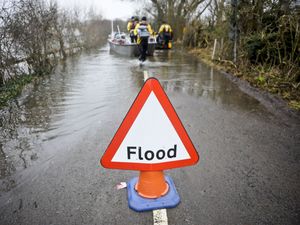
Vulnerable areas face “catastrophic flooding and economic devastation” without further Government funding for protections, councils have warned.
Senior local government figures said local taxpayers will now have to foot the bill for flood defence maintenance in many districts after the Environment Agency re-prioritised which areas receive support.
Local leaders have warned they already face a backlog of vital works and rising costs after the agency scaled back its work due to funding cuts in recent years.
The District Councils’ Network (DCN) said urgent funding is needed to reduce flood risk by keeping river courses free from obstruction, otherwise local taxpayers will have to cover costs.

The bill for vital protection measures mean councils will be forced to cut other services even if, as expected, council tax is raised by the maximum permitted, DCN said.
Flood protection is the responsibility of 112 internal drainage boards in England which protect nearly a tenth of the landmass.
They are funded via councils through levies on council tax and on the owners of property including agricultural land.
Paul Redgate, chairman of the Internal Drainage Boards Interest Group, said: “The withdrawal of funding for so many stretches of river amounts to cost-shunting from central government to already squeezed local taxpayers.
“If you are unfortunate enough to live in an area susceptible to floods you already face higher council tax and insurance bills – and Environment Agency cuts are going to hit you even harder.
“They’ll increase the likelihood of maximum council tax rises and force councils to shift spending away from other essential local services.
“Just to reassure everyone in our local community, we know how devastating flooding can be and, along with our partners, we will always seek to best protect communities, but this will mean less money available for other essential local services.
“We urge the Government to step in and provide extra funding for communities which, through no fault of their own, face growing risk of floods.
“The alternative could be catastrophic flooding and economic devastation.
“It’s a matter of fairness and common sense.”
The DCN said annual levies paid to drainage boards increased by 32% to £52.4 million in the four years to 2025/26.
Despite the Government providing £5 million to the councils facing worst impact of flooding for the current financial year, the DCN said this is does not cover rising costs.
Analysis of the impact of the Environment Agency’s funding re-prioritisation found Somerset could face a repeat of the devastating floods in 2014 when 10,400 hectares of land were affected.
Vulnerable areas identified included property near Somerton, on the River Cary near Glastonbury on the River Brue, and near Langport on the River Yeo.

DCN chairman Richard Wright said: “The sums of money required to maintain river maintenance are miniscule for national government – but rising costs can be devastating for individual district councils, giving them no option but to cut other services.
“The overall costs of flooding through the damage to property, devastation of local economies and the hit to agriculture would be enormous to the nation.
“Let’s get this maintenance work properly funded, with the costs borne fairly, sparing society and the taxpayer future misery and costs.”
Innes Thomson, chief executive of the Association of Drainage Authorities, said: “Most of these rivers are manmade channels designed to convey flood water but if they become clogged over time because of a lack of maintenance their capacity can be significantly reduced, dramatically increasing flood risk.
“There’s been a gradual reduction in maintenance carried out by the Environment Agency over the past 15 or 20 years, leaving councils with a significant bill to put things right.
“I am concerned that there’s been a significant amount of cost-shifting from central to local government and no transparency about it.
“You can’t simply walk away from flood protection without having agreed long-term plans for vital work to proceed.”
A Department for Environment, Food and Rural Affairs spokesperson said: “This government has committed a record £10.5 billion flooding investment by 2036, which will protect nearly 900,000 homes and businesses from billions of pounds in damage.
“We have updated our flood funding rules to ensure a better balance between new projects and asset maintenance, with more than £100 million reprioritised for urgent maintenance works.”