Cooper says she raised international law with US over Venezuela
Foreign Secretary Yvette Cooper addressed the Commons after Venezuelan President Nicolas Maduro entered a not guilty plea in court in New York.
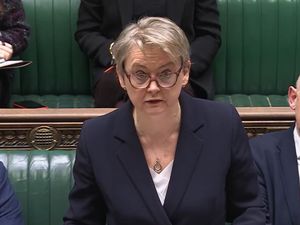
Foreign Secretary Yvette Cooper has said she raised the importance of international law with her US counterpart after President Donald Trump’s intervention in Venezuela.
But she stopped short of saying whether the military action that saw Venezuelan President Nicolas Maduro captured and taken to New York was a breach of such laws and told MPs it was for the US to set out the legal basis for the move.
Ms Cooper also reiterated that the UK will “shed no tears” for the end of Maduro’s rule as she accused him of using “fear, coercion and violence” to cling to power.
She addressed the Commons after Maduro entered a not guilty plea in court in New York, where he and his wife haven been indicted on charges of “narco-terrorism”.
Meanwhile, both allies and adversaries of the US criticised its intervention at an emergency meeting of the UN Security Council.
Ms Cooper said she spoke to US secretary of state Marco Rubio over the weekend.
She said: “In my discussions with Secretary Rubio, I raised the importance of complying with international law, and we will continue to urge all partners to do so.
“It is, of course, for the US to set out the legal basis for their actions, and the UN Security Council is discussing Venezuela this afternoon.
“These issues will continue to be matters for international discussion.
“I discussed with Secretary Rubio what should happen next and our continued commitment to a transition to a peaceful and stable democracy.
“Our collective immediate focus must be on avoiding any deterioration in Venezuela into further instability, criminality, repression or violence that would be deeply damaging for the people of Venezuela, our own overseas territories, our allies and in the US and other regional partners.”
The Foreign Secretary added that she also spoke to Mr Rubio about the role the UK can play in supporting a peaceful democratic transition that respects the will of the Venezuelan people.
Ms Cooper opened her statement with criticism of Maduro for his “authoritarian rule” and criticised his links to Russia and said his regime facilitated “organised criminal activity and narcotics trafficking and illegal gold trading”.
“That undermines the security of the whole region, including UK overseas territories, as well as the United States and other regional partners,” she said.
Ms Cooper noted opposition figures had been forced out of the country.
She said: “These are the hallmarks of a regime that clings to power through fear, coercion and violence, not through democratic consent.
“And that is why, as the Prime Minister said on Saturday, we can shed no tears for the end of Maduro’s rule.”
The Foreign Secretary was urged to call out the US for a breach of international law.
Dame Emily Thornberry, chairwoman of the Foreign Affairs Select Committee, said: “We should be calling it out for what it is, a breach of international law.
“It is not for the country that is breaking the law to say whether or not it has broken the law.
“It is for the West surely to stand up and say, call it as it is.
“Doesn’t she therefore share my concern that there might be a profound risk of international norms changing if we don’t do that, it may become OK?”

Ms Cooper replied: “I know that she and I would probably agree that a man who is currently being investigated for crimes against humanity and who has such a history of political repression as well as economic destruction and corruption should not be leading a country.”
But she added that the UK is committed to international law, repeating that she had raised the issue with Mr Rubio “and made clear that we will continue to urge all countries to follow it”.
Prime Minister Sir Keir Starmer earlier described Maduro as “illegitimate”.
While he said international law had to be the “anchor” for the future of Venezuela, he declined to comment on whether the American operation breached international law, saying the situation was “complicated” and it was “for the US to set out its justifications for the actions that it’s taken”.
Among the international laws the US could be at risk of breaching, if it provides no justification for the attacks, is the founding charter of the United Nations.
Article 2 of the UN Charter says all members should refrain from “the threat or use of force against the territorial integrity or political independence of any state”.
UN secretary general Antonio Guterres said he is “deeply concerned that rules of international law have not been respected with regard to the January 3 military action”.
He said the “grave” action by the US could set a precedent for future relations between nations.
The removal of Maduro is seen as the most assertive US intervention to achieve regime change since the 2003 invasion of Iraq, and followed months of pressure from Washington on the country and its autocratic leader.
Widespread protests followed Maduro’s apparent victory in the 2024 Venezuelan presidential election, amid accusations that electoral fraud led to him retaining power.
He was also accused of human rights abuses and corruption during his leadership.
Delcy Rodriguez, who served as Maduro’s vice president, has indicated she hopes to work with the US now she is the country’s interim leader.
The Trump administration has not indicated support for replacing the ruling regime with a government led by Maduro’s opposition rival Maria Corina Machado, who recently won the Nobel Peace Prize.
Mr Trump has insisted that the US would run Venezuela at least temporarily and tap its vast oil reserves to sell to other nations.
Liberal Democrat leader Sir Ed Davey told the Commons Mr Trump has “no interest in Venezuelan democracy”.
He said: “Trump’s refusal to back Nobel Prize winner Maria Machado, Maduro’s brave liberal opponent, shows Trump has no interest in Venezuelan democracy.
“This is about Trump believing he can grab anything he wants and get away with it – this time, oil.”
Tory leader Kemi Badenoch said the Conservatives understood why Mr Trump had intervened, saying the UK was “acting in its national interest” and that the UK needed to do the same.
She said: “We on this side of the House understand why the US has taken this action, as the Foreign Secretary said, UK policy has long been to press for a peaceful transition from authoritarian rule to a democracy. That never happened.”