No evidence of collusion in UVF bombings of Dublin and Monaghan
The final Operation Kenova report also said there does not appear to be ‘any realistic opportunities’ for a fresh investigation into the atrocities.
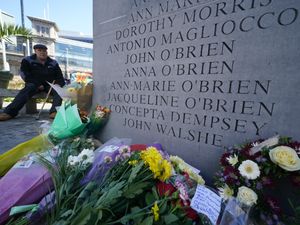
There is no evidence that UK security forces colluded with the UVF to bomb Dublin and Monaghan in 1974, a review has found.
The final Operation Kenova report also said there does not appear to be “any realistic opportunities” for a fresh investigation into the atrocities.
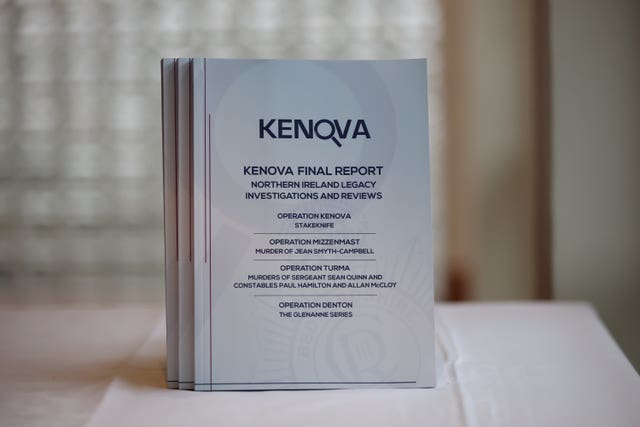
A review, known as Operation Denton and published as part of Kenova, looked into a series of UVF attacks attributed to the so-called Glenanne gang.
No one has ever been convicted over the Dublin and Monaghan bombings that killed 35 people including two unborn twins, but the UVF admitted responsibility in 1993.
It remains the biggest loss of life on any single day of the Troubles.
Another 300 people are estimated to have been injured in the blasts.
The report said “legitimate questions” had been raised around the lack of information and intelligence recovered from the attacks.
It said: “This absence of intelligence has been presented as indicative of collusion.
“In addition, the poor investigative response in the days following the attacks and the lack of information made available to victims and families thereafter have contributed to assertions and beliefs in collusion existing.
“However, with regard to the Dublin and Monaghan attacks, no evidence of collusion was found by the Operation Denton team, albeit that this cannot be categorically excluded.”
The review said UVF Brigade staff, based in the Shankill area of Belfast, planned, resourced and carried out the attacks.
It said: “The UVF was independently capable of carrying out the attacks and possessed the necessary materials, knowledge and expertise without any support from the security forces.”
The report said in the aftermath of the attacks, the RUC and Army were in possession of intelligence which identified a number of those believed to have been involved, but added “there was no specific intelligence which, if acted upon, could have prevented the 1974 Dublin and Monaghan bombings”.
It added: “The review has not identified any evidence or intelligence which would indicate that British security forces colluded with the UVF to carry out the attacks in Dublin or Monaghan, nor has any evidence of state collusion been identified.
“No new information has been discovered by Operation Denton which would confirm or contradict a view that the Glenanne farm may have played a role in the attacks.”

The Glenanne Gang has been blamed for around 120 killings throughout the 1970s, including the 1975 Miami Showband massacre in which three musicians were shot dead.
The report said an “easily defined discrete ‘Glenanne gang’ did not exist”.
It said: “Glenanne Farm was one of a number of farms and other premises utilised by the UVF to store explosives and ammunition as well as plan operations.”
The report added: “The review found in a number of individual cases, clear evidence of the active involvement of members of the security forces with loyalist paramilitary groups.
“This collusion involved extremely vicious and serious criminal activity, including bombing attacks and murder.
“Further, security force intelligence assessments indicate that paramilitary groups were regularly supplied with intelligence by members of the security forces and that UVF members and sympathisers existed within the UDR, the RUC and RUC Reserves and the Territorial and Army Volunteer Reserve (TAVR).
“These cases and assessments undoubtedly evidence collusion.”