Drought hit areas begin to recover after surge in rainfall, officials say
The Midlands has now moved out of drought status and into recovery.
The Midlands has moved out of drought status as several of England’s regions recover their water levels following the recent surge in rainfall, officials said.
The national drought group, which includes the Met Office, regulators, government, water companies, and other organisations, convened on Monday after November saw 149% of the long-term average rainfall.
The recent wet conditions come after the driest spring in 132 years, the hottest summer since records began and insufficient levels of rain to offset widespread droughts in September and October.
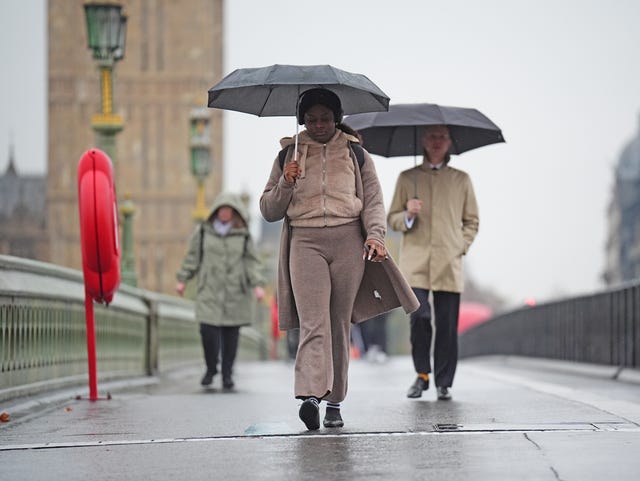
With eight of the 11 months this year seeing below average rainfall, many areas of the country were plunged into drought earlier this year.
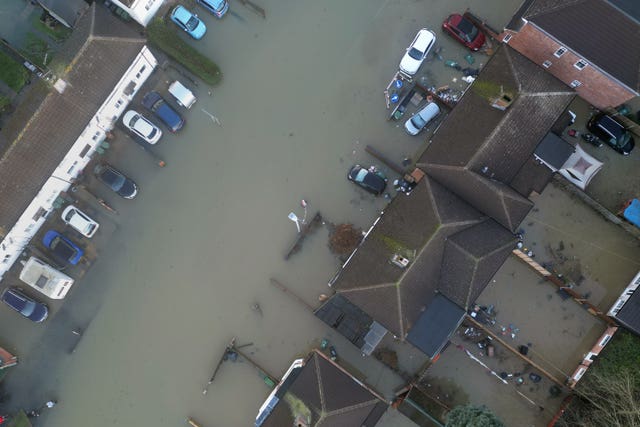
While November’s rainfall helped to kick-start drought recovery, it also brought flooding to many parts of the country.
The rain varied across different regions last month, with the East Midlands seeing 218% of rain – the wettest since 1871 – and the West Midlands saw 185% of rain, which was the wettest since 1970.
The two regions have now moved out of drought status and into recovery after 21 weeks in drought.
Meanwhile, the North West, which was the first to declare drought status in May, is now out of the recovery stage and back to normal, and the North East has moved from prolonged dry weather to drought recovery.
Yorkshire, which declared drought in June, is also showing good signs of recovery, the group said, adding that officials will decide on moving status later this week.
The parts of Sussex served by South East Water remain in drought.
Elsewhere, public water supply reservoir levels are now 79.8% full – only slightly below the 81.9% expected for this time of year.
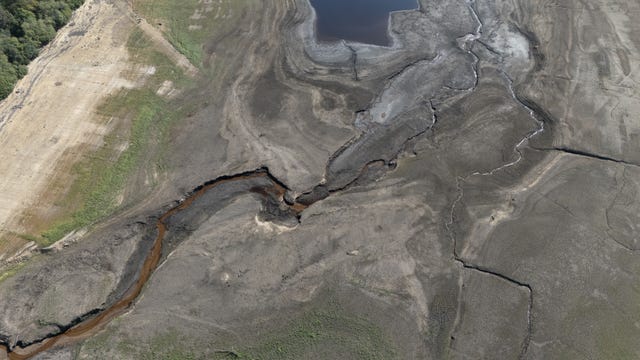
The national drought group said all areas are keeping their drought status under review, and more changes can be expected in the coming weeks.
Even as the situation improves, the group said there still needs to be a typical rainfall until the end of March to avoid drought in some areas next year.
Helen Wakeham, the group’s chairwoman and director of water at the Environment Agency, said: “The recent rain has helped some of our depleted rivers and reservoirs, but we are not out of the woods yet.
“The spring was exceptionally dry and the summer very hot.
“Therefore, I would urge people to carry on using water as efficiently as possible – particularly while our environment recovers from the impacts of the recent drought.”
Ms Wakeham said the national drought group is using the latest science to understand drought and help preparations for what could still be a difficult 2026.
The Environment Agency is working with The Alan Turing Institute to look at how the latest river flow modelling could be used to pinpoint how much water the country has and identify the early signs of drought.
Robert Bradburne, the Environment Agency’s chief scientist, told the meeting on Tuesday how cutting-edge technology can help build resilience to extreme weather.
All attendees then agreed to work more closely together to pool research, innovation, and data-driven insights, the officials said.
Mr Bradburn said: “Droughts are becoming more complex to analyse as the climate and society’s demand for water changes.
“Today we took an important step in tackling this complexity head-on.
“This agreement to work more closely with water companies on advanced tools, such as AI, will greatly enhance our scientific capabilities.
“This will lead to better forecasts and more decisive and well-evidenced responses to drought.”
Drought is over when river, groundwater and reservoir levels are back to normal.
The officials said water companies must maintain efficiency measures until resources are back to average for the time of year.
This includes ensuring their assets, such as pipes, pumps and reservoirs, are working well and, where necessary, submit any applications for drought permits early to maximise water storage.
With around 19% of water lost to leaks, firms are also being told to continue efforts to tackle the issue and meet the commitment to halve the amount lost by 2050.