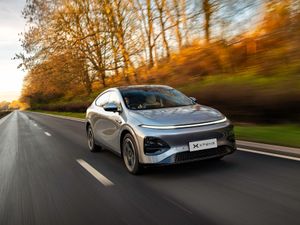
Road-tripping Europe in an EV: How hard can it be?
There has been plenty of criticism levelled at an EV’s ability to do long journeys, but is that really the case in 2026? Jack Evans finds out.
If there’s one thing that electric vehicle sceptics voice more than anything else, it’s that battery-powered models can’t do long journeys. ‘It’ll take too long to charge’, they say, while adding that a diesel-powered Volkswagen Passat from 20 years ago could go further without stopping.
Don’t get me wrong, I love a long-distance road trip in something big and diesel-y. But the world is a-changing, and as electric vehicles become more commonplace, we’re having to factor them into our lives. It’s why I thought seeing how an electric vehicle could do over a full European road trip would be a great showcase of whether or not things are progressing.
The plan is simple. Drive from the UK, through France and Germany to Austria, and a place called Zell am See. Why there? It would be hosting this year’s FAT Ice Race, a celebration of all things four-wheels on ice.
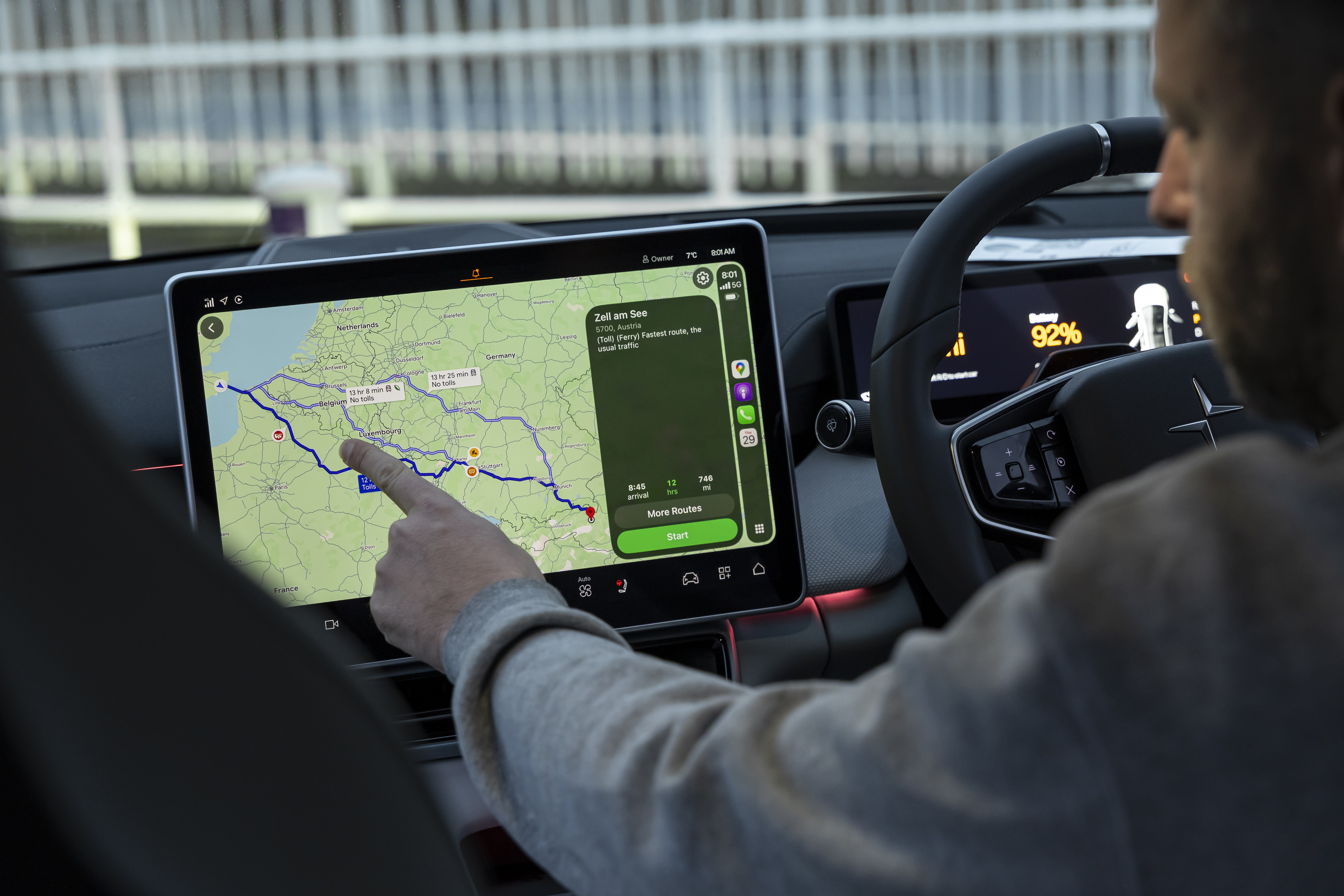
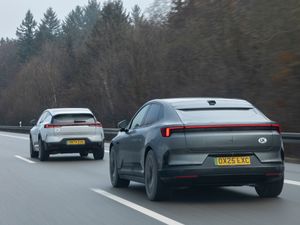
It’s also where Polestar would be showing off its latest creation – the 5 – before it goes on sale in the UK later this year. It seemed fitting, therefore, that I’d be doing the journey behind one of Polestar’s recently-launched cars, the 4.
I’ve got the dual-motor version, equipped with chunky-looking tyres. It’s a must-have for the wintery conditions that we’re heading towards, while the winter-ready rubber is a legal requirement for many areas.
But let’s talk figures. The dual-motor version of the 4 has a claimed range of 367 miles, which is helped by an efficiency-boosting heat pump. There’s a top-whack charging rate of 200kW, too, and this means that you should be able to charge the 4 from 10 to 80 per cent in 30 minutes when you’re hooked up to a rapid charger. It’s these that I’d be relying on to get the car topped up nice and quickly when on the road.
There’s a caveat to this. When I first fully charged the 4 before heading off, the car was reading just 238 miles on 100 per cent – some way off claimed. However, the spirit of adventure remained strong, and it was time to depart.
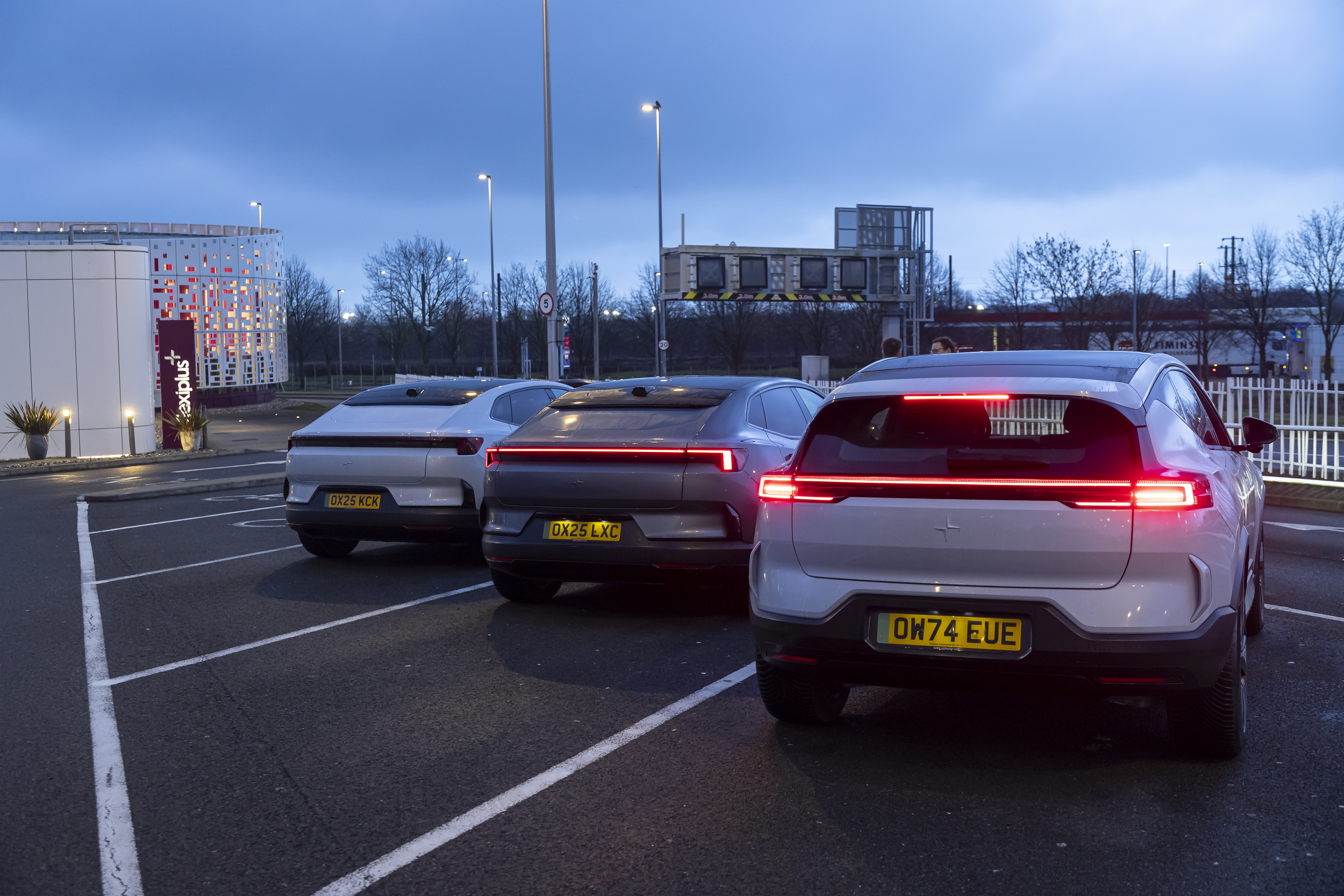
It’s a chilly morning as we convoy out of a hotel near Maidstone on the way to the Channel Tunnel. I’m doing this trip with a few others – also in Polestars – and thankfully chargers at the hotel we stayed at mean that every car has a full ‘tank’.
A quick whistle down to the ‘chunnel’ sees us on a train before long, weighed down with pastries and coffees from the FlexiPlus area. The tunnel trip always provides a good time to think of a plan, though the general feel of this journey is to try and do as much without checking apps to see charger locations. It’s something that you don’t tend to do with an electric car.
Out at the other end, we find a cruising speed as we whisk through northern France. The vast, stretching and relatively uninhabited roads feel a long way from the busy and congested highways of the UK and it makes for quick progress towards our first photo stop – Reims.
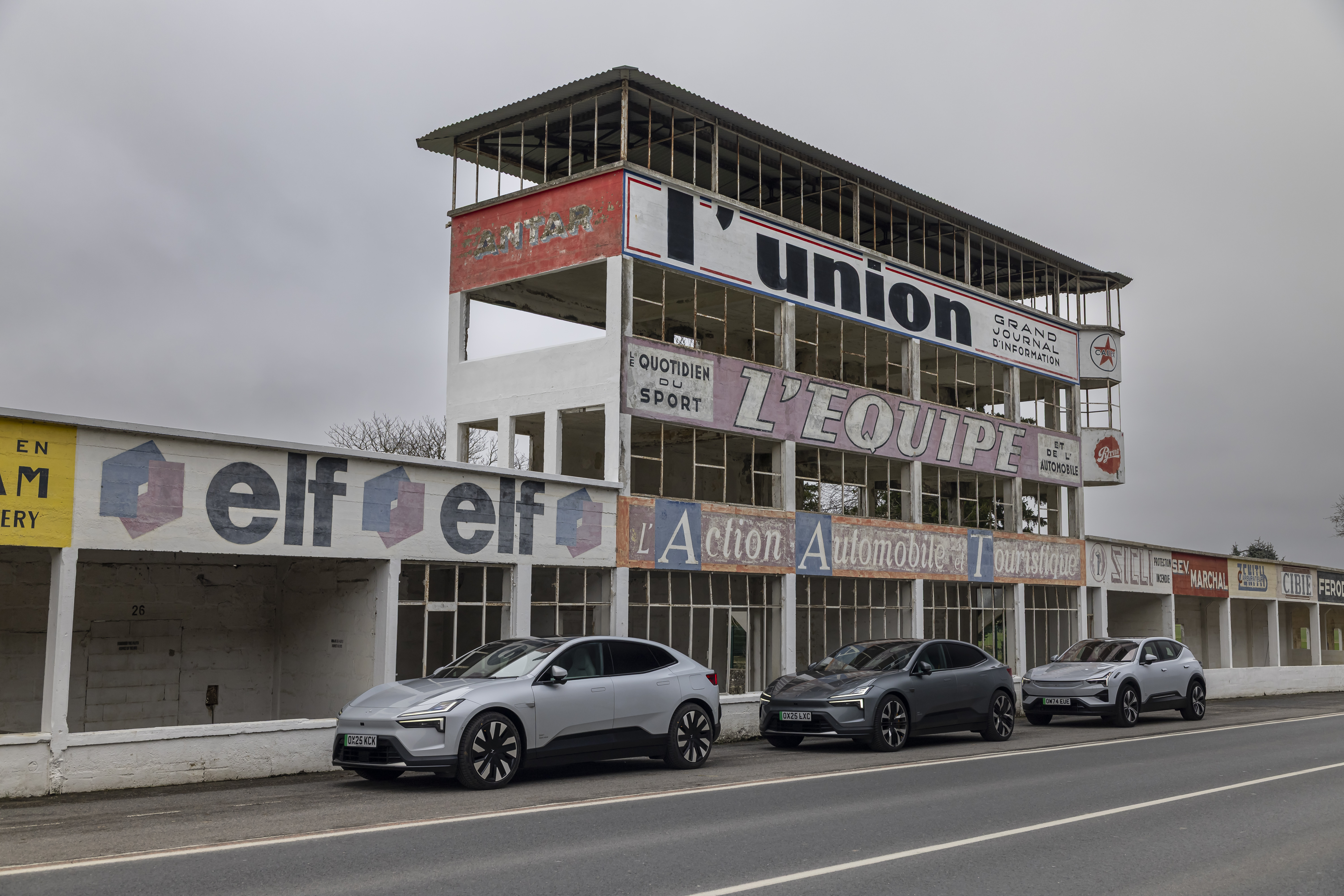
The Reims-Guex circuit was one made up of local roads and regularly hosted the French Grand Prix until it was closed in 1972. Today, you still see the bones of the old setup with grandstands and pit boxes there to look around. It’s a fitting pit stop for the Polestars, too, which line up as a modern look at the road car in an area dominated by the past. Fortunately for me, there’s a charger nearby – I’m down to 10 per cent charge and eager to get topped up.
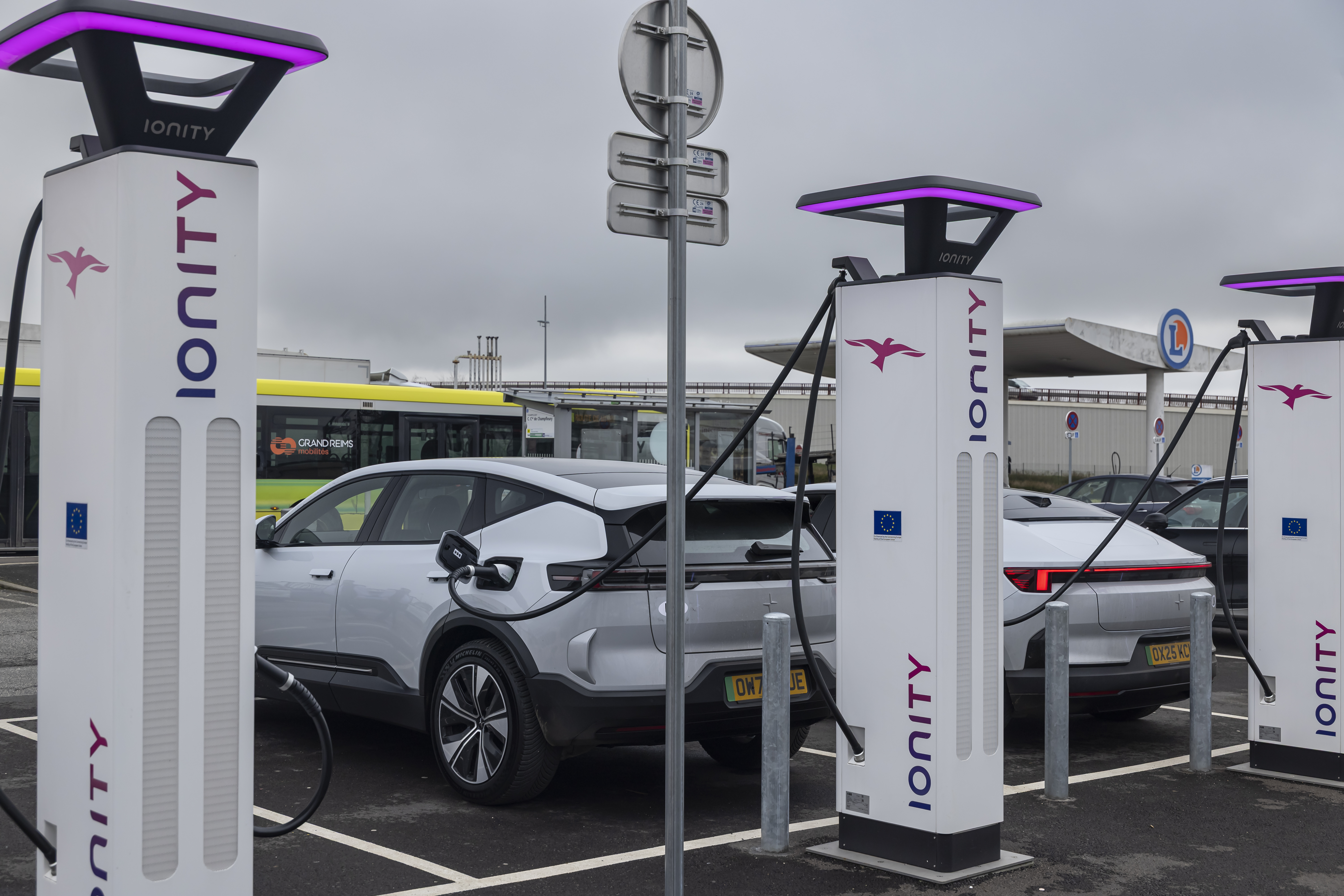
It’s the first of our charges and it couldn’t be easier. We stop at a nearby supermarket and there’s a huge bank of super-fast IONITY units. Plugged in, they’re soon delivering 135kW of charge and by the time I’ve had a trip to the facilities and grabbed a coffee and some food, the 4 is back up to 80 per cent charge. France’s charging prices are well under those in the UK, too, we’re paying around 54c/kWh, whereas in the UK an equivalent charger would be around 80p/kWh – if not more.
Charged back up – both in terms of coffee and electricity – it’s time hit the road again. We’re heading towards Freiburg and an overnight stop at the ArtBau DesignHotel to break up the journey. In theory, you could do it in one hit – but our tiredness is more apparent as we get through the drive.
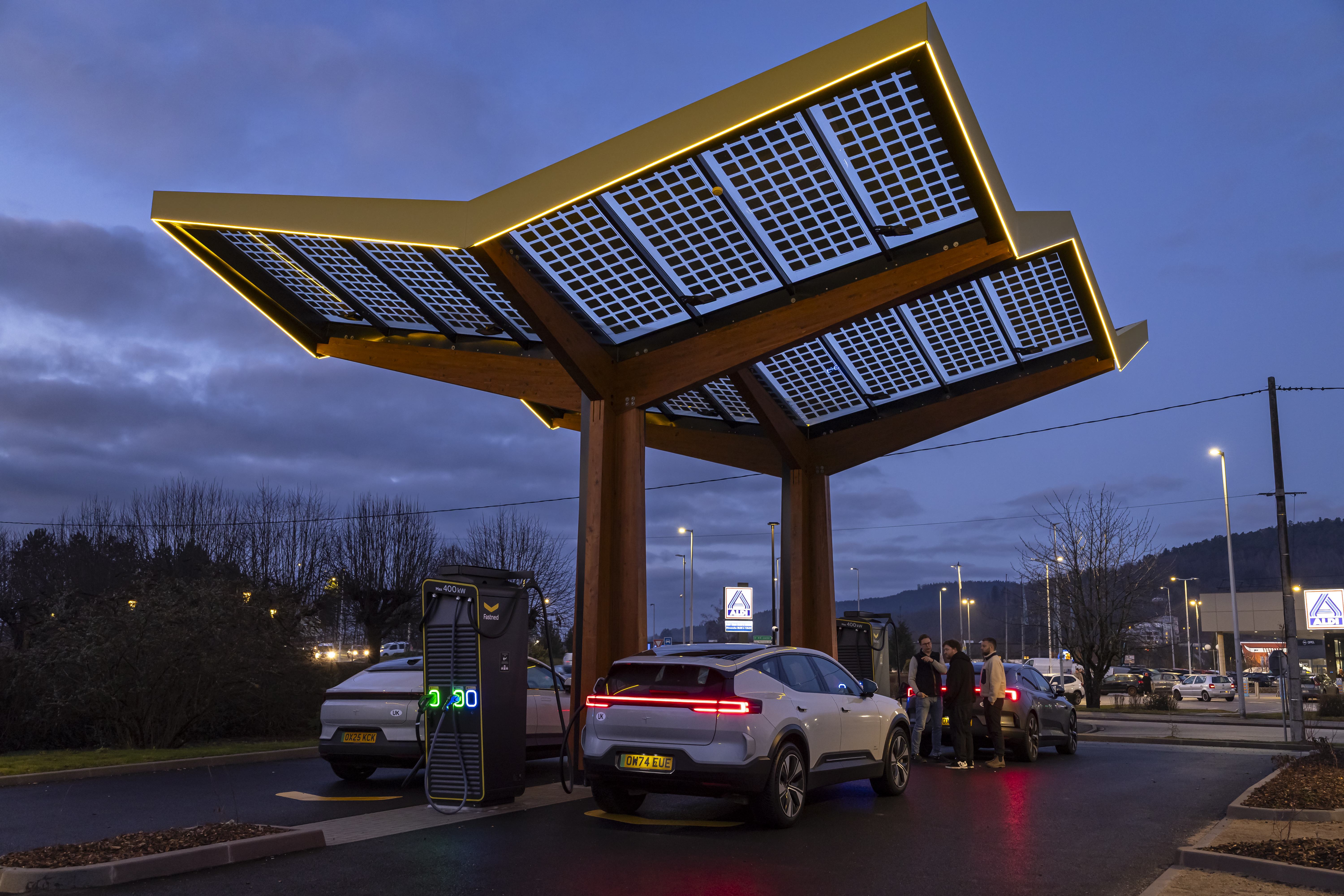
Luckily, we only need one more charge to get there and it’s at a super-fast Fastned unit. The site is clean, new and easy to use, with just a short 20-minute top-up required to give us enough juice to get to our hotel for the night. The good news is that our destination also has overnight chargers, so there’s no need to worry about charging up for the next day.
Up early the next day and we’re on to the final leg of the journey to Zel am See. In my head, I’d imagined it was a short trip, but a quick check of the nav revealed six-and-a-half hours remaining.
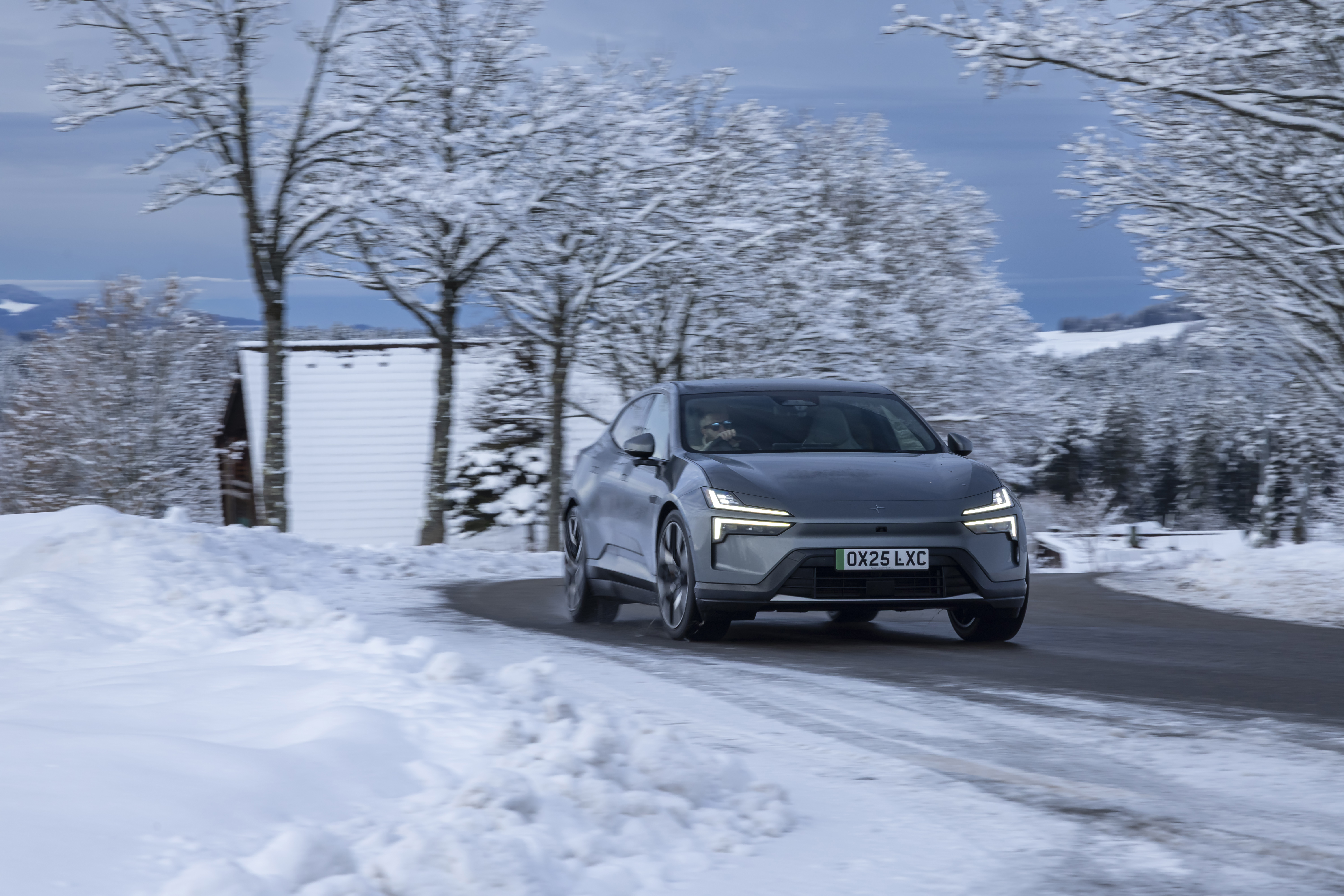
However, Germany is a country that makes short work of big distances. We start off climbing mountains and tackling a lot more snow than I had been expecting, but fortunately, the winter tyres play their role and everything remains on the straight and narrow.
Our first charge-up is at a rapid IONITY unit, conveniently placed next to a McDonald’s for a quick coffee after our 200-mile stretch. We’re finding that two-and-a-half hours is about right for journey times between charges. The cars could go for longer but when you’re driving on your own, it’s quite nice to jump out and have a chat.
We also get a good stretch of derestricted autobahn to find out the Polestar 4’s top speed. It’s 124mph, if you’re wondering, and in a car with this much performance, it’s not hard to reach. Of course, travelling at high speeds for a long period does kick the range into touch, but it’s worth it for the fun factor. Sometimes, the more exciting option is the best one.
Our final charge is at Holzkirchen, just outside of Munich, and it’s our first experience of a service station top-up. Previously, we’ve just been using those located slightly off the highways, in retail parks or outside supermarkets. There’s quite a big difference in demand at the service station; drivers queue up for their spot, and at one point, a driver closes one of our cars’ charging flaps and plugs their car into the charger instead.
It was also the site of our first failed charge. After a light, healthy lunch of currywurst, we return to the cars to find that one hasn’t charged up at all. It’s a pain, and it’s interesting to find that it has happened at our first service station stopover.
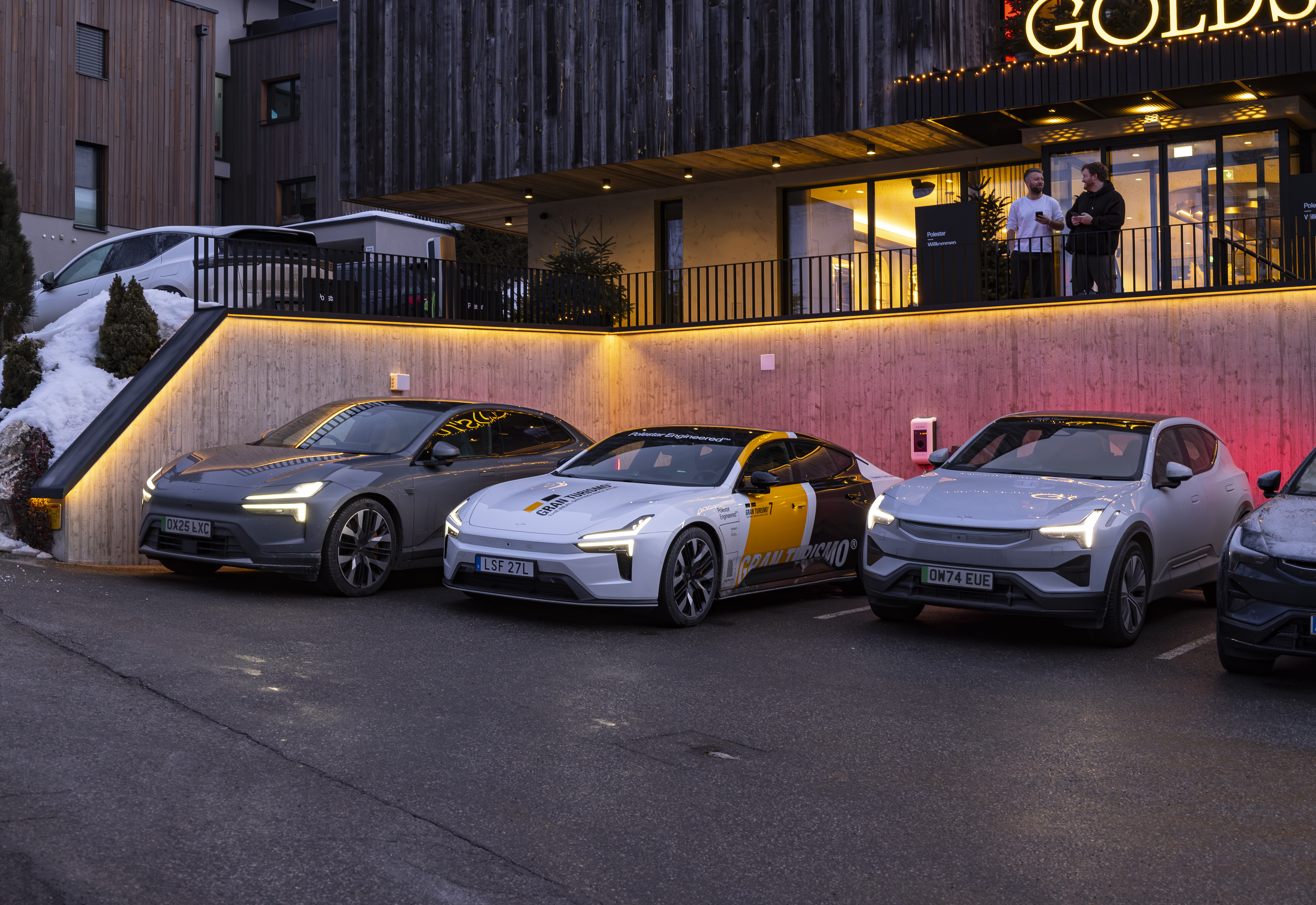
Thankfully, they’re rapid units, so we swap the cars over and get the remaining one all sorted. From there, a brief two-and-a-half-hour stint saw us to our final destination, a hotel just outside Zell am See. There, ready to line up against our dirty, mileage-munching Polestars is a new 5, decked out in Gran Turismo livery.
So, how was the trip overall? Pretty breezy, actually. Of course, you could fill up a diesel car and try and do the whole trip in one hit, but, in all honesty, all of the stops that we made to charge the Polestars up were made at points when I needed a rest too. Aside from one busy service station, there were no faults with the infrastructure, either. The total cost? Just over £160, which I don’t think is bad at all for well over 800 miles of driving. The UK needs to take note, though, of Europe’s charging costs – they make all the difference and help to make electric driving far more appealing.