Ambulance service would have to 'triple workforce' to improve rural waiting times
West Midlands Ambulance Service says it would have to triple its workforce to provide the same level of response in rural areas as in urban ones.
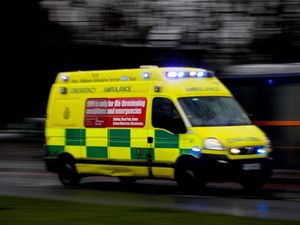
The service says despite staff working flat out it wasn't always easy to reach everyone as quickly as it would like.
The service was responding to calls for details of its response times from an Oswestry councillor.
Oswestry Town Council is to ask representatives from West Midlands Ambulance Service to a future meeting to discuss response times.
Councillor Paul Milner called for the service to attend a meeting and to give councillors response times for the town.
He said there should be more ambulances stationed locally.
Councillor Milner said: "It is worrying that response times for cities and larger towns are quicker than in smaller towns like Oswestry. In the countryside it is worse.
"I would like to obtain more up-to-date figures for Oswestry and the rural areas and find out if West Midlands Ambulance Service is meeting targets."
At a town council meeting on Wednesday members agreed to ask the service to attend a future meeting. Councillor Sandy Best questioned whether it was needed.
Pressures
"We could instead write a letter asking the service to answer our questions." she said.
A West Midlands Ambulance Service (WMAS) spokesman said: “Ambulance staff do everything possible to respond to patients quickly, no matter what category of call.
"Although our staff are working flat out, it is not always easy to reach everyone as quickly as we would like, especially in more rural areas, due to the rurality of those areas.
"In addition, we know from research from commissioners that to provide the same level of response in the more rural areas as the urban ones, we would need to triple our workforce.
“Like WMAS, our colleagues in hospitals have also seen significant pressures from big increases in demand. These and other factors have combined to mean that in some cases our ambulance crews haven’t been able to get back on the road as quickly as they should after taking someone to an emergency department with the inevitable knock on effect that this has on our ability to get to the next patient.
“Where vehicles start and finish is largely irrelevant in the way that ambulance services are provided.
"However, as we have reduced the number of response cars and increased number of ambulances as part of the NHS England led ambulance response programme, more patients with the most serious conditions are getting definitive care more quickly than ever.
“As a trust, our staff will continue to work as hard as possible to ensure patients are kept safe.”