Shropshire farmers call for agriculture to be remembered in Brexit negotiations
A farming leader says it is vital for the area that Theresa May gets the best deal possible for the industry during the crunch Brexit negotiations.
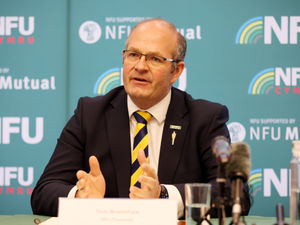
Malcolm Roberts, regional board chairman of the National Farmers' Union, said farming had to be at the forefront of talks as Britain readies itself to leave the European Union.
He said trade deals and access to the labour force were key to the survival of farming.
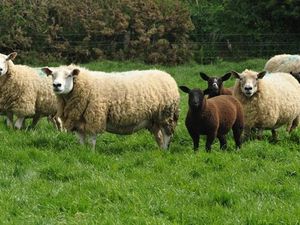
The Oswestry sheep farmer spoke out as lambing is in full swing in the Oswestry and Welsh borders countryside.
"We export about 40 per cent of lamb, the largest export of the UK's farming industry," Mr Roberts said.
"Mrs May has to ensure trade deals with Europe as we would not survive if we had to live with World Trade Organisation tariffs.
"If British agriculture is to survive then we have to have free trade."
Mr Roberts said the agricultural industry relied on an available labour force, from those to harvest produce to those who pack it.
He added: "We need workers from outside Britain to work, not just in farming but in the industries that depend of farming. We need slaughtermen and packers for instance."
He said that workforce can not always be found from British workers.
The NFU experts said that the value of agriculture to Britain's economy was huge.
He said: "For every £1 that goes to farmers in subsidy about £7.40 is generated for the economy, that is huge. The food and drink industry is worth 108 billion to the economy and without farming at its foundation we would not have that industry.
"We need support payments from somewhere if we are to survive The British farming industry can easily fall of our weather, for example."
"This time next year I hope things are clearer and sheep farmers do not need to worry about what the trade deals will be.
"The Farmers’ Union of Wales has said time is running out developing a UK framework for agriculture is just one element of that work."
Following consultation with members, the FUW agreed last autumn that a UK agricultural framework should be put in place which prevents unfair competition between devolved regions and secures and protects adequate long term funding for agriculture.
President of the FUW Glyn Roberts, said: "Now that Article 50 has been triggered we know there are just two years in which to deal with a huge volume of work.
“As well as pressing issues with regard to trade deals and negotiating the best possible exit options for the UK, we also need good progress in parallel in terms of reaching understanding and agreement between devolved administrations."
if we are to develop a home market that works for all.”
“We are concerned that discussions at the highest level regarding the need for and nature of such a framework are not progressing at the appropriate rate, particularly given the very short period during which important decisions need to be made, and that’s why we are repeating our call for all the Governments to work closely and cooperatively to ensure the wellbeing of our rural communities is not compromised,” added the Union President.
“In recent years we have seen what can happen when even slight changes are made to systems and rules which affect agriculture, particularly in England and in Scotland. And the problems in England in 2005 and 2006 are well documented," Mr Roberts said.
“We have to have a gradual transition to any new rules, and that means making sure there are few differences between the systems which are in place on the last day of EU membership and the first day of Brexit. A UK framework needs to be in place to achieve this."