Expats in Shropshire: The Tamas family from Hungary
Fish soup and pickled cabbage might raise a few eyebrows as an alternative to the traditional festive feast, but one Hungarian family will be tucking into just this as they celebrate their first Christmas in Telford.
Being from the Szigetszentmiklos (which translates to the Island of St Nicolas), 10km south of Budapest in Hungary, the Tamas family knows better than most how to uphold traditions from their homeland.
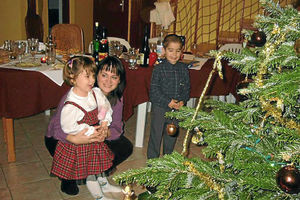
Mum Aniko and husband Gabor, both aged 38, came to live in Lightmoor just four months ago with their children Natalia, eight, and Gergely, nine, after Gabor was offered a key account manager's role in the Midlands for global logistics company Fedex.
Aniko, a former financial controller for Porsche in Budapest, said deciding where to settle was difficult, but the area's engineering heritage swung the decision – particularly since an understudy of civil engineer Thomas Telford helped build a suspension bridge in Budapest, called the Lanchid, which, like the couple's decision to move, links the East and West.
Shropshire was an attractive county compared to the hectic city life of Budapest; Aniko can now see the children's school from her kitchen window, a stark contrast to the gruelling two-hour round trip the family used to undertake back home.
She said: "It was exhausting for the children, education is very rigorous as many families aspire to raising a genius and children spend evenings and weekends doing homework and private tuition. They don't really have chance to be young and simply play.
"Christmas is a really important time to many families and the time children have at home during this time is so important for them."
Around September is when the first sprinklings of glitter can be seen in UK shop displays but Hungarians like to wait until the first Sunday of advent, December 1, to start thinking about the mainly Roman Catholic, family-focused celebration when the first advent candles are lit.
Natalia and Gergely begin to get excited when the second candle is sparked. Aniko explains: "On December 5, out comes the polish and footwear is placed on windowsills for St Nicolas, or Mikulas, who visits and crams boots full of tangerines, walnuts, apples, dates and chocolate Mikulas figures, that is of course if they have been good.
"Sometimes a rod is given to children who have been bad, from the Krampsusz to make them think about their behaviour."
St Nicolas' frightening helper, the Krampusz wears a black suit and has a long red tongue, a tail, little red horns and wields a Virgacs, a bunch of bound, gold-coloured twigs which are given to children, along with gifts, as a way to make them behave.
By the time the third candle is lit, thoughts turn to the meal and the tree. Last year Aniko's real, not plastic, pine tree cost 12,000 Hungarian Forint (about £40) and, as in the UK, was decorated with baubles and beads with the tasty addition of, szalonkcukor or string sweets, which the children often sneak off and replace, hanging wrappers with stones to fool mum and dad.
Although the festive feast is simple in terms of ingredients which includes mince pork, pickled cabbage, paprika, tomato and soured cream, the process of making töltött káposzta – stuffed cabbage leaves, baked in a tomato and paprika sauce, is complex and Aniko will spend much of the morning today stuffing and rolling delicate meaty parcels ready for baking while her husband and children dress the tree.
Thankfully, a cousin of the family is a truck driver and has already bought supplies of pickled cabbage and gifts from the rest of the family and kolbasz, the spicy, pork sausage similar to the Spanish chorizo, has been sourced from a specialist delicatessen in Wolverhampton.
Many families in Hungary will cook a spicy fish soup too and wash the meal down with a plum schnapps called Palinka, more often than not brewed by grandmothers and enjoyed with beigli, a rich sweet bread with either poppy seed or walnut filling for desert.
While Natalia and Gergely are discreetly moved into another room after lunch to talk with grandparents by Skype and sing songs, it is the baby Jesus that finally brings the gifts.
Aniko said: "Back home gifts are usually simple items such as bikes, books, chocolates and clothes but this year the children have asked for more electronic gadgets such as a Ninteno DS. In Hungary children don't normally get theses things until they are around 12 as we feel they are too solitary for children who should to be socialising.
"My daughter said she would rather have no presents and a loving family than mountains of gifts and an unloving home life which made me very proud.
"Something British people do which has been replaced in Hungary by SMS and e-mail is the sending of Christmas cards, they make so much effort to tell people they are thinking of each other and it really is beautiful."
Aniko and her family this year will be spending the day in pyjamas – a new family tradition starting tomorrow. She said: "Normally we would visit our friends and families on December 25 and 26 but as we are in England we have decided to stay in our pyjamas and enjoy the time with our children."