Trend continues on land price
Land remains in demand as investors and lifestyle buyers jostle for best plots and shortages of agricultural land continue to stoke prices.
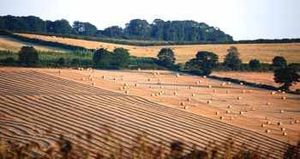
Commenting on the latest RICS/RAU Rural Land Market Survey, head of Bruton Knowles' Shrewsbury office, Gareth Lay, said demand remained very strong for parcels of farmland – with or without houses and buildings – with significant increases seen in Shropshire and throughout Wales.
He said: "The lack of supply to the market is having the effect of constantly enhancing prices at which land deals are being concluded. Whilst there are always local variations, and specific factors to be taken into account, this trend seems set to continue for the foreseeable future."
The RICS/RAU report revealed farmland in the UK had risen by four per in the first half of 2014 to £8,607 an acre. Average land prices are now 8.4 per cent higher than they were a year ago. Prices in the West Midlands have exceeded this national average, at £8,875 per acre.
Gareth said: "We are seeing considerable interest from a number of different sectors, including investment buyers for both substantial portfolios and smaller acreages. There has also been a noticeable trend as residential lifestyle buyers have returned to the market, reflecting the improved confidence in the national economy.
"Commercial farmers have been the most active as buyers in recent months, although the recent downturn in arable commodity prices may slightly temper their enthusiasm to acquire additional land in the next few months."
Bruton Knowles predicted the recently concluded reform of the CAP system was unlikely to have a significant impact on future land prices.
Gareth added: "Recent demand has been driven principally by commercial farmers, but demand from lifestyle farmers is starting to come back.
"Wales saw the largest price increase over the last 12 months, rising by 19 per cent. Land in Wales is now standing at £8,625 – higher than anywhere else across the rest of the UK and nearly seven per cent greater than the national average."
He concluded: "The imbalance between supply and demand appears to show no sign of waning where reasonable long term returns are very possible to achieve without undue risk."