Manmade climate change worsened flooding disaster in southern Africa, study says
The study was conducted by scientists from across the world to assess the impact of climate change on severe weather patterns.
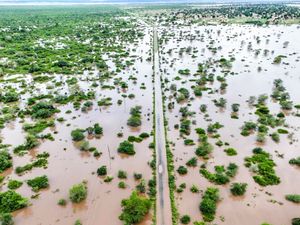
Human-caused climate change worsened recent torrential rains and floods that devastated parts of southern Africa, killing more than 100 people and displacing hundreds of thousands, researchers have said.
A study by World Weather Attribution, which analysed the heavy rainfall that caused severe flooding in parts of South Africa, Mozambique and Zimbabwe, showed that the region experienced a year’s worth of rain in a period of 10 days.
It resulted in widespread damage to housing and infrastructure estimated to run to millions of dollars while humanitarian agencies say there is an escalating crisis for people displaced and facing hunger, disease outbreaks and a lack of health services.
Many homes and buildings in Mozambique were completely submerged under water and dozens of hospitals and clinics were destroyed while roads and bridges were swept away in the South African provinces of Limpopo and Mpumalanga and parts of Zimbabwe.

The study was conducted by scientists from across the world using peer-reviewed methods to assess the impact of climate change on severe weather patterns and events.
The data obtained from the recent downpours, the rare magnitude of which occurs roughly once every 50 years, confirmed a “clear move toward more violent downpours”, the study said.
It was also compounded by the current La Nina weather phenomenon which naturally brings wetter conditions in the southern Africa region and is now operating within a much warmer atmosphere.
“Our analysis clearly shows that our continued burning of fossil fuels is not only increasing the intensity of extreme rainfall but turning events that would have happened anyway into something much more severe,” said Izidine Pinto, a senior climate researcher at the Royal Netherlands Meteorological Institute.

Mr Pinto, who co-authored the study, said the climate models used struggled to pinpoint exactly how much worse the recent floods were made but that a 40% increase in the intensity of the rains would be impossible to explain without human-caused climate change.
“It means what would have already been a serious period of heavy rain has been transformed into a more violent deluge that communities are not equipped to deal with,” he said.
Africa contributes only 3% to 4% of global emissions, according to the United Nations, and yet is one of the most vulnerable to the impacts of climate change.
The floods and previous crises like cyclones in southern Africa cause hundreds of millions to billions of dollars’ worth of damage in what are largely poor countries and the continent has urged richer nations to help more with climate-related disasters.
Around 1.3 million people across southern Africa were affected by this month’s floods, The World Health Organisation said.

The affected regions in southern Africa are no strangers to heavy downpours and flooding, but scientists were alarmed by the magnitude of the recent events.
“This event was a surprise to us because we have experienced the previous ones 25 years ago, which flooded the same areas,” said Bernardino Nhantumbo, a researcher with the Mozambique weather service. “There are places that have recorded in two to three days the rainfall that was expected for the entire rainy season, so this was very challenging to accommodate in any circumstances.”
Nine international rivers flow downstream to Mozambique and significant damage is expected following such an event due to heavy rainfall as well as the stream flow, Mr Nhantumbo said.
“We forecast well because we have different models but these are those events that even with a good forecast you cannot hold the damages that are associated,” he said.
The central and southern parts of Mozambique were the hardest hit, with the Gaza provincial capital of Xai-Xai and the nearby town of Chokwe largely submerged under water.