Fire at Cox’s Bazar refugee camp in Bangladesh displaces thousands of Rohingya
The blaze broke out in Camp 16, one of more than 30 camps in the Cox’s Bazar district that makes up the world’s largest refugee centre.
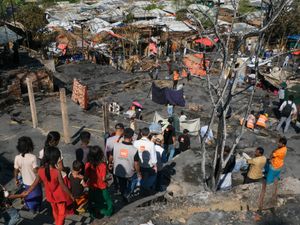
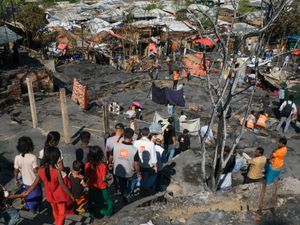
A fire has destroyed hundreds of makeshift homes and displaced more than 2,000 people in a Rohingya refugee camp in Cox’s Bazar, Bangladesh, prompting calls from relief agencies for more funding to build safer housing and help provide emergency aid.
The fire broke out in the early hours of Tuesday in Camp 16, one of more than 30 camps in the Cox’s Bazar district that makes up the world’s largest refugee centre, housing more than one million Rohingya people who have fled persecution in neighbouring Myanmar.
The United Nations’ International Organisation for Migration (IOM) said it had created a new crisis for families already struggling to survive.

“When fires strike in overcrowded camp settings, the impact extends far beyond damaged infrastructure,” Lance Bonneau, IOM chief of mission in Bangladesh, said in a statement.
“Families lose shelter, essential belongings, and access to basic services, increasing immediate protection risks.”
It took firefighters about three hours to bring the blaze under control. While there were no fatalities and only a handful of minor injuries, many people lost not only their homes but also all their possessions, including identity documents and other important papers, the Norwegian Refugee Council told The Associated Press on Thursday.
The aid organisation is among others operating inside the Cox’s Bazar camps.
Overall, the fire, whose cause has not yet been determined, destroyed 335 shelters and damaged 72 more, the organisation said. It also damaged water and sanitation points in the camp, 11 learning centres and camp infrastructure and pathways.
More than 700,000 Rohingya fled Myanmar in 2017 after the military launched a crackdown on the Muslim minority group following insurgent attacks on guard posts in Rakhine state, which borders Bangladesh, swelling the numbers of refugees already in Cox’s Bazar.
The scale, organisation and ferocity of the Myanmar military operation led to accusations of ethnic cleansing and genocide from the international community, including the UN.
The International Court of Justice in The Hague, Netherlands, is hearing a case accusing Myanmar of violating the 1948 Genocide Convention during its so-called “clearance operation” in 2017. Myanmar has denied the allegations.
Ongoing fighting in Rakhine, between government forces and groups opposing the military leaders who ousted democratically elected Aung San Suu Kyi in February 2021, has led to tens of thousands more Rohingya fleeing to Bangladesh.
Following the fire, the IOM, Norwegian Refugee Council and other agencies launched relief efforts to provide emergency aid to address the immediate needs of those displaced, including blankets, mosquito nets, cooking supplies, hygiene kits and solar lights.
“While immediate assistance continues, the incident underscores the persistent fire risks facing refugee communities in Cox’s Bazar,” the IOM said.
The Norwegian Refugee Council said there had been plans to build 50,000 semi-permanent shelters to move people from the tarpaulin or plastic-covered bamboo structures in which most refugees live, but that international aid cuts announced in January 2025 meant they had to be shelved.
The bamboo shelters, originally meant to last six to 12 months, are packed together in close proximity in the overcrowded camps and are particularly vulnerable to fire, the organisation said.
It cited one report that between May 2018 and December 2025 there had been 2,425 fires in the camps, affecting more than 100,000 people and damaging more than 20,000 shelters causing significant loss of life.