Rain floods camps for displaced Palestinians in Gaza
Blankets have been soaked and ovens have been swamped.
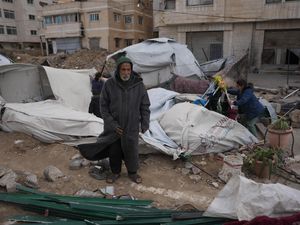
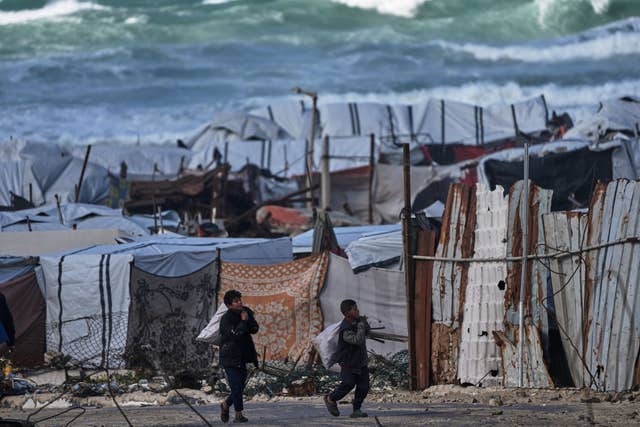
Winter rain lashed the Gaza Strip over the weekend, flooding camps with ankle-deep puddles as Palestinians displaced by two years of war attempted to stay dry in tents frayed by months of use.
In the southern city of Khan Younis, blankets were soaked and clay ovens meant for cooking were swamped. Children wearing flip-flops waded through puddles. Some people used shovels or tin cans to remove water from tents, while others clawed at the ground to pry collapsed shelters from the mud.
“Puddles formed, and there was a bad smell,” said Majdoleen Tarabein, displaced from Rafah in southern Gaza. “The tent flew away. We don’t know what to do or where to go.”
She and family members tried to wring muddy blankets dry by hand.

“When we woke up in the morning, we found that the water had entered the tent,” said Eman Abu Riziq, also displaced in Khan Younis. “These are the mattresses. They are all completely soaked.”
She said her family are still reeling from her husband’s death less than two weeks ago.
“Where are the mediators? We don’t want food. We don’t want anything. We are exhausted. We just want mattresses and covers,” said Fatima Abu Omar as she tried to prop up a collapsing shelter.
At least 12 people, including a two-week-old infant, have died since December 13 from hypothermia or weather-related collapses of war-damaged homes, according to Gaza’s Health Ministry, part of the Hamas-run government.
Emergency workers have warned people not to stay in damaged buildings because they could collapse. But with much of the territory in rubble, there are few places to escape the rain.
In July, the United Nations estimated almost 80% of buildings in Gaza have been destroyed or damaged.
Israeli Prime Minister Benjamin Netanyahu, meanwhile, has travelled for an expected meeting on Monday with US President Donald Trump in Florida about the second phase of the Gaza ceasefire.
The first phase that took effect on October 10 was meant to bring a surge in humanitarian aid for Gaza, including shelter.
Mr Netanyahu made no public statement as he departed on Sunday for the US.
Since the ceasefire between Israel and Hamas began, 414 people have been killed and 1,142 wounded in Gaza, according to the Health Ministry.
The overall Palestinian death toll from the war is at least 71,266.
Humanitarian deliveries into Gaza are falling far short of the amount called for under the US-brokered ceasefire, according to aid organisations and an Associated Press analysis of the Israeli military’s figures.
The Israeli military body in charge of humanitarian aid said in the past week that 4,200 trucks with aid entered Gaza, plus eight rubbish trucks to assist with sanitation, as well as tents and winter clothing. It refused to elaborate on the number of tents. Aid groups have said the need far outstrips the number that have entered.
“People in Gaza are surviving in flimsy, waterlogged tents and among ruins,” Philippe Lazzarini, commissioner-general of the top UN group overseeing aid in Gaza, wrote on social media.
“There is nothing inevitable about this. Aid supplies are not being allowed in at the scale required.”