Social media ban for children under 16 begins in Australia
Parents reported distraught children discovering they had been shut out of platforms as the landmark law took effect.
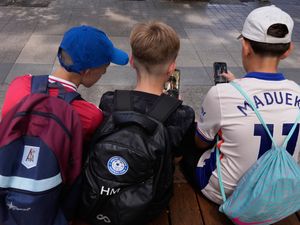
Australian Prime Minister Anthony Albanese welcomed a world-first social media ban for children younger than 16 as it took effect on Wednesday.
But he warned the implementation would be difficult.
Parents reported distraught children discovering they had been shut out of platforms as the landmark law took effect.
Some young children reported fooling the platforms’ age estimation technology by drawing on facial hair.
Parents and older siblings are also expected to help some children circumvent the restrictions.
“This is the day when Australian families are taking back power from these big tech companies and they’re asserting the right of kids to be kids and for parents to have greater peace of mind,” Mr Albanese told the Australian Broadcasting Corp.
“This reform will change lives. For Australian kids… allowing them to just have their childhood.
“For Australian parents, enabling them to have greater peace of mind.
“But also for the global community, who are looking at Australia and saying: well, if Australia can do it, why can’t we?” Mr Albanese later told a Sydney gathering of reform supporters, including parents who blame social media for a child’s suicide.

Facebook, Instagram, Kick, Reddit, Snapchat, Threads, TikTok, X, YouTube and Twitch face fines of up to 49.5 million Australian dollars (£24.7 million) from Wednesday if they fail to take reasonable steps to remove the accounts of Australian children younger than 16.
The ban will be enforced by Australia’s eSafety commissioner Julie Inman Grant.
She said the platforms already had the technology and personal data about their users to enforce the age restriction with precision.
Ms Inman Grant will send the 10 targeted platforms on Thursday notices demanding information on how the age restriction was being implemented and how many accounts had been closed.
“We will provide information to the public before Christmas on how these age restrictions are being implemented and whether preliminarily we see them working,” she said.
Australia’s privacy commissioner Carly Kind said the platforms could potentially ask all account holders across the country to prove they are 16 or older.

The platforms’ age verification options were to ask for copies of identification documents, use a third party to apply age estimation technology to analyse an account holder’s face, or make inferences from data already available such has how long an account has been held, Ms Kind said.
“There’s quite strong privacy protections in the legislation,” she said.
“They require social media platforms to delete any data they collect for the purpose of age assurance under this scheme and to not use it for secondary purposes unless they have individuals’ consent.
“And that’s a really strong and important safeguard.”
The government has said requesting all account holders verify their ages would not be a reasonable step, given the platforms already held sufficient personal data of most people to perform that task.
The platforms also cannot compel users to provide government-issued identification.