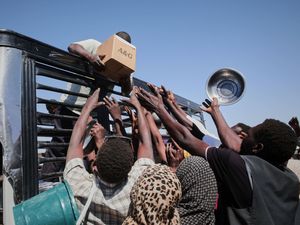
Netanyahu says Israel plans Gaza takeover as officials discuss wider offensive
The meeting comes on a day when at least 42 Palestinians were killed in airstrikes and shootings across southern Gaza, according to local hospitals.

Israel intends to take full control of the Gaza Strip to destroy Hamas, and eventually transfer its administration to friendly Arab forces, Prime Minister Benjamin Netanyahu said on Thursday, as the security cabinet discussed a widening of its 22-month offensive.
Asked in an interview with Fox News if Israel would “take control of all of Gaza”, Mr Netanyahu replied: “We intend to, in order to assure our security, remove Hamas there, enable the population to be free of Gaza.”
The security cabinet would still need to approve such a decision.
“We don’t want to keep it. We want to have a security perimeter,” Mr Netanyahu said in the interview.
“We want to hand it over to Arab forces that will govern it properly without threatening us and giving Gazans a good life.”
The security cabinet has begun discussing a possible expansion of Israel’s military operations in Gaza, a move that, if it happens, would come despite fierce opposition from many in Israel, including the families of hostages who remain in Hamas captivity.
The meeting comes on a day when at least 42 Palestinians were killed in airstrikes and shootings across southern Gaza, according to local hospitals.
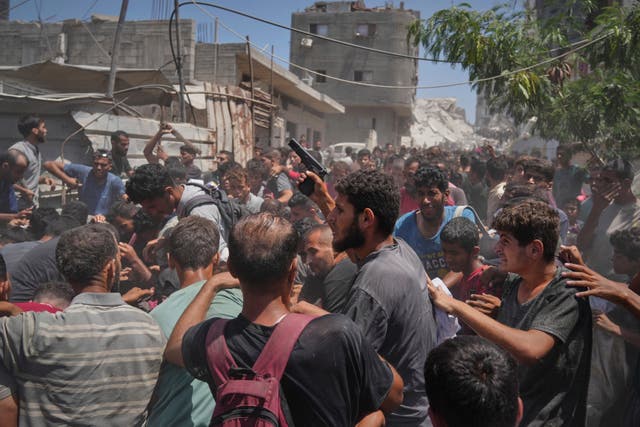
Of the 42 people killed on Thursday, at least 13 were seeking aid in an Israeli military zone in southern Gaza where UN aid convoys are regularly overwhelmed by looters and desperate crowds.
Another two were killed on roads leading to nearby sites run by the Israeli-backed Gaza Humanitarian Foundation, an American contractor, according to Nasser Hospital, which received the bodies.
Neither the Gaza Humanitarian Foundation nor the Israeli military, which helps secure the group’s sites, commented on the strikes or shootings. The military zone, known as the Morag Corridor, is off limits to independent media.
The Israeli military has accused Hamas of operating in densely populated civilian areas.
Mr Netanyahu has been meeting top advisers and security officials to discuss what his office said are ways to “further achieve Israel’s goals in Gaza” after the breakdown of ceasefire talks last month.
An Israeli official said the security cabinet would hold a lengthy debate and approve an expanded military plan to conquer all or parts of Gaza not yet under Israeli control.
The official said that whatever is approved would be implemented gradually and in stages, with the idea of increasing pressure on Hamas.
Such a step would trigger new international condemnation of Israel at a time when Gaza is plunging towards famine.
It also has drawn opposition across Israel, with hostage families saying it could threaten their loved ones.
Israel’s army chief, Lt Gen Eyal Zamir, has warned that the plan would endanger the hostages and further strain Israel’s army, which has been stretched thin during a nearly two-year war, according to Israeli media.
The comments appear to have exposed a rift between Mr Netanyahu and his army.
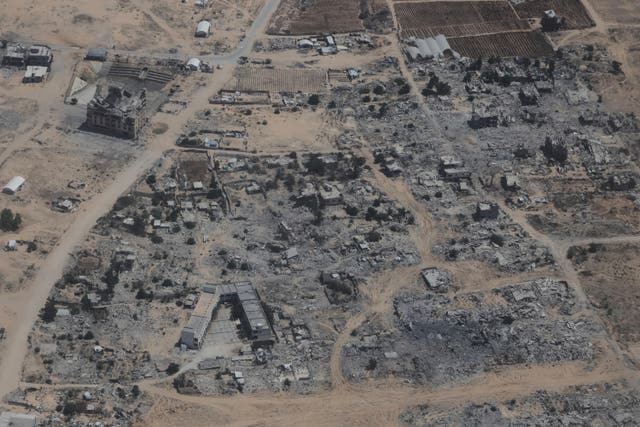
In Gaza, where Israel’s 22-month offensive has already killed tens of thousands of people, displaced most of the population, destroyed vast areas and caused severe and widespread hunger, Palestinians braced for further misery.
“There is nothing left to occupy,” said Maysaa al-Heila, who is living in a displacement camp. “There is no Gaza left.”
Demonstrations were planned across Israel on Thursday to protest against the expected Cabinet decision.
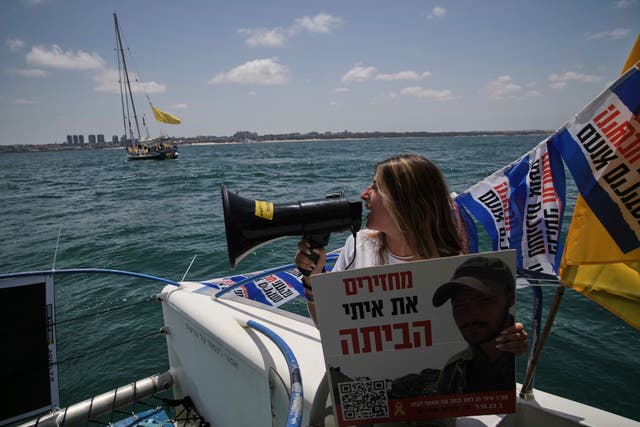
Earlier on Thursday almost two dozen relatives of hostages being held in Gaza set sail from southern Israel towards the maritime border with Gaza, where they broadcast messages from loudspeakers on boats to their relatives in Gaza.
The families denounced Mr Netanyahu’s plan to expand military operations.
Yehuda Cohen, the father of Nimrod Cohen, an Israeli soldier held hostage in Gaza, said from the boat that Mr Netanyahu is prolonging the war to satisfy extremists in his government and to prevent it from collapsing.
“Netanyahu is working only for himself,” he said, pleading with the international community to put pressure on Mr Netanyahu to stop the war and save his son.
Meanwhile Israeli authorities returned the body of a Palestinian activist allegedly killed by an Israeli settler last week, after female Bedouin relatives launched a hunger strike in protest at the authority’s decision to hold his body in custody.
The hunger strike was a rare public call from Bedouin women who traditionally mourn in private.
Witnesses said Awdah Al Hathaleen was shot and killed by a radical Israeli settler during a confrontation caught on video last month.
Israeli authorities said they would only return the body if the family agreed to certain conditions that would “prevent public disorder”.
Despite dropping some of their demands, family members said Israel set up checkpoints and prevented many mourners from outside the village from attending.
Hamas-led militants killed about 1,200 people, mostly civilians, and abducted 251 in the October 7, 2023, attack that ignited the war.
They still hold 50 hostages, about 20 of them believed to be alive, after most of the rest were released in ceasefires or other deals.
Israel’s retaliatory military offensive has killed more than 61,000 Palestinians, according to Gaza’s health ministry, which does not distinguish between civilians and combatants in its count but says about half the dead have been women and children.