Zelensky announces new anti-corruption Bill after public outcry and EU criticism
Mr Zelensky said it was needed to speed up investigations, ensure more convictions and remove ‘Russian influence’ from the fight against corruption.
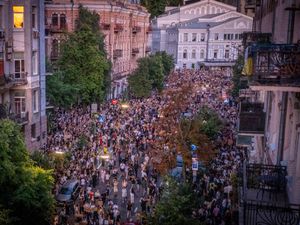
Ukrainian President Volodymyr Zelensky announced that he is sending a new anti-corruption Bill to Ukraine’s Parliament on Thursday, in a further attempt to defuse tensions after he approved changes to corruption laws that brought a public outcry and sharp criticism from the European Union.
Opponents of the contentious law passed by politicians and approved by Mr Zelensky earlier this week said that it stripped Ukraine’s anti-corruption watchdogs of their independence by granting the government more oversight of their work.
Mr Zelensky said it was needed to speed up investigations, ensure more convictions and remove “Russian influence” from the fight against corruption, though he did not provide examples of Russian meddling.
In an abrupt change of course on Thursday, Mr Zelensky unexpectedly said that he had drawn up a new draft Bill on corruption that “guarantees the real strengthening of the law and order system in Ukraine”.
“The most important thing is real tools, no Russian connections, and the independence of the (watchdogs),” he said in a Telegram post.
The declaration appeared to bow to recent pressure that threatened to undermine public trust in Ukraine’s leaders after more than three years of fighting Russia’s full-scale invasion.
The protests have not called for Mr Zelensky ousting, but they are the first major anti-government demonstrations since the war began.
“It is important that we maintain unity,” Mr Zelensky said in his post.
The announcement also left some questions unanswered.
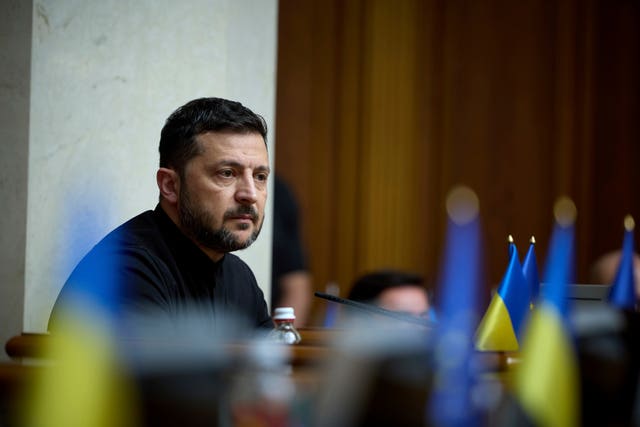
Mr Zelensky had said on Wednesday that he met the heads of Ukraine’s key anti-corruption and security agencies and gave them two weeks to make recommendations on how the graft law could be improved before he presented another Bill to Parliament. It is unclear what becomes of that effort to seek their input.
Despite that assurance of new legislation, further street protests were scheduled for Thursday evening.
The new pronouncement also left unclear whether Mr Zelensky intended to revoke the law that he approved earlier in the week after Parliament had passed it. He did not publicise details about the proposed new law.
The unrest has come at a difficult time in the all-out war, which began on February 24 2022. Russia’s bigger army is accelerating its efforts to pierce Ukraine’s frontline defences and is escalating its bombardment of Ukrainian cities.
Ukraine is also facing a question mark over whether the United States will provide more military aid and whether European commitments can take up the slack, with no end in sight to the war.
Delegations from Russia and Ukraine met in Istanbul for a third round of talks in as many months on Wednesday. But once again, the talks were brief and delivered no major breakthrough.
Fighting entrenched corruption is crucial for Ukraine’s aspirations to join the EU and maintain access to billions of dollars in Western aid in the war. It is also an effort that enjoys broad public support.
EU enlargement commissioner Marta Kos expressed concern on Wednesday over the new law, calling it “a serious step back”.
The Ukrainian branch of Transparency International criticizsed parliament’s decision, saying it undermines one of the most significant reforms since what Ukraine calls its Revolution of Dignity in 2014 and damages trust with international partners.
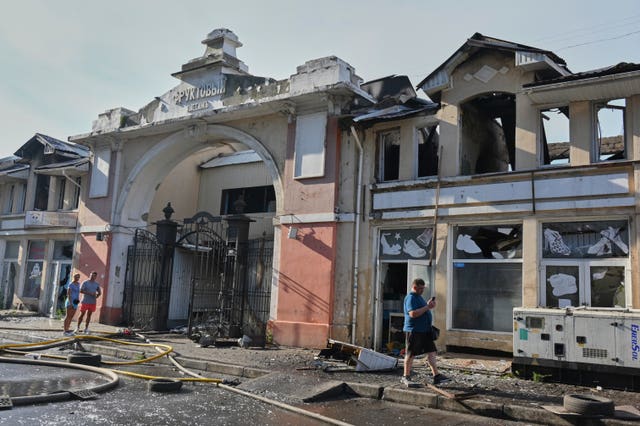
Meanwhile, two women aged 48 and 59 were killed and 14 other people were injured when Russian forces dropped four powerful glide bombs on Kostiantynivka, an industrial city in eastern Ukraine, and shelled it with artillery, Donetsk regional governor Vadym Filashkin said.
Russian planes also dropped two glide bombs on the centre of Kharkiv, Ukraine’s second-largest city, on Thursday morning, regional governor Oleh Syniehubov said. At least 42 people were wounded, including two babies, a 10-year-old girl and two 17 year olds, authorities said.
The southern city of Odesa, and Cherkasy in central Ukraine, were also hit overnight, authorities said. The drone and missile strikes on the cities wounded 11 people, including a nine-year-old, and damaged historic landmarks and residential buildings, officials said.
Ukraine has sought to step up its own long-range drone attacks on Russia, using domestic technology and manufacturing.
An overnight Ukrainian drone attack on the Russian Black Sea resort of Sochi killed two women and wounded 11 other people, local authorities said Thursday.
An oil depot was hit, officials said, without offering details.