Israeli strikes across Gaza kill at least 85 people, health officials say
On Monday, Israeli Prime Minister Benjamin Netanyahu began allowing a small number of aid trucks into Gaza for the first time in more than two months.
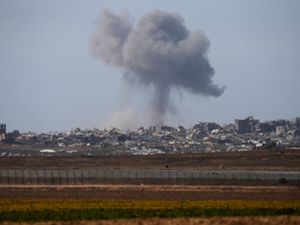
Israel showed no sign of responding to allies’ calls to halt its new military offensive in Gaza as health officials said airstrikes killed at least 85 Palestinians overnight, but Israel said it was allowing in dozens more trucks of aid.
The strikes came as Israel pressed its war against Hamas despite mounting international condemnation.
Israel launched another major offensive in the territory in recent days, saying it aims to return dozens of hostages held by Hamas and destroy the militant group.
More than 300 people have been killed in Gaza during the latest onslaught, according to health officials.
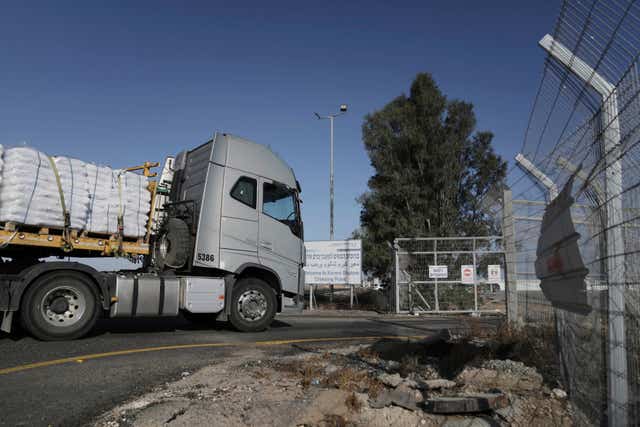
Dozens of aid trucks began entering Gaza via the Kerem Shalom crossing on Tuesday afternoon, Israel’s Foreign Ministry spokesperson Oren Marmorstein said.
They included flour for bakeries, food for community soup kitchens, baby food and medical supplies. Organisations in Gaza did not immediately confirm whether they had received supplies.
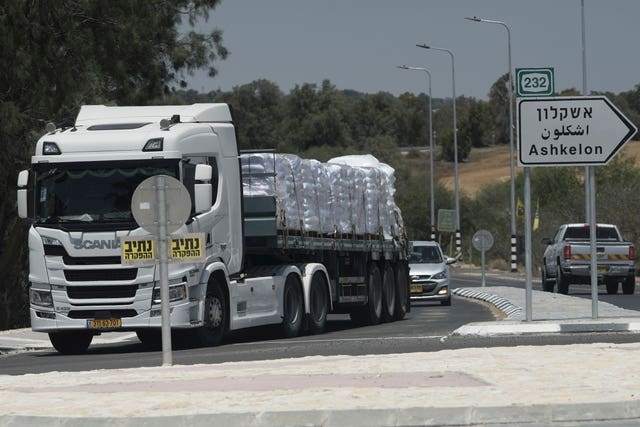
Mr Marmorstein said Israel would continue to allow dozens of trucks carrying humanitarian aid per day – far less than the 600 per day that entered during the latest ceasefire.
Israel has agreed to allow a “minimal” amount of aid into the territory of more than two million people after a nearly three-month blockade that prevented the entry of food, medicine and fuel, among other goods. The blockade prompted warnings from food experts of a risk of famine. The first few trucks entered on Monday.
Israeli Prime Minister Benjamin Netanyahu said he made the decision to let in minimal aid after pressure from allies, who he said could not support Israel so long as “images of hunger” were coming out of Gaza.
Criticism of Israel’s conduct intensified on Monday when allies Canada, France and the UK threatened “concrete actions” against the country, including sanctions, and called on Israel to stop its “egregious” new military actions in Gaza.
Mr Netanyahu rejected the criticism, saying it was “a huge prize” for Hamas’s attack on October 7 2023 that would invite more such violence.
The UK government on Tuesday said it was suspending free trade negotiations with Israel and was levelling new sanctions targeting settlements in the occupied West Bank.
“I want to put on record today that we’re horrified by the escalation from Israel,” Prime Minister Sir Keir Starmer told Parliament.
Israel’s Marmorstein called the new sanctions “unjustified and regrettable” and claimed Israel and the UK had not been talking about free trade.
French foreign minister Jean-Noel Barrot denounced the Israeli government’s “blind violence” in Gaza that he said has turned the Palestinian territory into a “place of death”.
Jens Laerke, spokesman for the UN humanitarian agency OCHA, said the world body had received approvals for about 100 trucks to enter Gaza.
The UN says that amount of trucks is just a “drop in the ocean” of what is needed.
Criticism against Israel’s conduct in Gaza came also from inside the country, with a leader of Israel’s centre-left politics saying on Tuesday that Israel was becoming an “outcast among nations” because of the government’s approach to the war.
“A sane country doesn’t engage in fighting against civilians, doesn’t kill babies as a hobby and doesn’t set for itself the goals of expelling a population,” Yair Golan, a retired general and leader of the opposition Democrats party, told Reshet Bet radio.
His comments were a rare criticism from within Israel of its wartime conduct in Gaza.
Many Israelis have criticised Mr Netanyahu throughout the war, but that has been mostly limited to what opponents argue are his political motives to continue the war. Criticism like Mr Golan’s, over the war’s toll on Palestinian civilians, has been almost unheard.
Mr Netanyahu swiftly criticised Mr Golan’s remarks, calling them “wild incitement” against Israeli soldiers.
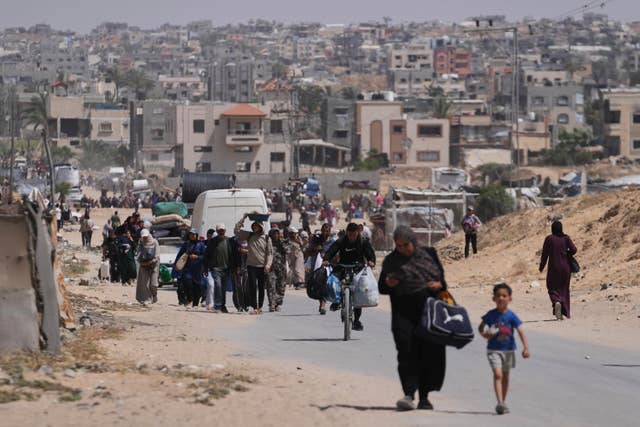
Over recent days, strikes have pounded areas across Gaza and Israel has issued evacuation orders for Gaza’s second-largest city, Khan Younis, which endured a previous offensive that left vast destruction.
In the latest strikes, two in northern Gaza hit a family home and a school-turned-shelter, killing at least 22 people, more than half of them women and children, according to the Gaza Health Ministry.
A strike in the central city of Deir al-Balah killed 13 people, and another in the nearby built-up Nuseirat refugee camp killed 15, according to the Al-Aqsa Martyrs Hospital.
Two strikes in the southern city of Khan Younis killed 10 people, according to Nasser Hospital.
There was no immediate comment from the Israeli military, which says it only targets militants and blames Hamas for civilian deaths because the group operates in densely populated areas.
The war in Gaza began when Hamas-led militants attacked southern Israel, killing some 1,200 people, mostly civilians, and abducting 251 others. The militants are still holding 58 captives, around a third believed to be alive, after most of the rest were returned in ceasefire agreements or other deals.
Israel’s retaliatory offensive, which has destroyed large swathes of Gaza, has killed more than 53,000 Palestinians, mostly women and children, according to Gaza’s Health Ministry, which does not differentiate between civilians and combatants in its count.