
Boutcher challenges ‘misinterpretation’ of PIRA remark in police log on Drumcree
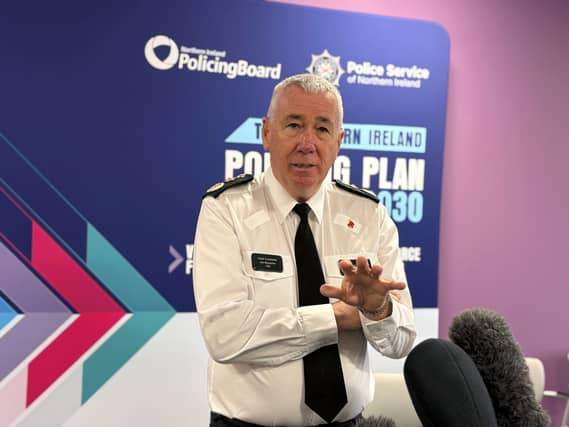

Northern Ireland’s police chief also said files on suspects interviewed over a protest on the Garvaghy Road would be sent to prosecutors within days.
Northern Ireland’s police chief has insisted no one “dictates” how his officers make decisions as he challenged a “misinterpretation” that the feelings of the Provisional IRA were a factor in the PSNI halting the Drumcree parade in Portadown.
Jon Boutcher also gave an update on the investigation into people who participated in an allegedly unlawful protest to block the parade, including First Minister Michelle O’Neill, telling reporters that evidence files on suspects would be sent to prosecutors for consideration within days.
Mr Boutcher said 65 potential suspects had been identified and 23 had been interviewed by police as of Thursday.
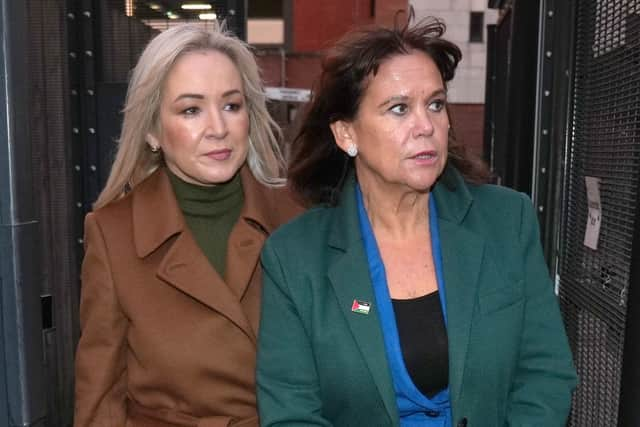
Several senior Sinn Féin politicians, including Ms O’Neill and party president Mary Lou McDonald, are among those who have been interviewed for taking part in the protest on the Garvaghy Road.
Mr Boutcher appeared before members of his oversight body – the Northern Ireland Policing Board – on Thursday and faced several questions about the Drumcree controversy.
He said the police operation to date had cost around £5.5 million.
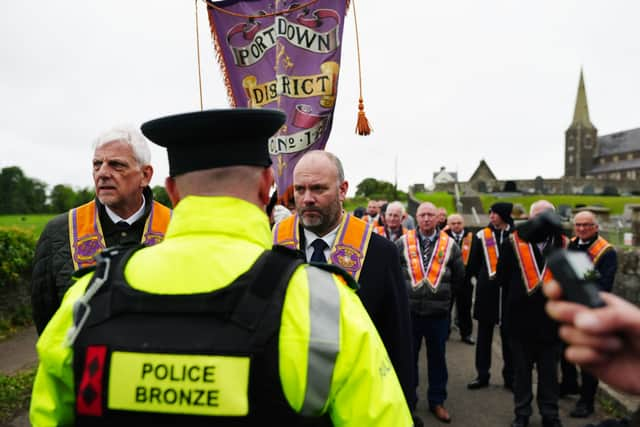
A decision in September by the Parades Commission adjudication body to allow the Orange Order to parade from Drumcree Church down the predominantly nationalist Garvaghy Road for the first time in almost 30 years prompted a two-week stand-off at the site of what was a notorious parading flashpoint during the Troubles.
The parade was ultimately unable to take place because of significant numbers of protesters on the Garvaghy Road, leading Northern Ireland Secretary Sir Chris Bryant to overturn the commission’s decision and ban the procession. His decision was upheld by a High Court judge last week.
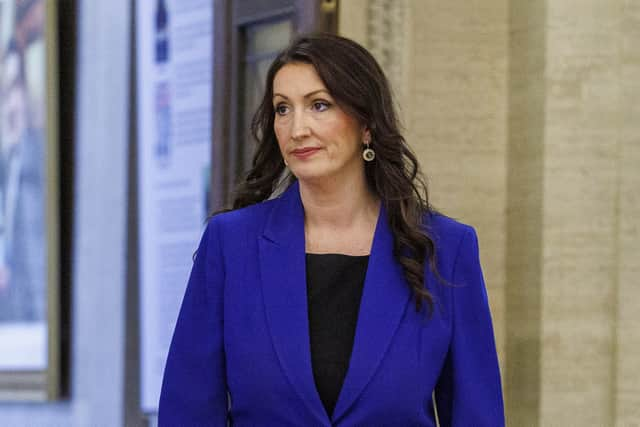
The fallout from the row has had political consequences at Stormont, with DUP deputy First Minister Emma Little-Pengelly having stopped joint engagements with Ms O’Neill.
Ms Little-Pengelly is also blocking Ms O’Neill from attending engagements in an official capacity on her own.
Carla Lockhart, the MP for Upper Bann – a constituency that includes Portadown – quit the DUP this week after accusing the party of not going far enough in its response to Ms O’Neill being under police investigation.
Ms Lockhart wanted the party to withdraw Ms Little-Pengelly from her role entirely – a move that would have automatically forced the Sinn Féin First Minister from office as well.
Under parading laws in Northern Ireland, protests must be notified to, and approved by, the Parades Commission. The protest on the Garvaghy Road on the day the parade was due to proceed, September 27, was not notified to the commission.
The decisions around the Drumcree parade have been subject to a series of legal challenges, and a reference to the “feelings of the Provisional IRA” in one police security assessment was aired in court.
Mr Boutcher used his appearance before the board to reject what he characterised as a “misrepresentation” of the comment.
“Some aspects of the intelligent picture available to police were provided to the court and subsequently became the subject of much public debate,” he said.
“To be absolutely clear, our police operation was not hostage to any threats from any proscribed organisation. We operate every day under substantial terrorist threat. It’s nothing new to us.
“A police silver commander’s summary of information and intelligence recorded in an operational log that covered a 12-hour period was disclosed to the court and made reference to, and I quote, “the feelings of the Provisional IRA”, end quote.
“I have spoken to that commander, and the word ‘feelings’ did not convey his thinking at that time, and has resulted in misinterpretation and misrepresentation.
“A better word, and what has been clarified by the officer, would have been the position or the stance of the Provisional IRA.
“Police officers must assess information from a wide range of sources to understand the potential consequences of different operational options. This includes information about community sentiment, likely reactions, persons of influence, and risks associated with any intervention.
“Such information is assessed and weighed alongside a wide range of other available material.
“This was one piece of intelligence amongst hundreds of pieces.
“The Provisional IRA remains a proscribed organisation under the Terrorism Act in 2000. The PSNI, alongside security and intelligence partners, continues to assess the national security threat presented by all relevant groups.
“The last formal public assessment of PIRA was in 2015, and it stated that it retains some structures in a reduced form, but was not involved in targeting or conducting terrorist attacks against the state.
“That position was reaffirmed in 2024 and remains the same today.”
Speaking to reporters after the board meeting, Mr Boutcher added: “Let’s be absolutely clear, there was no – at any time, in any way – decision-making about Drumcree because of the feelings of one group or another.
“We took into account all of the responsibilities and considerations you’d expect us to take into account around people’s human rights, not individual groups’ wishes and I think anybody who actually looks at the material that we were very open about in disclosing at court would have come to that conclusion.
“So again, I’m very disappointed about the way that narrative has then run away in a way that’s completely wrong and I hope I’ve set the record straight now.”
The police chief said members of the Provisional IRA are not seeking to harm society.
“They remain a proscribed organisation,” he said.
“In this society today, in 2026, people often talk about members of the IRA, but they talk about members of the IRA in the context of when people were in the IRA during the Troubles and were operating in a way to bring harm to society.
“We still talk about people who are in that organisation today, who are now much older, in the same way, but they’re not seeking to bring harm to society.
“The challenge I have, the challenge we have, the challenge this organisation has, is the dissident republicans.”
Providing an update on the investigation into the Garvaghy Road protest, Mr Boutcher told reporters: “The investigation is progressing at speed, but we’ve got to make sure we do things properly, and I don’t think anybody looking at our response to the investigation could fairly criticise us for the way we’ve got on with it, and we continue to get on with it.
“And what I would say is, let that due process take its course, we will wait to see what the decisions of the Public Prosecution Service are with regards to the files that we submit.
“I’ve made clear in my responses to the board today, there are more interviews to do, we’ve interviewed 23, and that number changes almost every day, as I’m sure you appreciate, and as we submit files to the Public Prosecution Service, in the way that we do it, a transparent way, we’ll keep everybody updated.”
Asked by reporters in Belfast when the police would be sending files to the PPS, Mr Boutcher said: “I want us to get on with this in a timely fashion because there’s a public reassurance requirement for that, but I want us to get it right.
“That we are now reaching the stages where files, I know, imminently will be passed to the Public Prosecution Service, but it’s going to be an ongoing process and every day we’re interviewing more people.”
Pushed to say whether that would be “within days” he replied: “Yes, definitely. Yeah.”