
Seven historic Shropshire locations newly 'at risk' say heritage guardians
Several of the county’s landmark buildings feature in the report
Heritage guardians have added a number of Shropshire’s historic sites to their annual ‘at-risk’ list.
Historic England’s annual list details culturally valuable sites across the country where it has concerns over the future of the location.

While the list largely covers listed buildings, it also includes scheduled monuments, such as barrows, conservation areas and registered parks.
For the county of Shropshire, which includes locations in the Shropshire Council and neighbouring Telford & Wrekin Council areas, there is good and bad news.
Two sites have been removed from the register, signifying progress in tackling concerns.
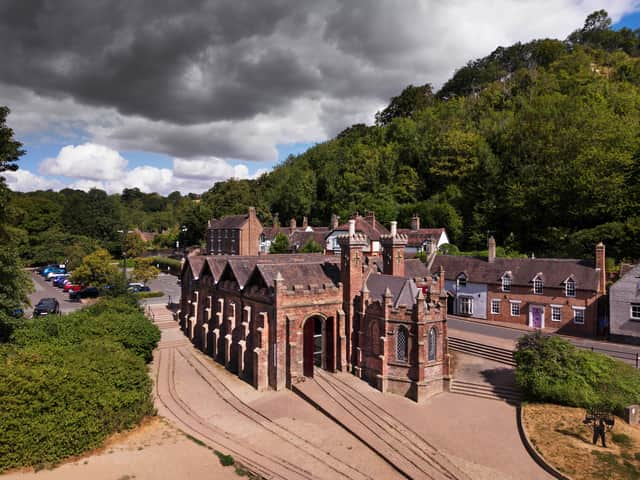
They are the Severn Wharf Building in Ironbridge, and a motte castle 400m near to Chirbury on the Shropshire and Mid Wales border.
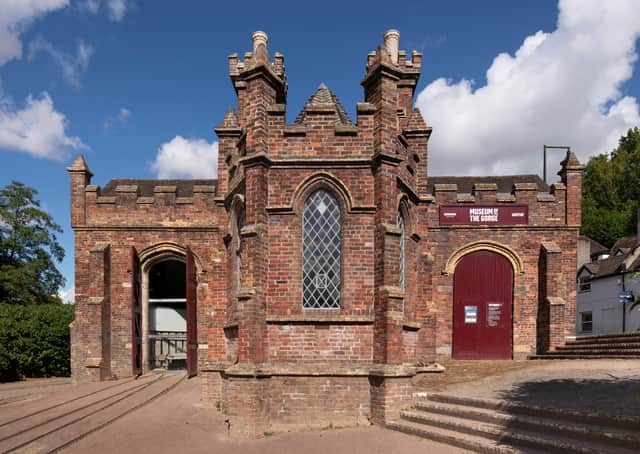
The historic castle had been at risk from “animal burrowing” according to Historic England, while the Severn Wharf Building was badly damaged by flooding in the 2020 storms.
The Ironbridge building, which sits on the banks of the River Severn, was repaired in a £260,000 project.
The Grade II* listed former warehouse is part of the Ironbridge Gorge Museum.
Built by the Coalbrookdale Company between 1838 and 1847 in the Gothick style, it was badly impacted by flood damage, causing deterioration of the internal fabric and structural problems.
There were also defects in the roof pitches, guttering and chimneys leading to it being included on the Heritage at Risk Register in 2021.
Historic England, alongside the National Heritage Memorial Fund, provided grant funding for a £260k repair project, which was completed in 2024.
Only cosmetic internal repairs remain and these will be carried out through ongoing maintenance and planned refurbishment works.
The building has reopened, and the site has recently come under the ownership and management of the National Trust.
But Historic England has also highlighted seven county sites which have been freshly included on the list, including some of Shropshire’s most famous buildings.
One of those added to the list is the Lion Hotel on Shrewsbury’s Wyle Cop, owing to what it describes as its deteriorating condition.
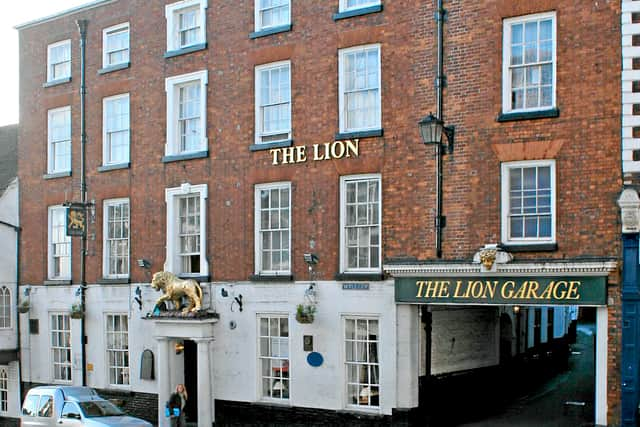
The list says a solution has been agreed but not yet implemented.
The building, which sits at the top of the picturesque Shrewsbury street, was famously where Charles Darwin stayed the night before departing for his expedition on the Beagle.
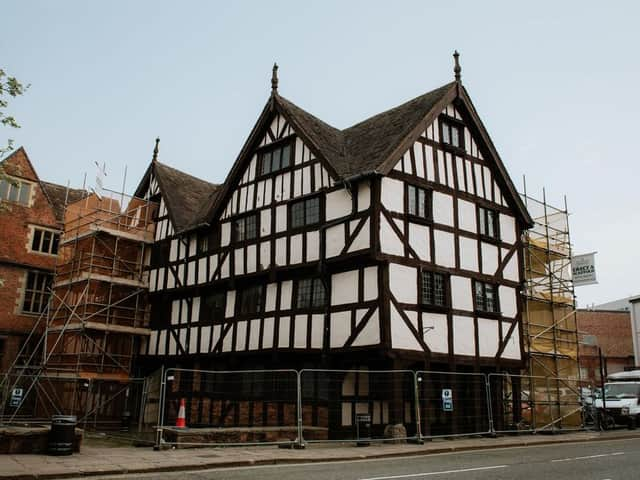
The list also includes Perches House, the historic Shrewsbury property which suffered extensive damage in a fire earlier this year, which also tragically claimed the life of its owner, Rose Roberts.
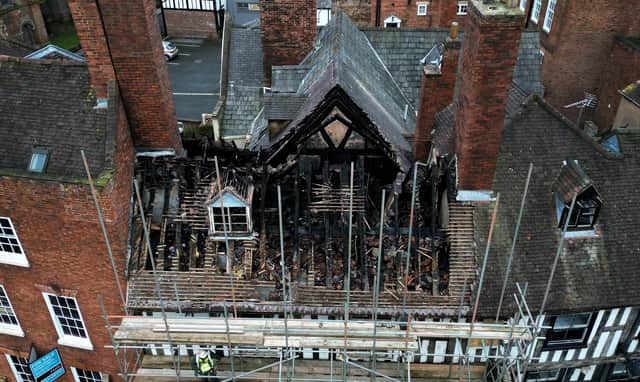
The timber-framed property featured in Shrewsbury’s celebrated film, ‘A Christmas Carol’ and a fundraiser was launched to save the property.
Shropshire Council put up scaffolding to protect the building and neighbouring properties earlier this year, and placed a land charge on the building.
Rowley’s House and Mansion, which sits off Barker Street in the town is also added to the list.
The 16th and 17th Century buildings are owned by Shropshire Council but have not been used since staff from the scrapped University Centre Shrewsbury, left the site.
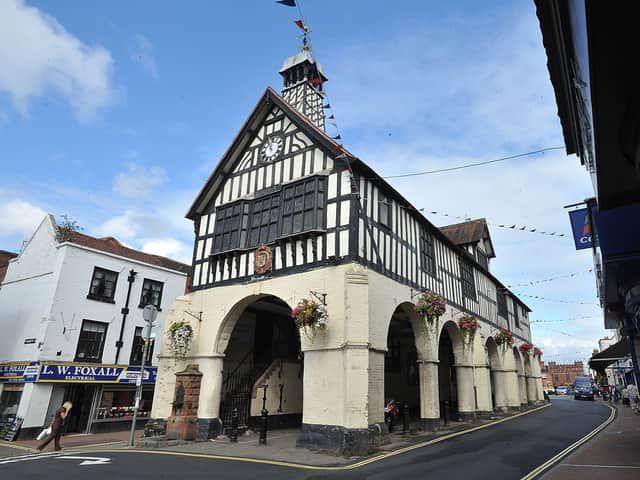
In Bridgnorth, the landmark black and white Town Hall, which dominates High Street, is also added over concerns about the slow deterioration of its condition.
Other sites added to the list include Lower House Farmhouse in Boraston, the Church of Holy Trinity at Worthen, and the Abbey Wall to the south east of Lilleshall Abbey, near Newport.
A statement from Claudia Kenyatta CBE and Emma Squire CBE, Co-CEOs of Historic England, said: “Our historic buildings and places help tell the story of where we live and contribute to the character and identity of local communities. Each year, the Heritage at Risk Register showcases the positive impact that restoring and reusing these special places can have.
“The most effective way to protect our buildings is to bring them back into use as places that create connection and enjoyment for local people. The sites saved and removed from the Register this year show what can be achieved when partners and communities work together to deliver positive, lasting change. By working together, we can protect our heritage for generations to come.”
Heritage Minister Baroness Twycross added: "Every part of the UK is bursting with history, so it is vital we protect the heritage sites at the heart of communities which help tell the stories of our nation.
“That’s why our £1.5 billion Arts Everywhere Fund is so important, supporting efforts to save more than 1,000 arts venues, museums, libraries, and heritage buildings across England.
“This year’s Register is an important reminder of the pressures facing our historic environment, from ageing buildings and structural deterioration to the impacts of extreme weather. I want us to build on our progress to ensure our heritage is protected for generations to come.”
Comment Guidelines
Iconic Media encourages reader discussion on our stories. User feedback, insights and back-and-forth exchanges add a rich layer of context to reporting. Please review our Community Guidelines before commenting.