
Coroner gives ruling on Shropshire homeless man's death amid family concerns
Barnaby Spicer was “friendly” and loved juggling and drawing, family have said

The family of a “friendly and generous” homeless man who was ordered to leave his accommodation believe his death was preventable.
Barnaby Spicer, who had significant difficulties with his mental health, died at a friend’s home in Ludlow after taking drink and drugs.
The 45-year-old had schizo-affective disorder, and his family felt the authorities should have done more to look after him.
However, a coroner has ruled that people supporting Mr Spicer - including mental health nurses and housing workers - acted appropriately, and that in the circumstances, his death was not preventable.


A three-day inquest into Mr Spicer’s death was held at Shropshire Coroner’s Court, Guildhall, Shrewsbury, to investigate the situation further.
The court was told that Mr Spicer, who was from Shrewsbury, had gone to Ludlow and went to the pub with friends.
As well as alcohol, he also consumed cocaine.
He had to be carried back to his friend’s home in Milton Road, having tried to lie down in the road on the way.
It was later discovered that Mr Spicer had fallen ill. Paramedics were called and advanced life support was carried out including CPR, but nothing could be done to save him. He was pronounced dead at the scene on December 14, 2024.
The inquest explored not just the events on the day of Mr Spicer’s death, but how he was supported by authorities in the time beforehand.
He had been a patient at the Redwoods Centre mental health facility in Shelton, Shrewsbury.
He had been staying in temporary accommodation but was asked to leave on August 30 after a number of incidents.
It was said that Mr Spicer was offered other places to stay, including in Staffordshire, but he did not accept them.
It was also said that he was encouraged to apply for housing, but did not do so.
Mr Spicer had another spell at Redwoods in November 2024, and was released without a community treatment order (CTO) - a framework which allows patients to be supported in a less restrictive setting but orders them to stick to conditions, such as taking medication and attending mental health appointments.
He died weeks later.
Heath Westerman, deputy coroner for Shropshire, Telford and Wrekin, accepted evidence that, despite there being no CTO in place, there was a plan in place for Mr Spicer’s care.
He also said that even if Mr Spicer had been provided with accommodation when he left the Redwoods in November, and even if there was a CTO in place, there would have been nothing stopping him from going to Ludlow to stay with friends and take alcohol and drugs.
“I find that when his friends discovered him, they did everything they could,” Mr Westerman said. “I find West Midlands Ambulance Service paramedics did all they could.”
He concluded that Mr Spicer’s death was not preventable and was a result of misadventure. Mr Westerman will not be writing a Prevention of Future Deaths report in relation to Mr Spicer’s case.
“He had a great deal of support from his brothers, mental health workers, the referral support team and friends,” said Mr Westerman.
“He died despite everyone’s best efforts to assist him through life. I send my sincere condolences to his family and friends.”
Like “a car crash in slow motion”
After the conclusion was reached, Mr Spicer’s brother Luke said the family felt his death was preventable.
“Our brother Greg described it like ‘a car crash in slow motion’,” he said. “You could see what was going to happen.
“There have been failings or the person with mental health issues wouldn’t have died.”
He believes his brother should have been staying in a facility like Redwoods.
“He was quite obviously unwell,” he said. “We absolutely believe it (his death) was preventable.”
Mr Spicer’s brother also said the family were disappointed to be denied legal aid for a lawyer to represent them at the inquest.
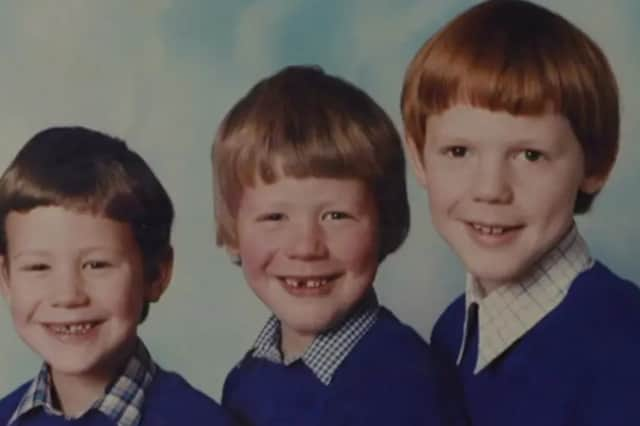
Paying tribute to his brother, he said: “We had a happy childhood. He was a friendly lad and generous. He loved juggling and drawing.
“He was very normal as a child but struggled with his mental health in his adult life.”
Comment Guidelines
Iconic Media encourages reader discussion on our stories. User feedback, insights and back-and-forth exchanges add a rich layer of context to reporting. Please review our Community Guidelines before commenting.