King Harold’s forced march to Battle of Hastings ‘implausible’
It has long been taught that after Harold’s victory at the Battle of Stamford Bridge, there was a forced march south to face the Norman invasion.
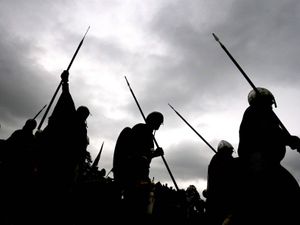
A near 200-mile forced march to the Battle of Hastings in 1066 did not happen, research suggests, with troops largely travelling by ship.
It has long been taught that after King Harold’s victory at the Battle of Stamford Bridge in Yorkshire, there was a forced march south for his army to face the Norman invasion.
However, University of East Anglia professor of medieval history and literature Tom Licence argues that this was down to a Victorian “misunderstanding”.
The Anglo‑Saxon Chronicle, one of the earliest and most complete written records of English history, seems to imply that Harold had dismissed his fleet, leaving him no choice but to rush his troops south on foot.

But Prof Licence suggests a record that the ships “came home” was mistakenly interpreted by Victorian historians as meaning Harold disbanded the navy.
They actually returned to their home base of London and remained operational throughout the year, he argues.
“Harold’s weary, unmounted men covering nearly 200 miles in 10 days and then continuing straight to the Hastings peninsula is implausible given medieval roads and the aftermath of battle,” said Prof Licence.
“Only a mad general would have sent all his men on foot in this way if ship transports were available.”
He said that he noticed “multiple contemporary writers referring to Harold’s fleet, while modern historians were dismissing those references or trying to explain them away”.
“I checked the evidence for him having sent the fleet home and found that it was just a misunderstanding,” Prof Licence said.
“I went looking in the sources for evidence of a forced march and found there wasn’t any.

“Harold’s campaign was not a desperate dash across England, it was a sophisticated land‑sea operation.
“The idea of a heroic march is a Victorian invention that has shaped our understanding, or misunderstanding, of 1066 for far too long.”
Contemporary sources describe Harold sending hundreds of ships to block Duke William of Normandy – also known as William the Conqueror – after the Norman landing.
Prof Licence said the fleet was used to defend the south coast, then to support Harold’s campaign against the Viking invasion led by Harald Hardrada, then to head back south to face the Norman invasion.

Prof Licence said the research “reframes the events of 1066 and highlights a previously overlooked aspect of Anglo‑Saxon maritime capability”.
“Harold was not a reactive, exhausted commander, he was a strategist using England’s naval assets to wage a co-ordinated defence,” he said.
Harold’s death in the Battle of Hastings is depicted in the Bayeux Tapestry, which shows him clutching an arrow to his eye.
The victorious William became the first Norman king of England.
Professor Michael Lewis, curator of the Bayeux Tapestry Exhibition at the British Museum, said: “With the Bayeux Tapestry coming to the British Museum later this year, Prof Tom Licence’s research shows there is much still to be learned about the events of 1066.
“It is clearly a fascinating discovery that following the Battle of Stamford Bridge Harold took an easier, more logical, trip south by ship to meet Duke William in battle, rather than a long trek overland, as has long been supposed.
“Hopefully this new research inspires people to also come and see the tapestry whilst it is in London.”
Prof Licence is to present his research at The Maritime and Political World of 1066 conference at Oxford University on March 24.